The springs of Las Vegas sustained Native people for millennia and drew traders, settlers, ranchers, and the railroad to the valley. This timeline traces the history of Las Vegas and Clark County, Nevada, from Native occupation and early travel routes through the railroad era, and the first 100 years of modern city.
View sources
Prehistory
-
Native people of Southern Nevada
c. 11,000–8,000 BPHuman occupation of southern Nevada is documented by the terminal Pleistocene / Paleoindian period. Evidence survives at sites including Tule Springs, Gypsum Cave, Pintwater Cave, and Stuart Rockshelter.
c. 300 BCE–1150/1200 CEAncestral Puebloan, or Virgin Branch, communities expanded into southern Nevada, with villages along the Muddy and Virgin Rivers and farming of corn, beans, and squash.
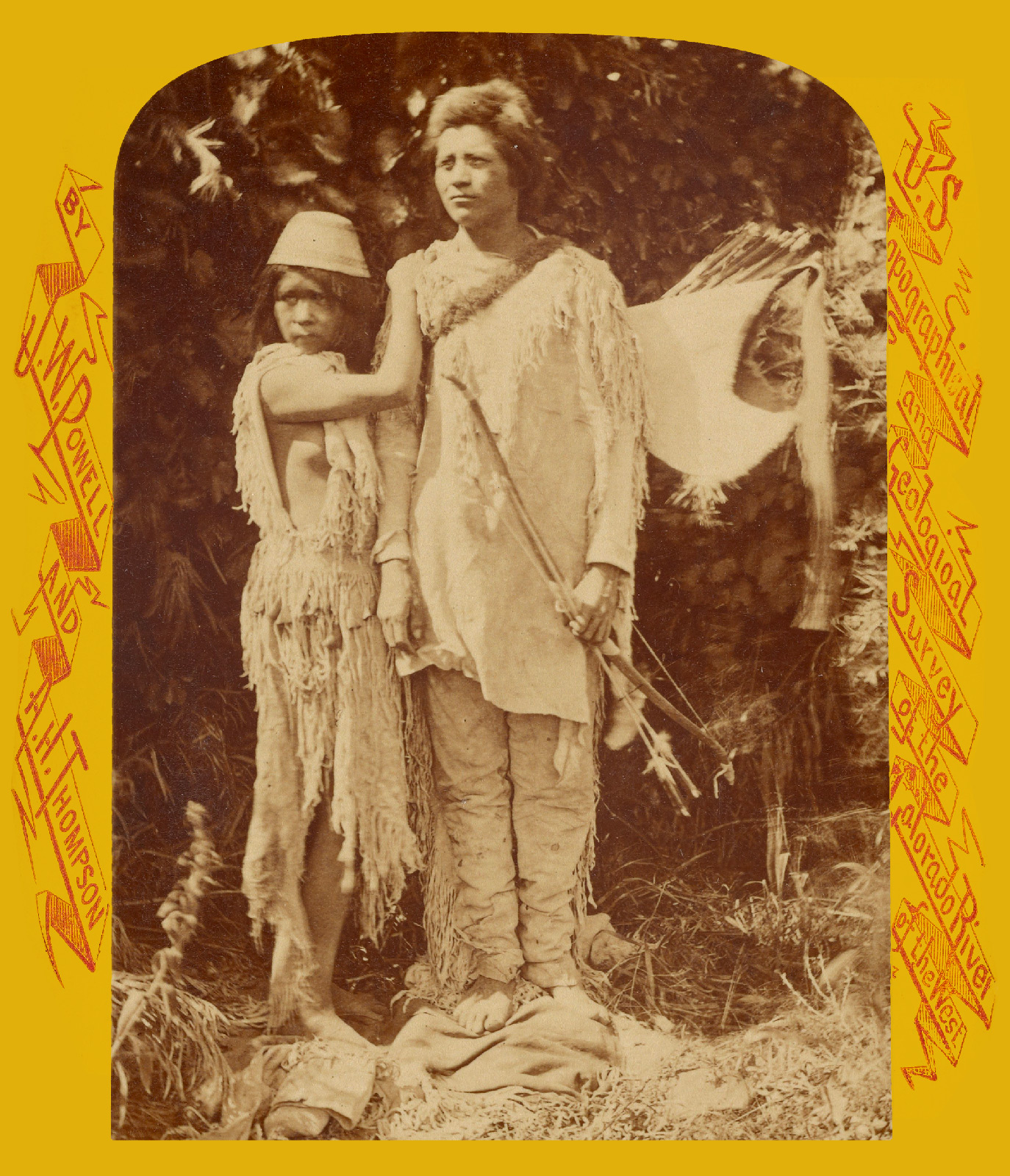
c. 1100 CE–presentSouthern Paiute / Nuwuvi people occupied the Las Vegas Valley and surrounding region, moving seasonally between springs, washes, and mountain areas. Las Vegas Springs was a major center of use and settlement.
Photo: Las Vegas Paiutes. John K. Hiller, 1873.
Before 1905
-
New Spain
1535Las Vegas region incorporated into the Spanish Viceroyalty of New Spain as part of Spain’s North American claims.
-
Mexico territory
1821Mexican independence; southern Nevada becomes part of Mexico’s northern frontier.
-
Explorers and traders in Clark County and Las Vegas
1826Explorer Jedediah Smith enters today’s Clark County near Mesquite. He links two routes forged by Spanish padres and becomes the first American to enter southern Nevada.
1830Antonio Armijo’s expedition crosses the Las Vegas Valley while opening a trade route from New Mexico to California. On January 9, the caravan camps near present-day Duck Creek and Sunset Park.
1830s-1840sOld Spanish Trail established as a major trade route linking New Mexico and California; Las Vegas Springs becomes a critical water stop. Expansion of trade coincides with a devastating slave trade targeting Paiutes.
1844John C. Frémont camps at Las Vegas Springs and maps the area, fixing the name “Las Vegas” in U.S. geographic usage and placing it on American maps.
-
U.S. Territory
1848Treaty of Guadalupe Hidalgo ends the Mexican-American War; southern Nevada transferred to the United States as part of New Mexico Territory.
-
Mormon Fort established
1855William Bringhurst and a group of Latter-day Saint missionaries arrive in Las Vegas on June 14, 1855, to establish a mission and build what is now the Old Las Vegas Mormon Fort. The mission lasts until early 1857, when the group is recalled to Utah and the fort is abandoned.
Illustrated depiction of the Las Vegas Mormon Fort, based on the painting "Sunset at the Las Vegas Mormon Fort, 1857," by Bradley Giles.

-
Las Vegas becomes part of Nevada
1861Congress creates Nevada Territory from the western portion of Utah Territory. Its boundaries do not yet include present-day Clark County.
1863Congress creates Arizona Territory from the western half of New Mexico Territory. The Las Vegas Valley becomes part of newly established Pah-Ute County.
1864Nevada is admitted as the 36th U.S. state, though the Las Vegas Valley remains part of Arizona Territory.
1867Congress transfers the western portion of Pah-Ute County, including the Las Vegas Valley, from Arizona Territory to Nevada, where it is incorporated into Lincoln County.
-
Las Vegas Ranch
1865Octavius Decatur Gass and partners buy the abandoned Mormon Fort, establishing the Las Vegas Ranch. By 1872 Gass owns the entire 640-acre ranch.
View EventLas Vegas Ranch, 1873. Unknown photographer. Otis Marston Colorado River Collection, The Huntington Digital Library.

-
Kiel Ranch
1867The adobe house was built by Conrad Kiel in 1867 at what would later become Kiel Ranch, formally established as a homestead and ranching operation in 1875. The property is now Kiel Ranch State Park in North Las Vegas.
View EventPhoto: Kiel Ranch, c. 1890s. Edit of pho022264. Kiel Family Photographs. MS-00838. UNLV Special Collections & Archives.

-
Stewart Ranch
1880Archibald Stewart acquires the Las Vegas Ranch in payment for a loan from O. D. Gass in 1880. The Stewart family moves to the ranch in 1882. Archibald dies in 1884 in a shooting at Kiel Ranch. His widow Helen J. Stewart and family remain. Helen receives a federal land patent for the ranch property in 1893, formalizing her ownership of the land.
Photo: Stewart Ranch, early 1900s, by Ramsey and Pierce. Wilson Photograph Collection (PH-00014) UNLV Special Collections.

-
Searchlight
1897G. F. Colton locates the Searchlight claim, at what is today Searchlight on May 6. The Searchlight post office opens in 1898.
-
Beginning of the railroad era
1902Drawn by its water resources, Las Vegas is selected as the division point for the San Pedro, Los Angeles, and Salt Lake Railroad (SPLA&SL) financed by William A. Clark. Helen J. Stewart’s Las Vegas Ranch is acquired, obtaining right of way, water rights, and land for rail facilities and a townsite.
View EventPhoto: Unknown man camping at Stewart Ranch c. 1904. Ferron and Bracken Photograph Collection (PH-00001) UNLV Special Collections & Archives.

-
McWilliams Original Las Vegas Townsite
1904In competition with SPLA&SL Railroad, J. T. McWilliams plats a townsite on the west side of the railroad tracks and begins selling plots. A number of tents and wooden structures on lots in the McWilliams townsite appeared in early 1905, but declined after the opening of Clark's Las Vegas townsite. McWilliams townsite is part of today's Historic Westside Las Vegas.
Photo: McWilliams Original Las Vegas Townsite, 1905. Captioned, "The leading hotel, Las Vegas, Salt Lake Route" C.R. Savage.

1905-1920
-
Clark's Las Vegas Townsite auction
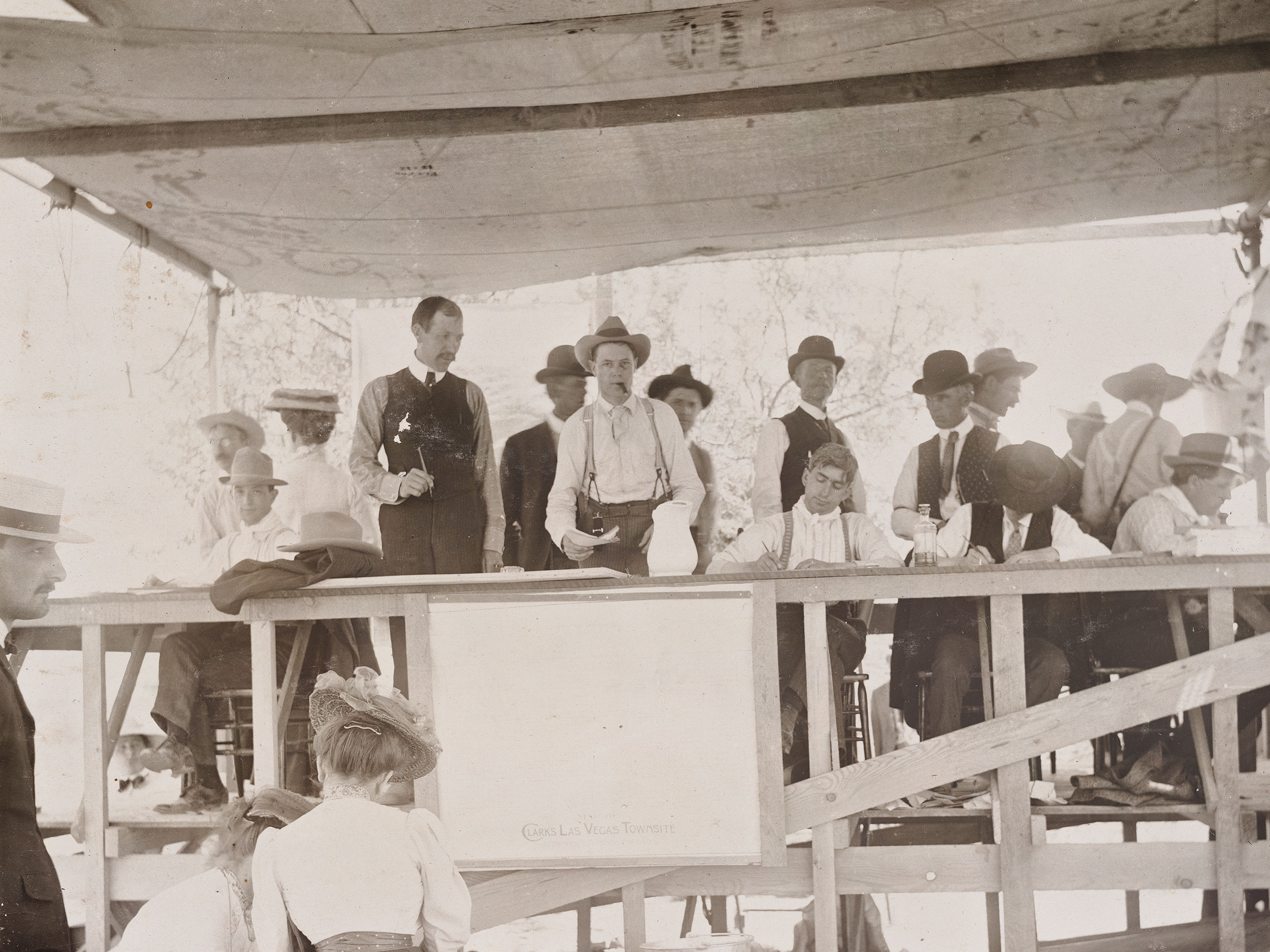
Birth of modern Las Vegas1905On May 15, 1905, SPLA&SL Railroad held a land auction for Clark's Las Vegas Townsite, 40 blocks anchored at the junction of Fremont and Main, marking the beginning of what will become modern Las Vegas.
City of Las Vegas: The Early Years (documentary)Photo: Las Vegas Land Auction, May 15, 1905. Ferron and Bracken Photographs (PH-00001) UNLV Special Collections & Archives.

-
First permanent buildings of Las Vegas
1906Overland Hotel and the Hotel Nevada (Golden Gate Hotel & Casino) opened at Main & Fremont, the original hotel district. The First State Bank became the city's first formal financial institution. On Block 16, where liquor sales were allowed, the Arizona Club anchored a red light district.
Photo: Elizabeth Harrington Photograph Collection (PH-00291), UNLV Special Collections & Archives.

-
First churches in Las Vegas
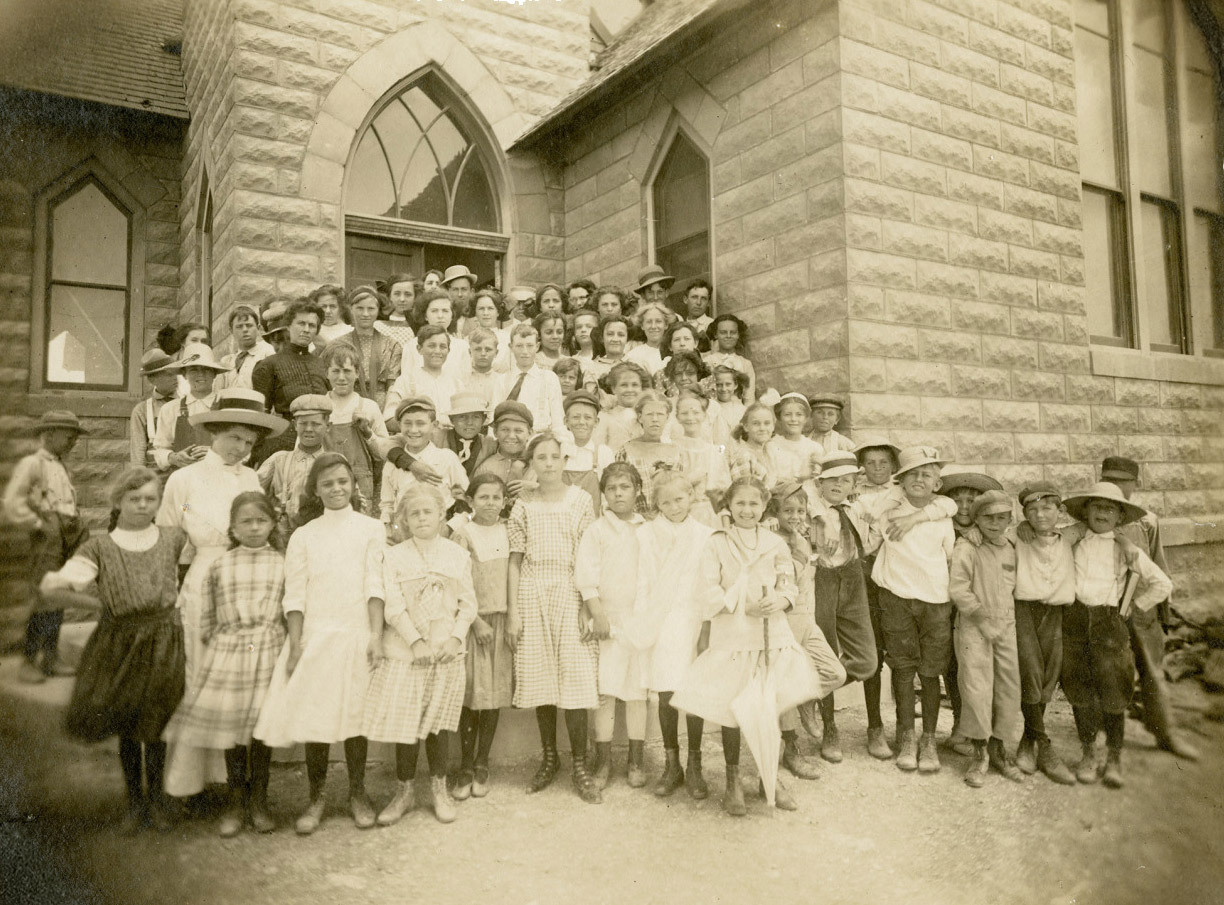
1908Since the 1905 settlement, the First United Methodist congregation was the earliest organized worship group, informally called "the church" because it welcomed all faiths in a shared tent. In 1908 First Methodist completed a church at South 3rd & Bridger, and Christ Episcopal opened one at South 2nd & Carson.
Photo: Students at First Methodist Church, circa 1910. Wilson Collection. PH-00014. UNLV Special Collections & Archives.
-
Las Vegas Age
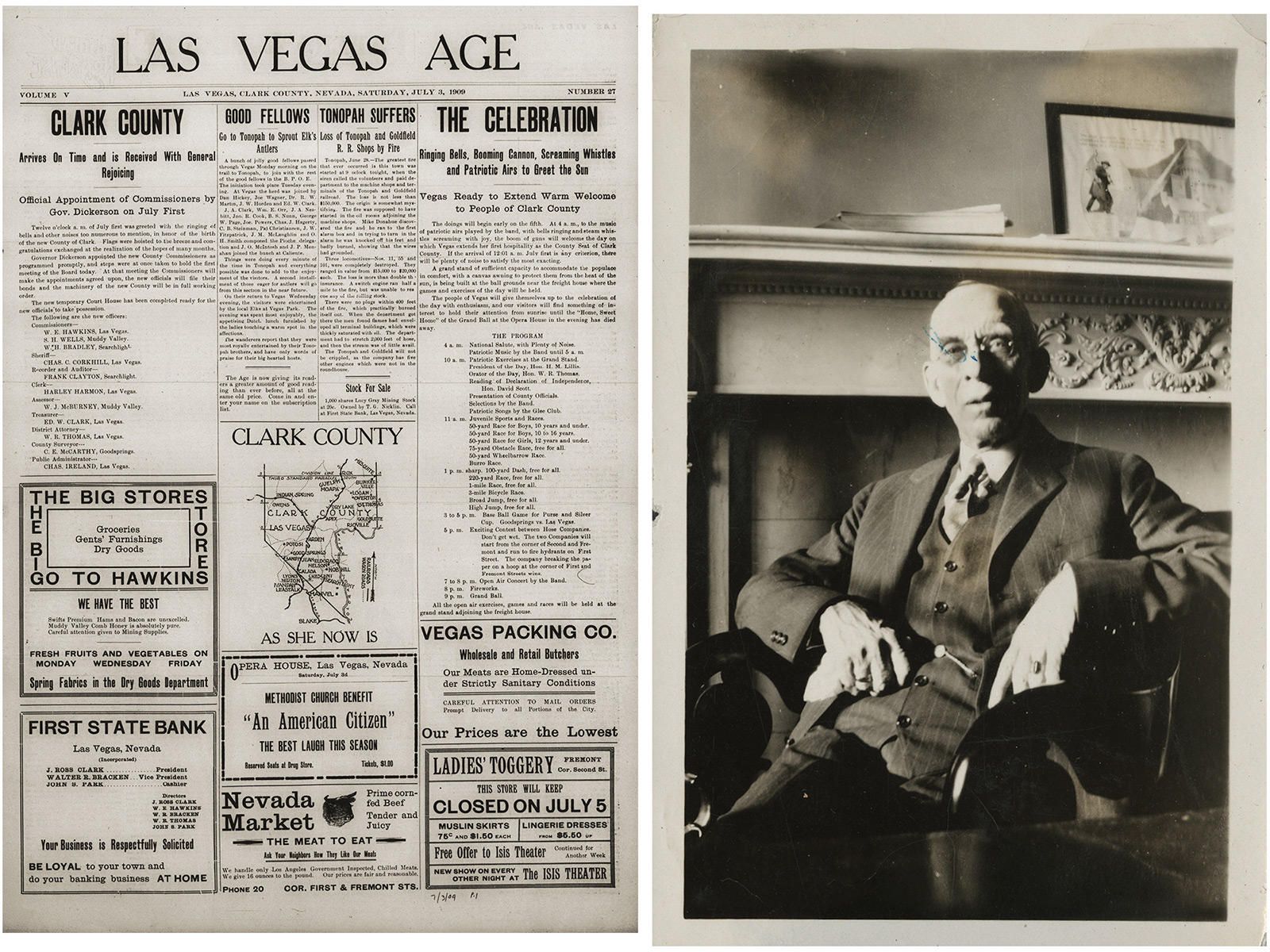
1908Charles Squires bought the Las Vegas Age newspaper in 1908. He became the community's chief advocate for creation of Clark County, city incorporation, women's suffrage, and development of the Colorado River for power and water, helping launch the campaign that led to the construction of Hoover Dam.
Photo: Squires Collection. PH-00002. Special Collections & Archives, UNLV.
-
Clark County Review / Las Vegas Review-Journal
1909Charles Corkhill founded the Review as an alternative to the Age. Later owners Frank Garside and editor A. E. Cahlan merged the paper with the Clark County Journal in 1929, establishing the Las Vegas Evening Review-Journal. In later years the paper would become Nevada's leading daily.
Photo: Las Vegas Evening Review-Journal, 113 S. 1st St, Las Vegas, circa 1930

-
Railroad expansion and company houses
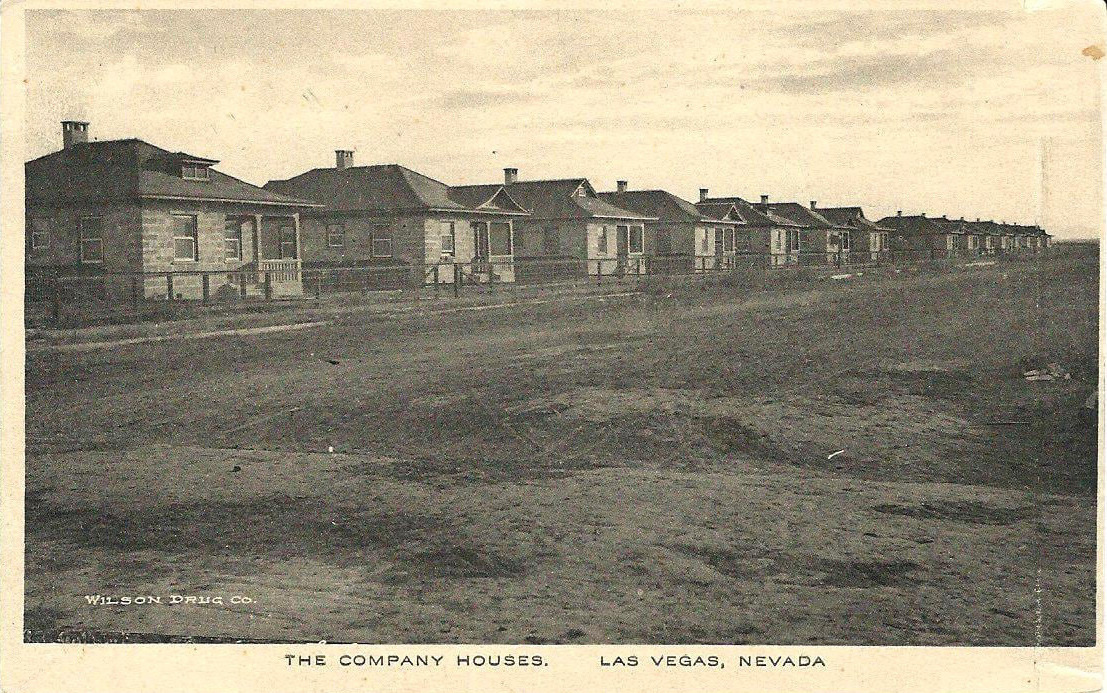
1909The railroad expanded its Las Vegas operations with new and enlarged shops, and built the community's first housing tract: 64 company houses for workers in what would later be called the Railroad Cottage Historic District.
View EventPhoto: Postcard circa 1910
-
Clark County is created
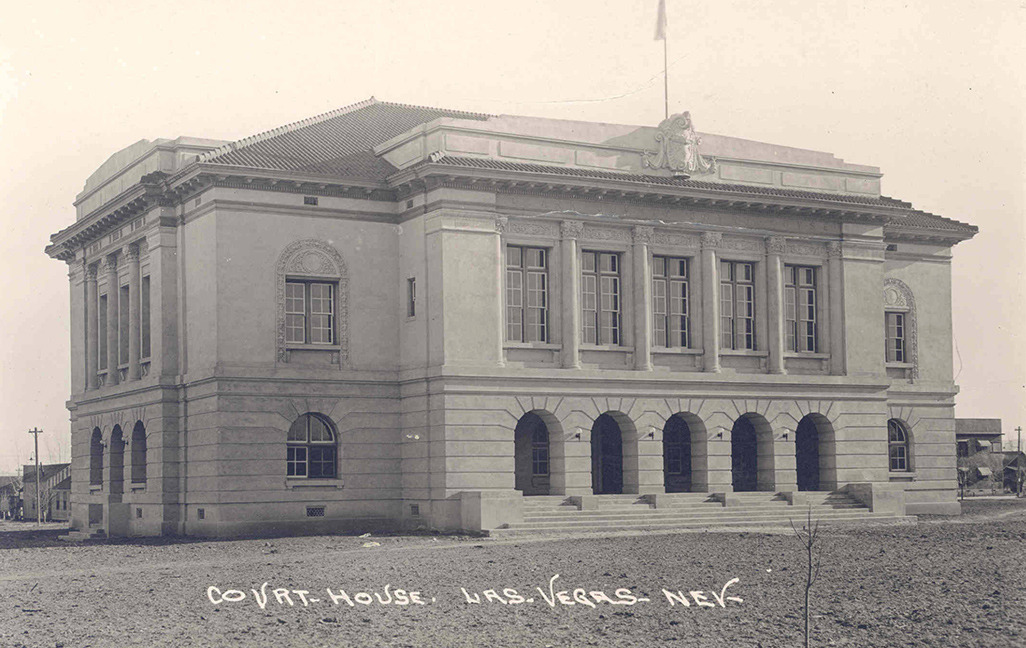
1909The creation of the county government on July 1, 1909, made Las Vegas the political and administrative hub of Southern Nevada. Power broker Ed W. Clark is credited with the political maneuvering to form the new county. Clark County Courthouse was completed in 1914.
Photo: Clark County Courthouse, c. 1914. UNLV Collection. PH-00062. Special Collections & Archives, UNLV.
-
Clark County population: 3,371
Las Vegas townsite population: 8001910 -
City of Las Vegas incorporated
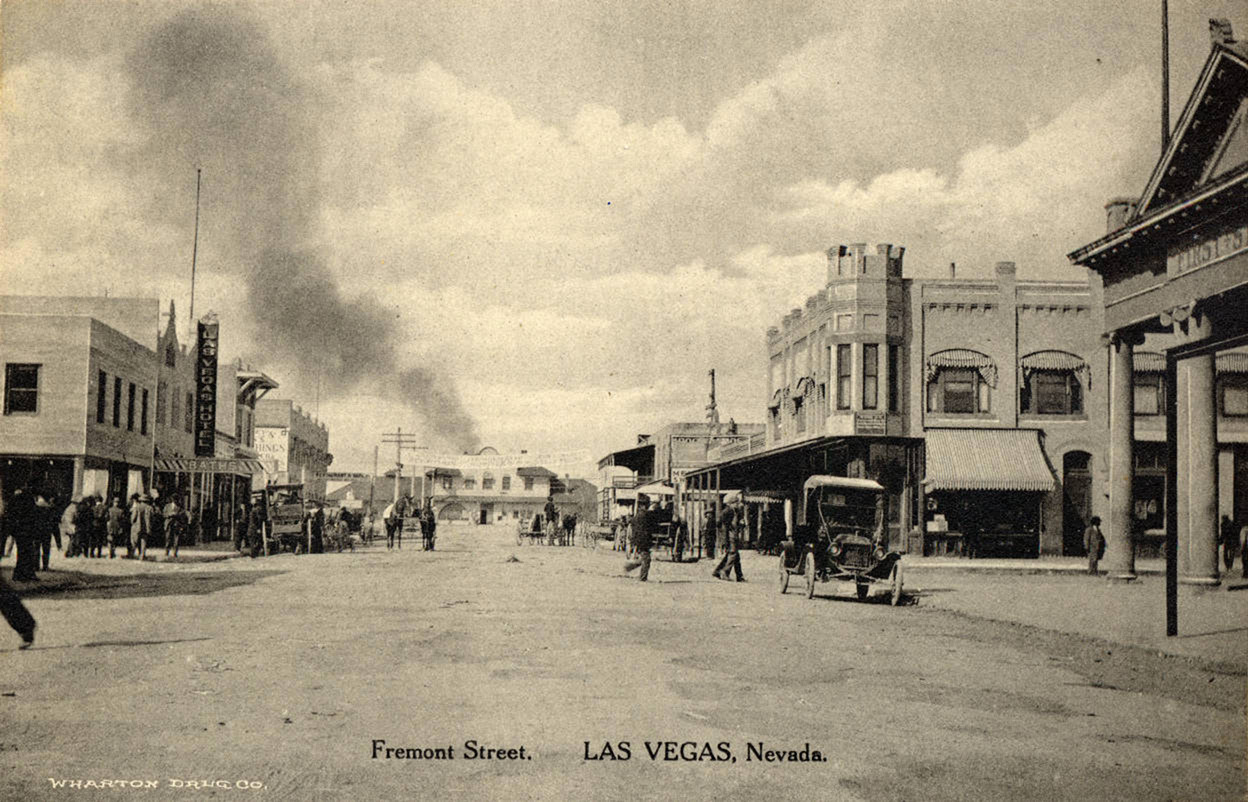
1911On June 1, residents voted to incorporate under a charter approved by the Nevada Legislature. Peter Buol became the city's first mayor.
-
Arrowhead Highway
1915Arrowhead Highway is formally organized, an all-weather automobile road connecting California, Nevada, and Utah.
View Event
-
Groundwater use codified
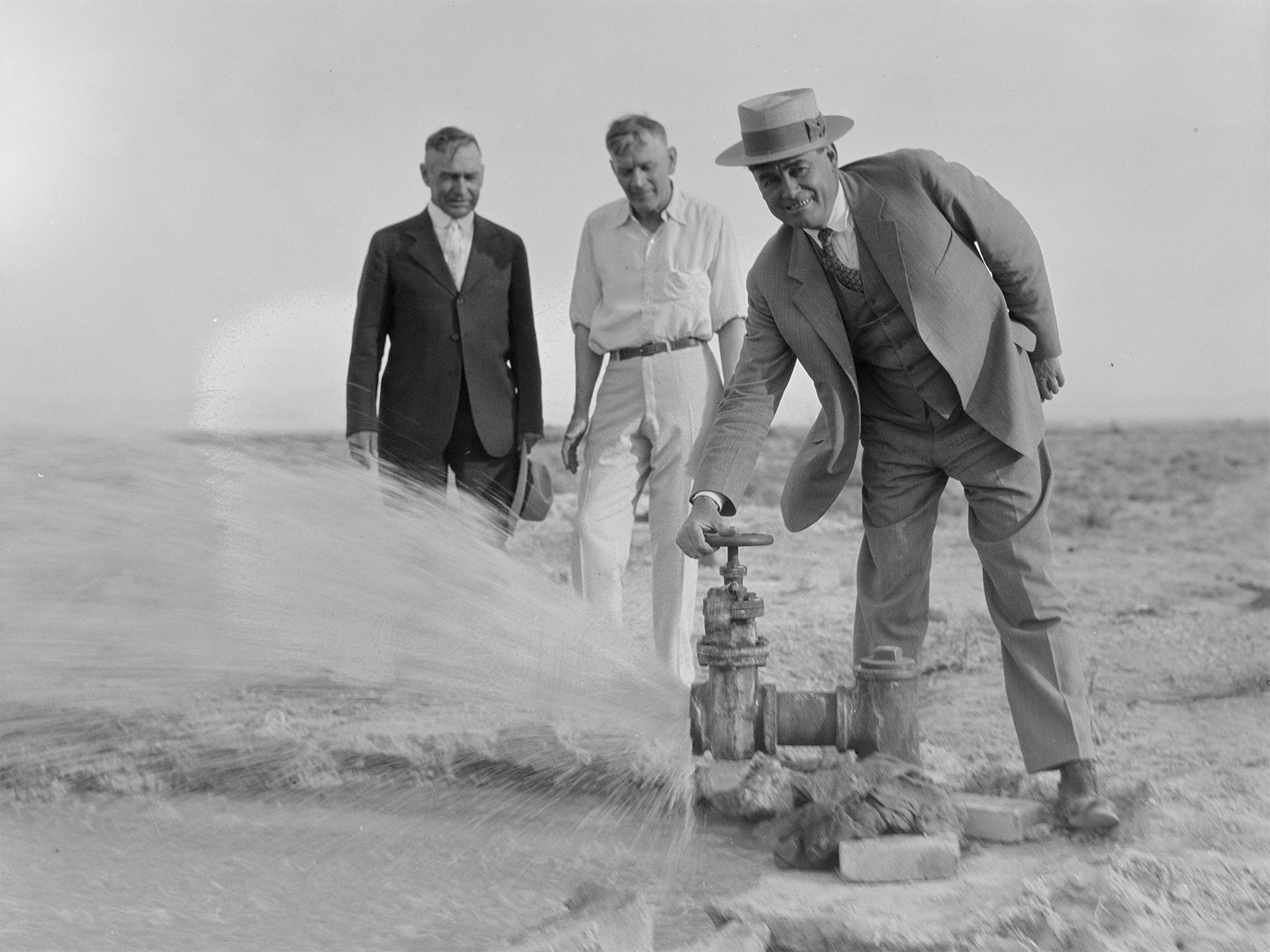
1919Congress passed the Pittman Underground Water Act, encouraging drilling on Nevada public lands to support farming. Amid concerns over existing artesian wells, the policy spurred further drilling and shaped Las Vegas's reliance on groundwater for decades.
Photo: Opening an artesian well in Las Vegas circa 1920s. Garrett Collection. PH-00265. Special Collections & Archives, UNLV.
1920-1930
-
Clark County population: 4,859
City of Las Vegas population: 2,3041920City of Las Vegas: The 1920s (documentary) -
Railroad strike
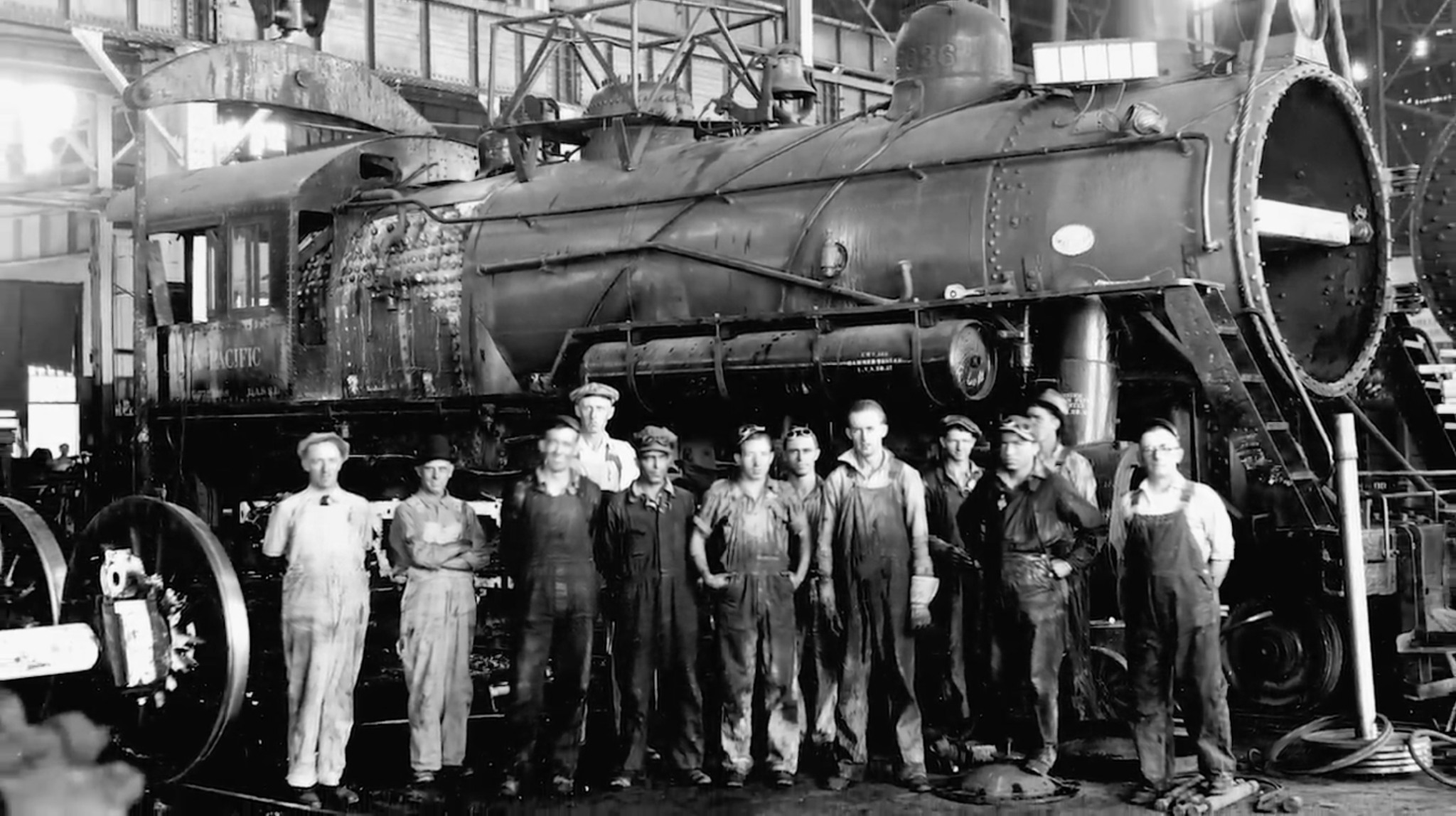
1922Union Pacific workers in Las Vegas joined a nationwide shopmen's strike in July, disrupting rail operations, straining local businesses, and underscoring the city's dependence on the railroad. After the strike, the city's railroad operations were diminished when U.P. transferred most repair-shop functions to Caliente.
-
Historic Westside School
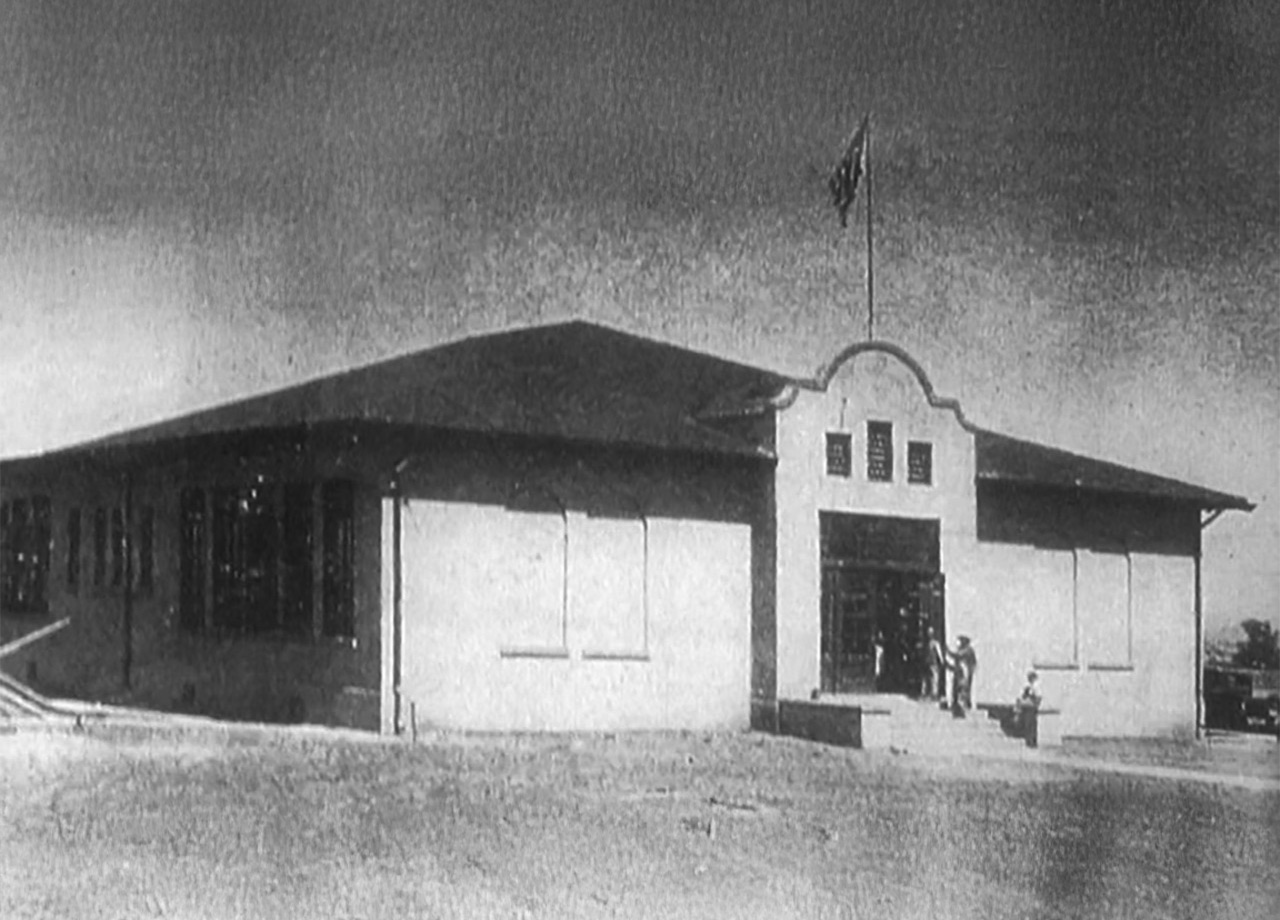
1923Originally known as Las Vegas Grammar School, Branch No. 1, it is the city's oldest surviving schoolhouse. Closed as a school in 1967, the complex became a community hub.
View EventPhoto: Circa 1920s. City of Las Vegas.
-
Airmail
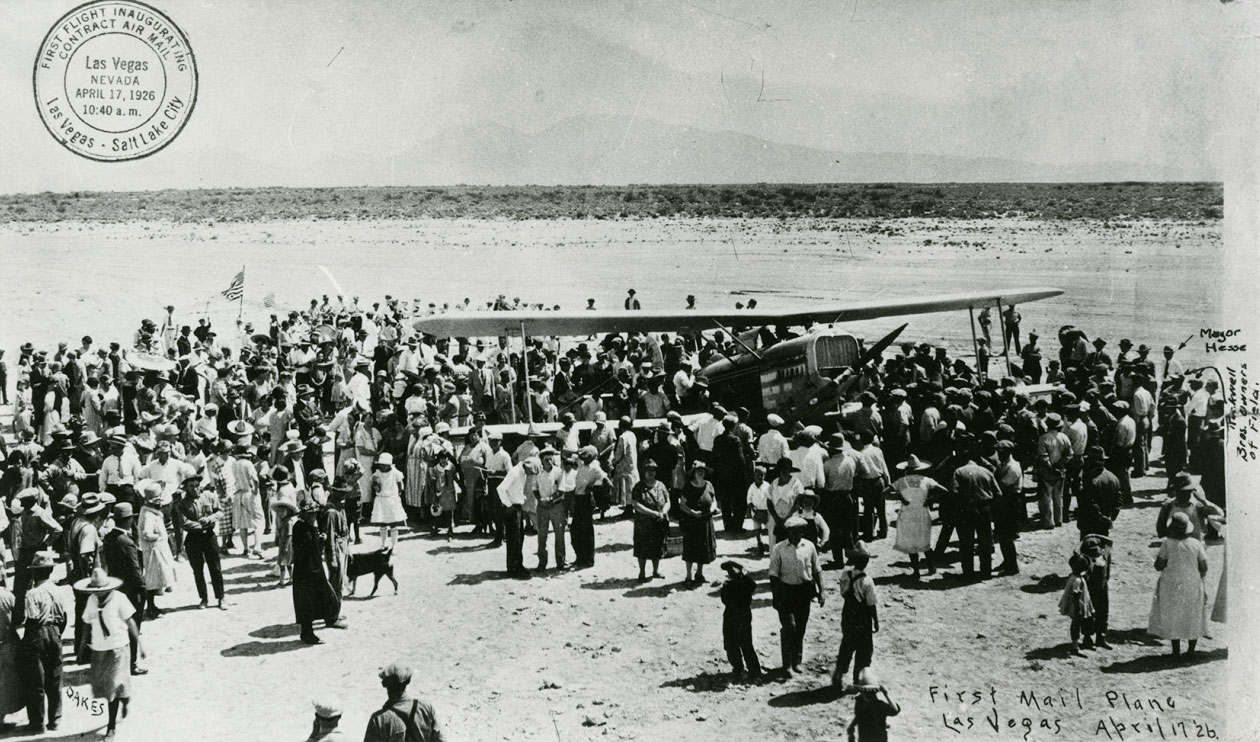
1926Las Vegas became a stop on the expanding airmail network in 1926, giving the community a significant leap forward in communication. Western Air Express utilized Rockwell Field, the first airport in Clark County, located at present Sahara Ave & Paradise Rd.
Photo: Las Vegas, April 17, 1926. Postcard by Oakes Vegas Studio. Rockwell Collection. PH-00008. Special Collections & Archives, UNLV.
-
Boulder Canyon Project Act
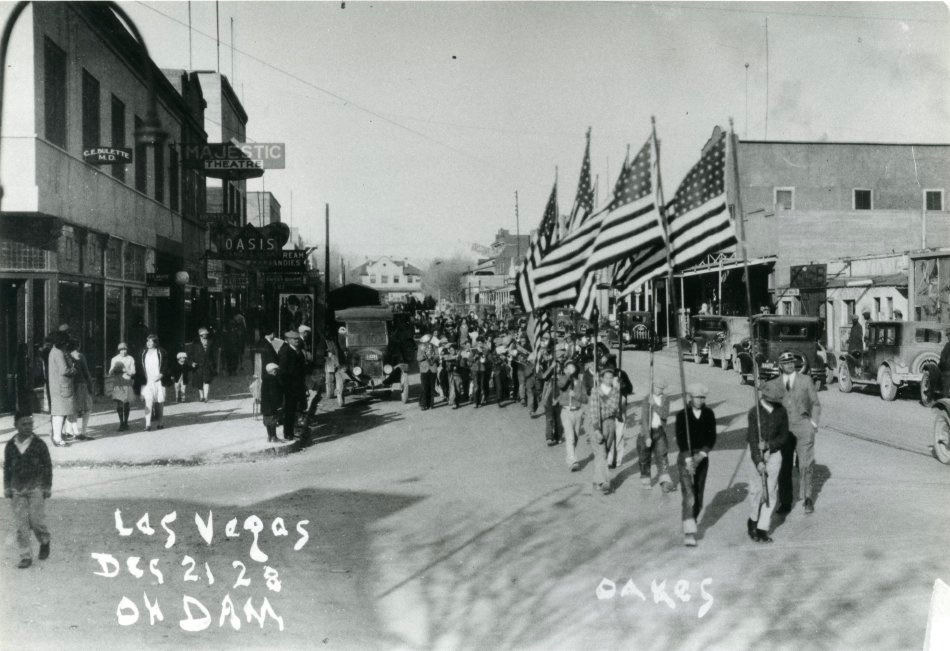
1928The law signed on December 21 authorized construction of Boulder (Hoover) Dam. The project promised a reliable source of power.
Photo: Celebrating the Boulder Canyon Project Act, Fremont St, Dec. 21, 1928. Oakes Vegas Studio.
-
Western Air Express Field
1929Western Air Express Field, unofficially "Las Vegas Field," north of Las Vegas, becomes the city's main airport serving Las Vegas.
View Event
1930-1940
-
Clark County population: 8,532
City of Las Vegas population: 5,1651930City of Las Vegas: The 1930s (documentary) -
Dam project brings population boom
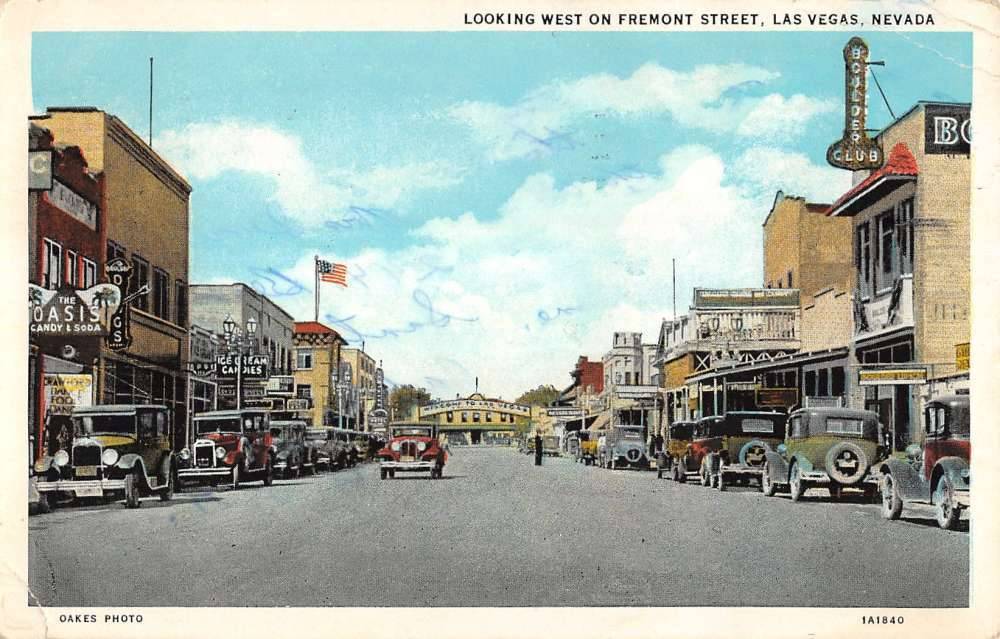
1931Thousands flocked to Las Vegas seeking work on the Hoover Dam. The city's population more than doubled in a single year, overwhelming housing, schools, and services.
Photo: Postcard, 1931.
-
Gambling and divorce laws
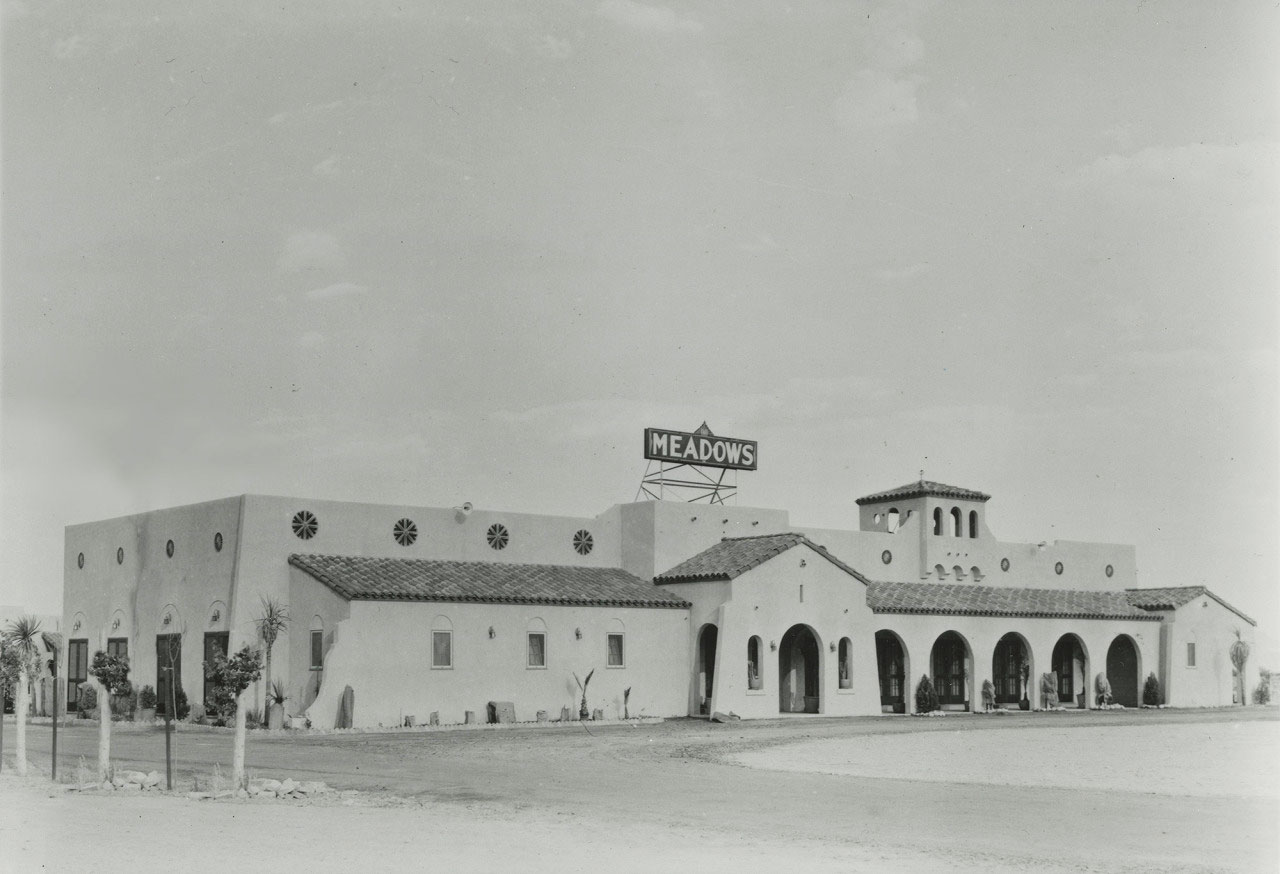
1931Nevada law legalized wide-open gambling and shortened the divorce residency. These changes laid the groundwork for industries that would define Las Vegas's image in the years ahead.
Photo: The Meadows Club, Boulder Hwy, 1931. Garrett Collection. PH-00265. Special Collections & Archives, UNLV.
-
Wedding Chapels
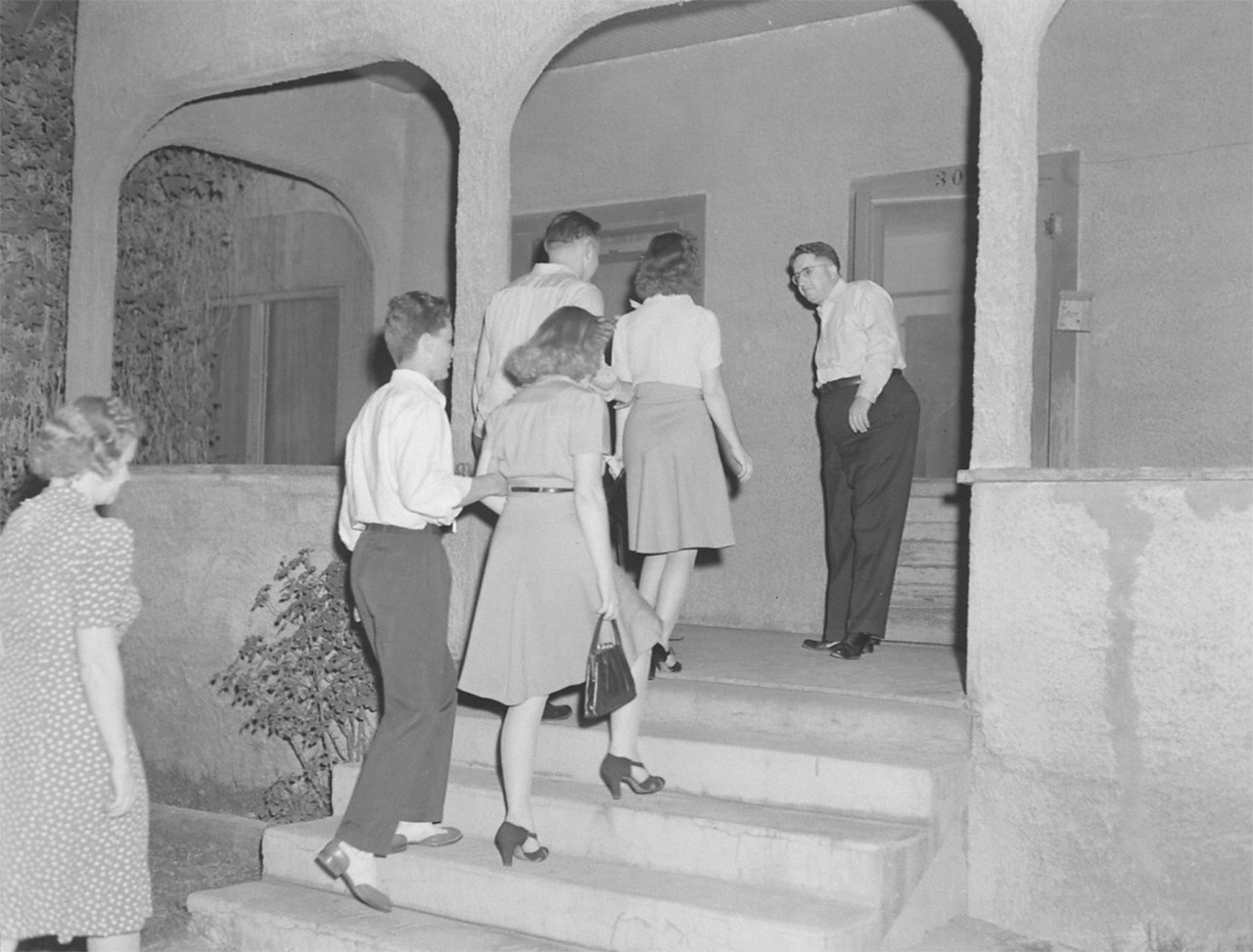
1933Rising automobile travel led to new motels and roadside businesses in Las Vegas, along with visitors drawn by Nevada's lenient marriage laws. On September 29, "The Wedding Chapel" opened at 513 South 5th Street, the beginning of Las Vegas's dedicated wedding industry.
View EventPhoto: A private home-turned wedding chapel, Las Vegas, 1940. George Strock.
-
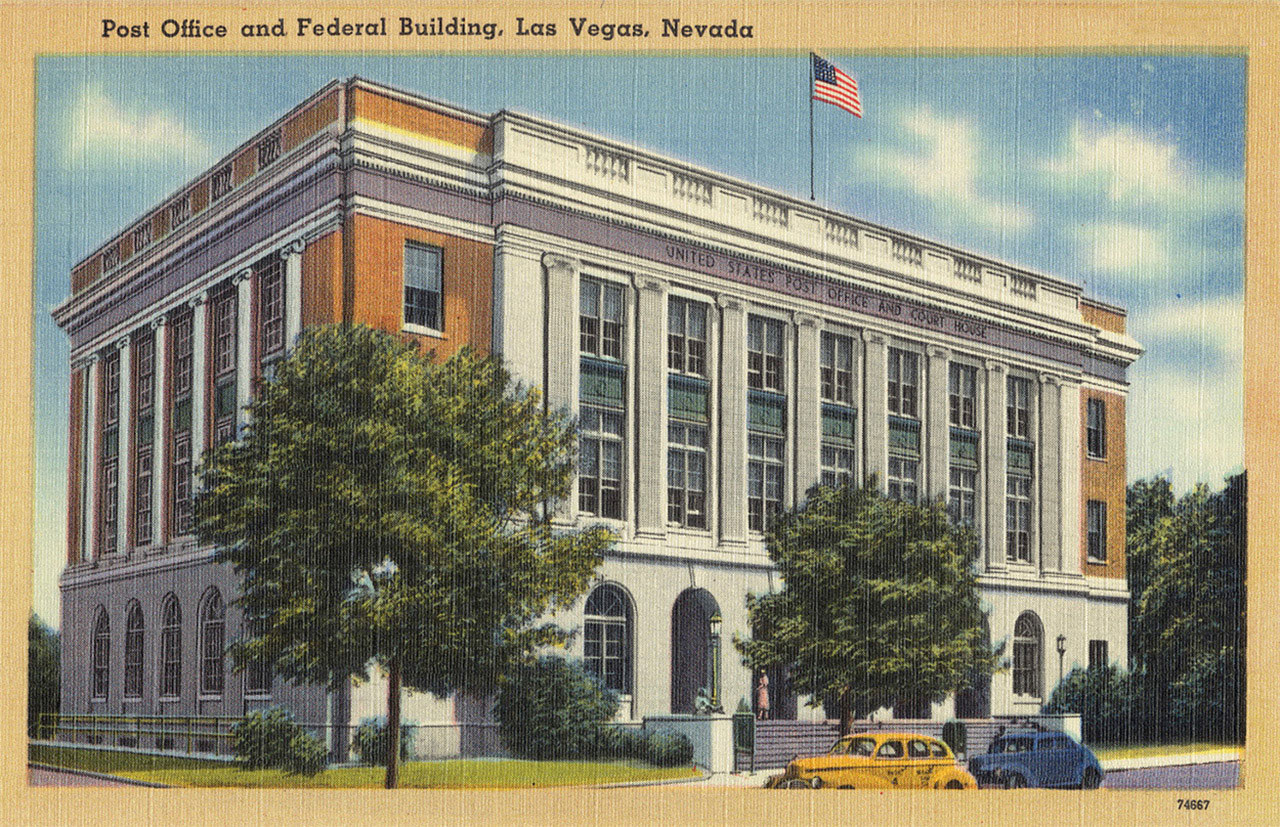
U.S. Post Office and Courthouse
1933Dedicated November 11, the Neo-classical building at 300 Stewart Ave served as post office and federal court for 50 years. Today it houses The Mob Museum.
Photo: Postcard circa 1942.
-
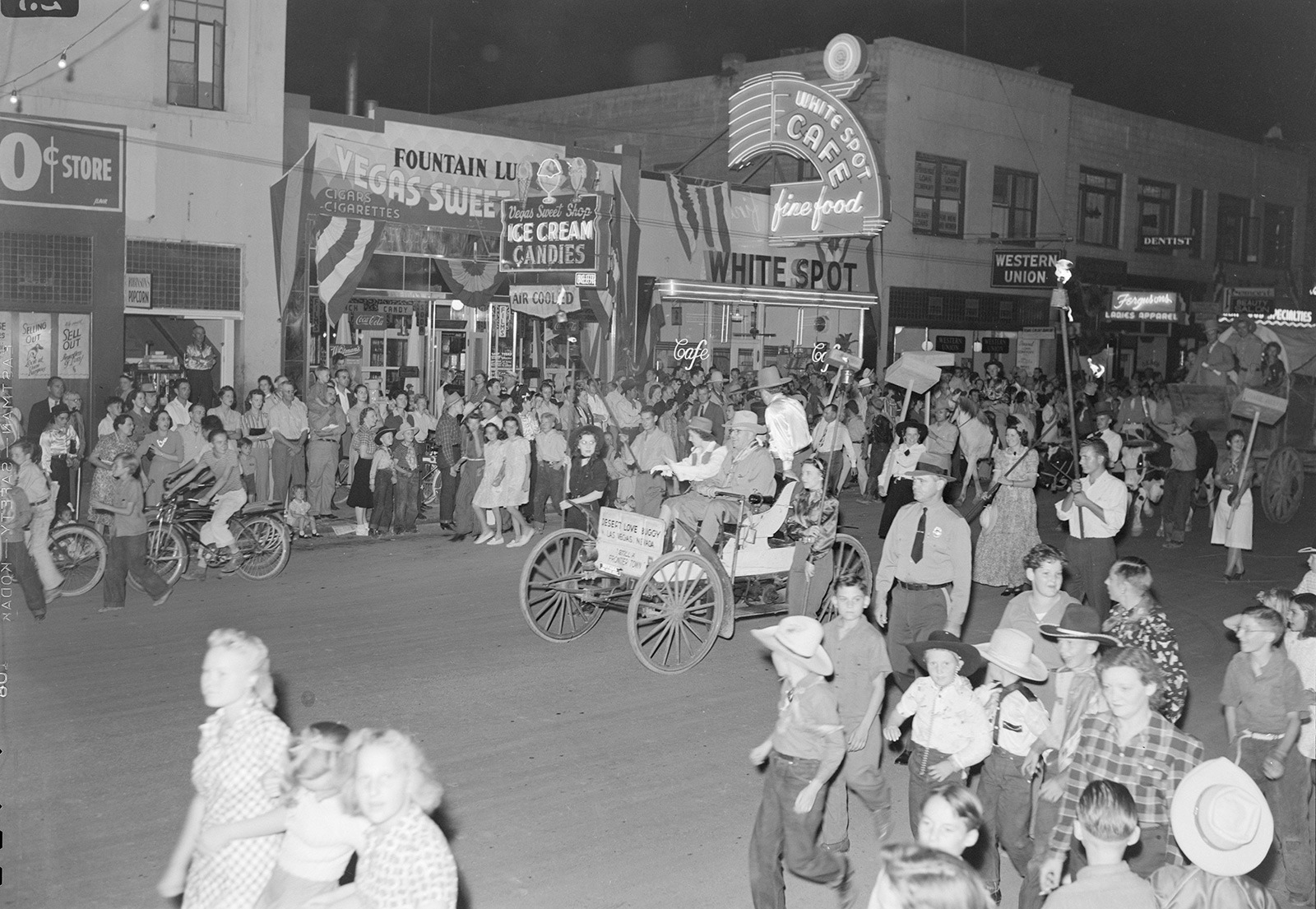
Helldorado Days
1935Organized by the Elks Lodge No. 1468, the western-themed festival began as a fundraiser and grew into Las Vegas's longest-running civic celebration, continuing through the 1990s and revived in 2005 for the city's centennial.
Photo: Helldorado Days circa 1938. Davis Collection. PH-00020. Special Collections & Archives, UNLV.
-
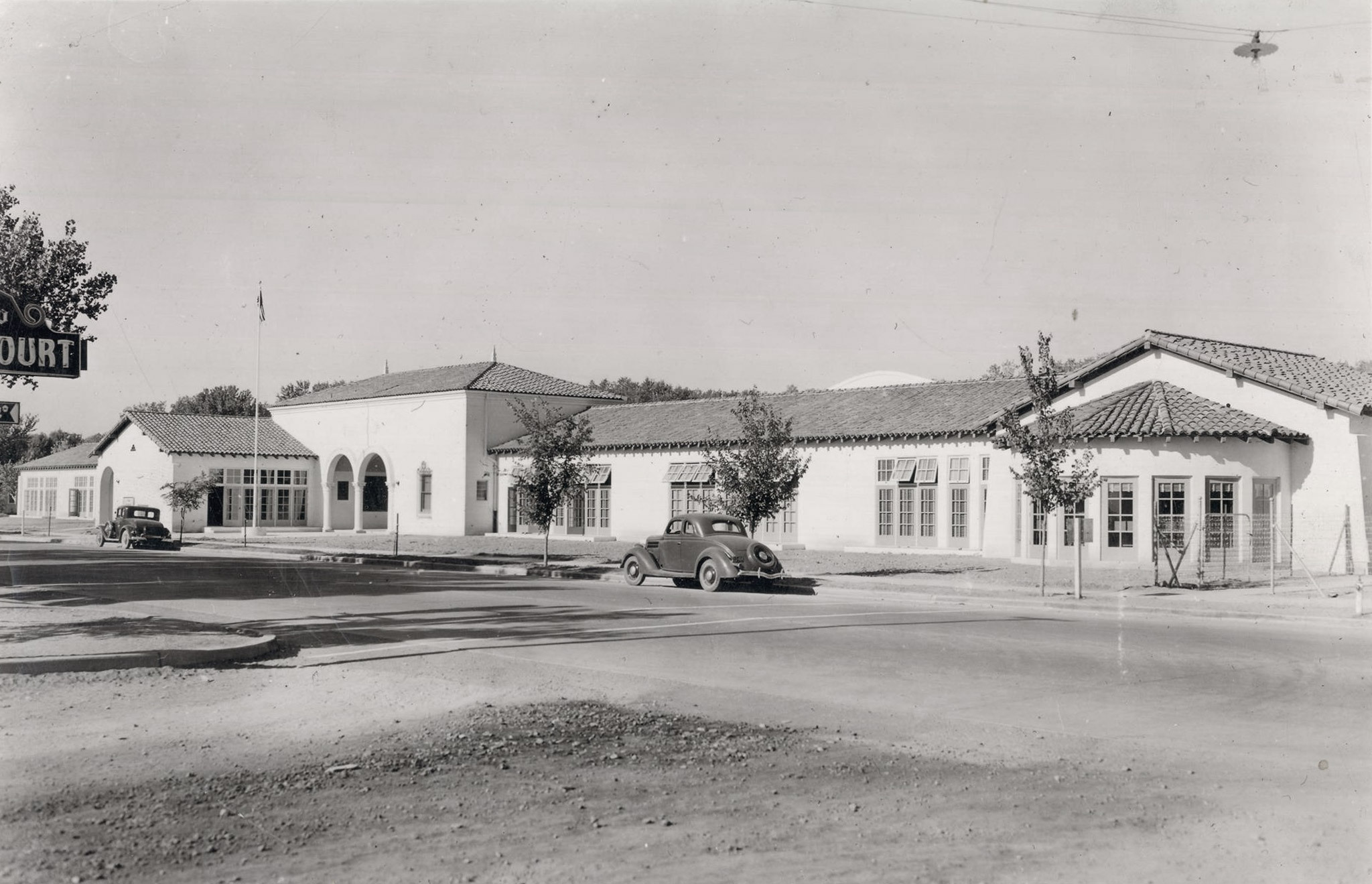
Historic Fifth Street School
1936The new Las Vegas Grammar School, informally called the Fifth Street School, opened to relieve overcrowding. It served students until 1966, and today the restored building houses cultural and educational programs.
Photo: Knudson Collection. PH-00108. Special Collections & Archives, UNLV.
-
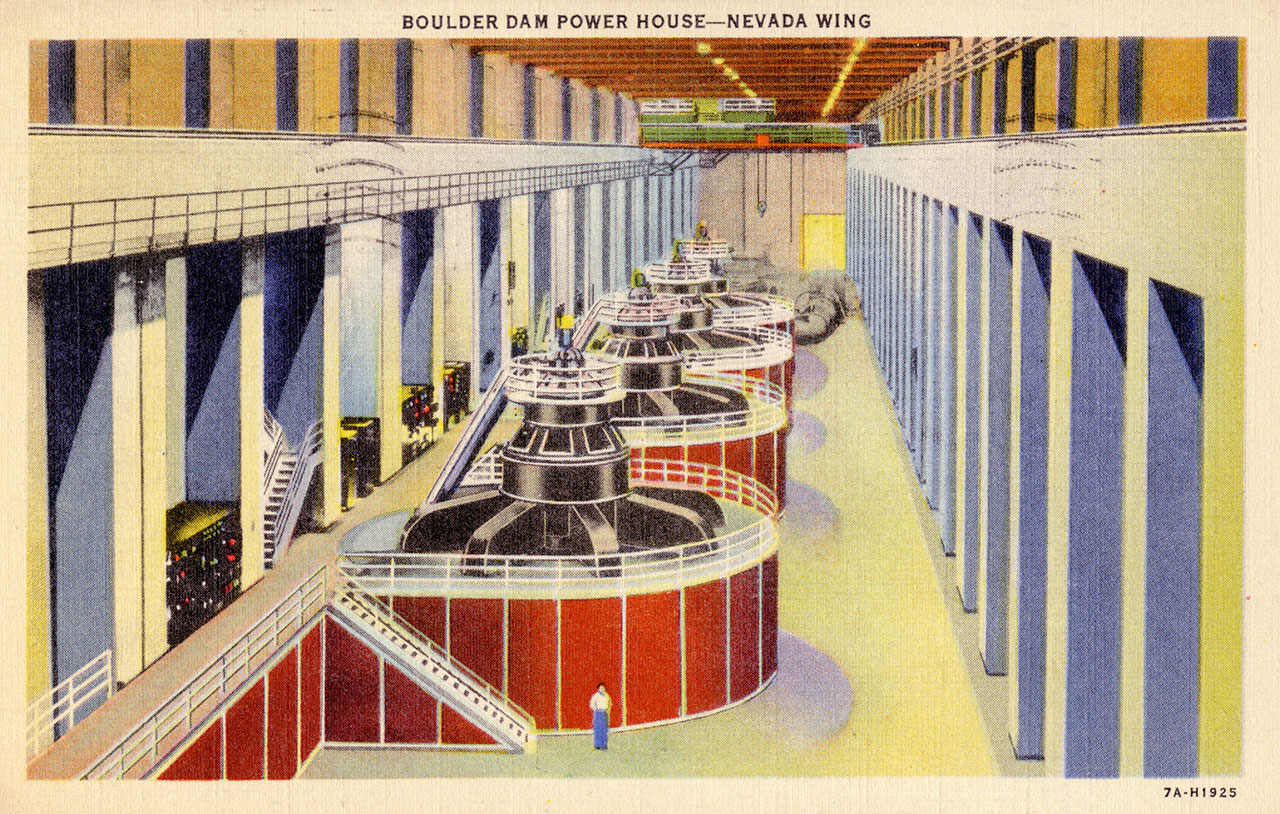
Power flows from Hoover Dam
1937With the dam completed and dedicated in 1936, electric power began flowing in 1937 to Southern Nevada, transforming the regional economy and securing Las Vegas's modern growth.
Photo: Boulder Dam Power House - Nevada Wing. Postcard, 1937.
1940-1950
-
Clark County population: 16,414
City of Las Vegas population: 8,4221940City of Las Vegas: The 1940s (documentary) -
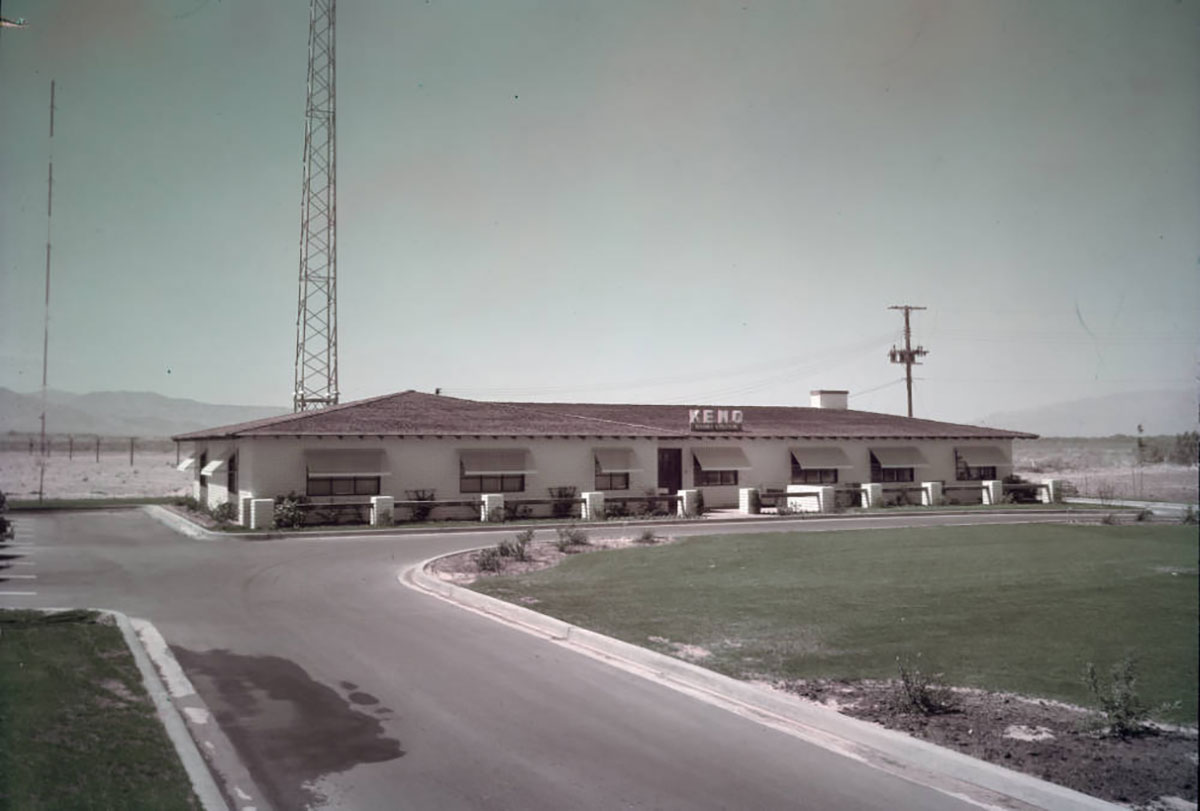
KENO-AM Radio Station
1940KENO, launched by Laura Belle and Maxwell Kelch on November 1, became the city's first successful radio station.
View EventPhoto: KENO-AM, US Hwy 91, circa 1947. Manis Collection. PH-00100. Special Collections & Archives, UNLV.
-
Basic Magnesium Inc. and Basic Townsite, the wartime industrial city.
1941Federal war production drove the creation of Basic Magnesium Inc. (BMI) and a major industrial complex in the valley, giving rise to the community that would become Henderson.
View EventBillboard: "MacArthur’s Job is Fighting. Our is Magnesium." Basic Townsite, 1942. Photo by Fritz Henle.

-
Las Vegas Army Air Field
1941City of Las Vegas buys Western Air Express Field. A portion of the airport is leased to the Army to become Las Vegas Army Air Field, the future Nellis Air Force Base. The public portion is renamed McCarran Field. (McCarran Field relocates to the south of Las Vegas in 1948.)
View EventSenator McCarran at the gateway of the original McCarran field in North Las Vegas, 1941. Nellis Air Force Base Photograph Collection, PH-00028, UNLV Special Collections & Archives.

-
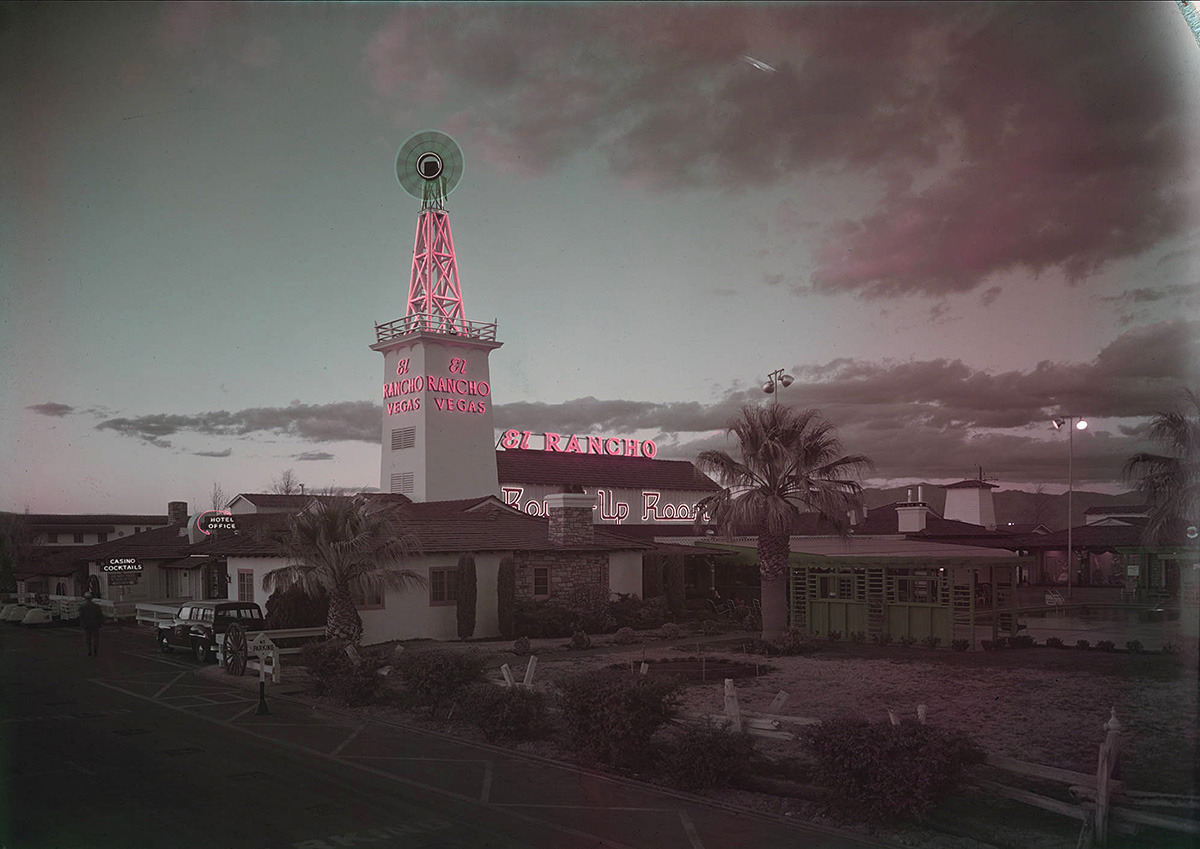
Dawn of the resort industry
1941-1942Between 1941 and 1942, four major hotel-casinos opened that defined new Las Vegas hospitality: El Cortez on Fremont Street, Nevada Biltmore on North Main, and El Rancho Vegas and Hotel Last Frontier on the Strip south of the city limits.
Photo: El Rancho Vegas, 1940s. Manis Collection. PH-00100. Special Collections & Archives, UNLV.
-
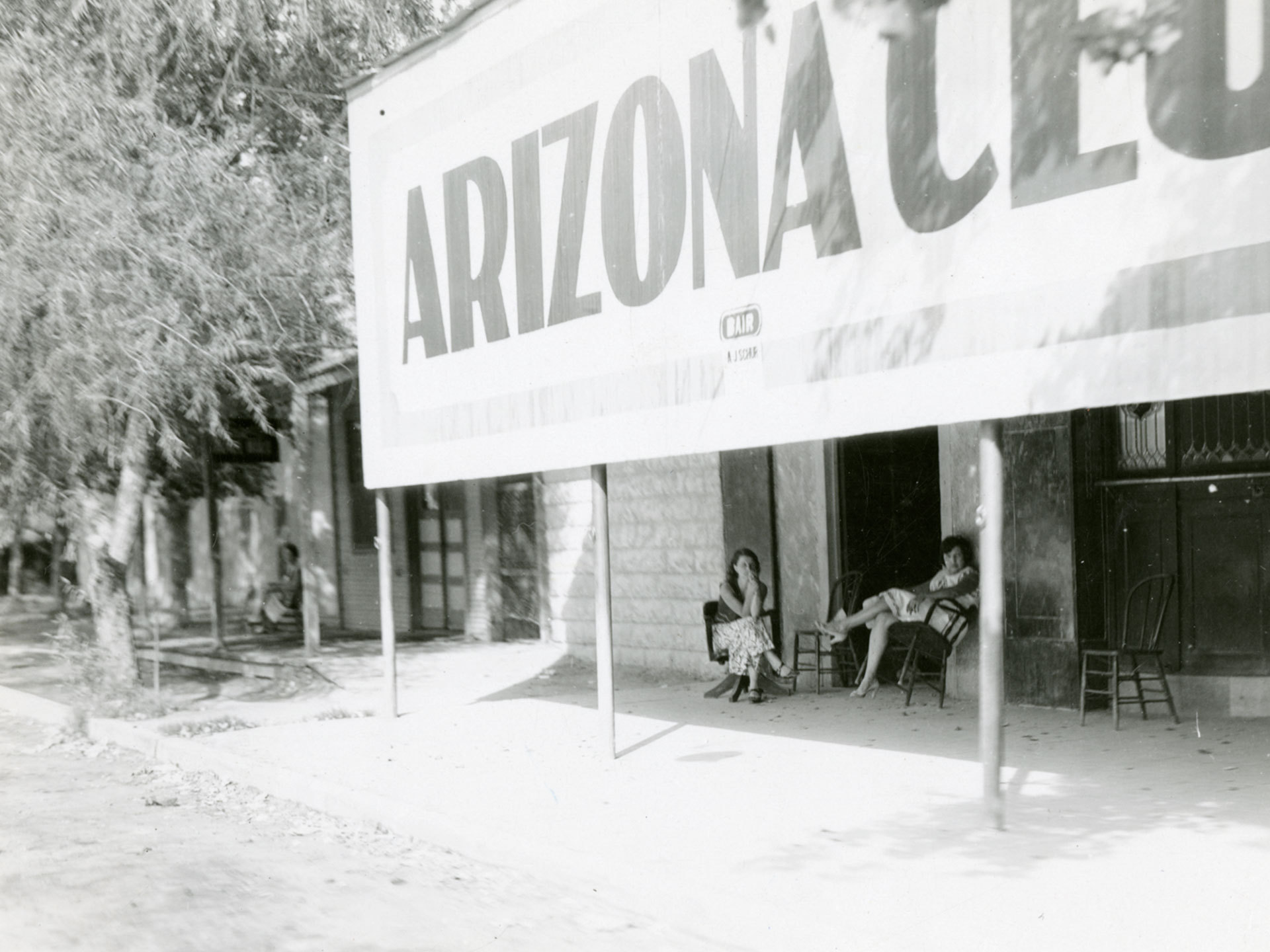
Block 16 is shut down
1942After the U.S. Army established Las Vegas Army Air Field (today's Nellis Air Force Base) the city banned prostitution and revoked licenses in the 'red-light district' on North 1st Street.
Photo: Arizona Club, circa 1940. Wilson Collection. PH-00014. Special Collections & Archives, UNLV.
-
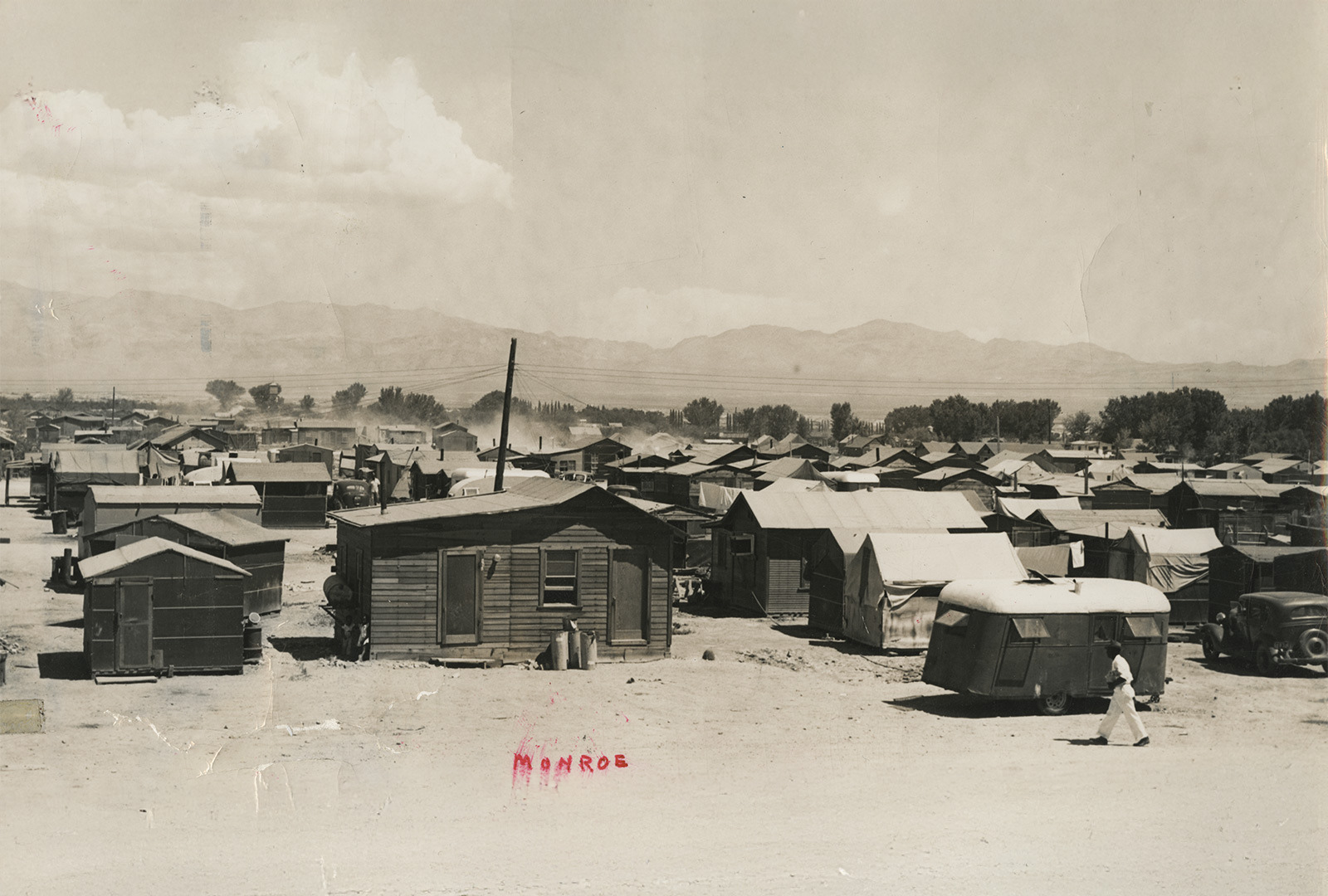
Westside segregation takes hold
1943War projects brought a migration of African Americans to Las Vegas to fill essential jobs. Confined by discriminatory housing practices, most new and existing Black residents were limited to the underdeveloped Westside, solidifying it as a segregated enclave.
Photo: Monroe St, 1943. Norman Collection. PH-00259. Special Collections & Archives, UNLV.
-
Wartime housing
1943To accommodate defense workers and families, FHA-backed subdivisions such as Huntridge, Biltmore Addition, Vega Verde, Mayfair, and Charleston Square expanded the city's housing supply. These neighborhoods introduced tract-style planning that shaped Las Vegas's suburban development in the decades that followed.
Photo: Aerial view over the city of Las Vegas. circa late 1940s.

-
Huntridge Theater
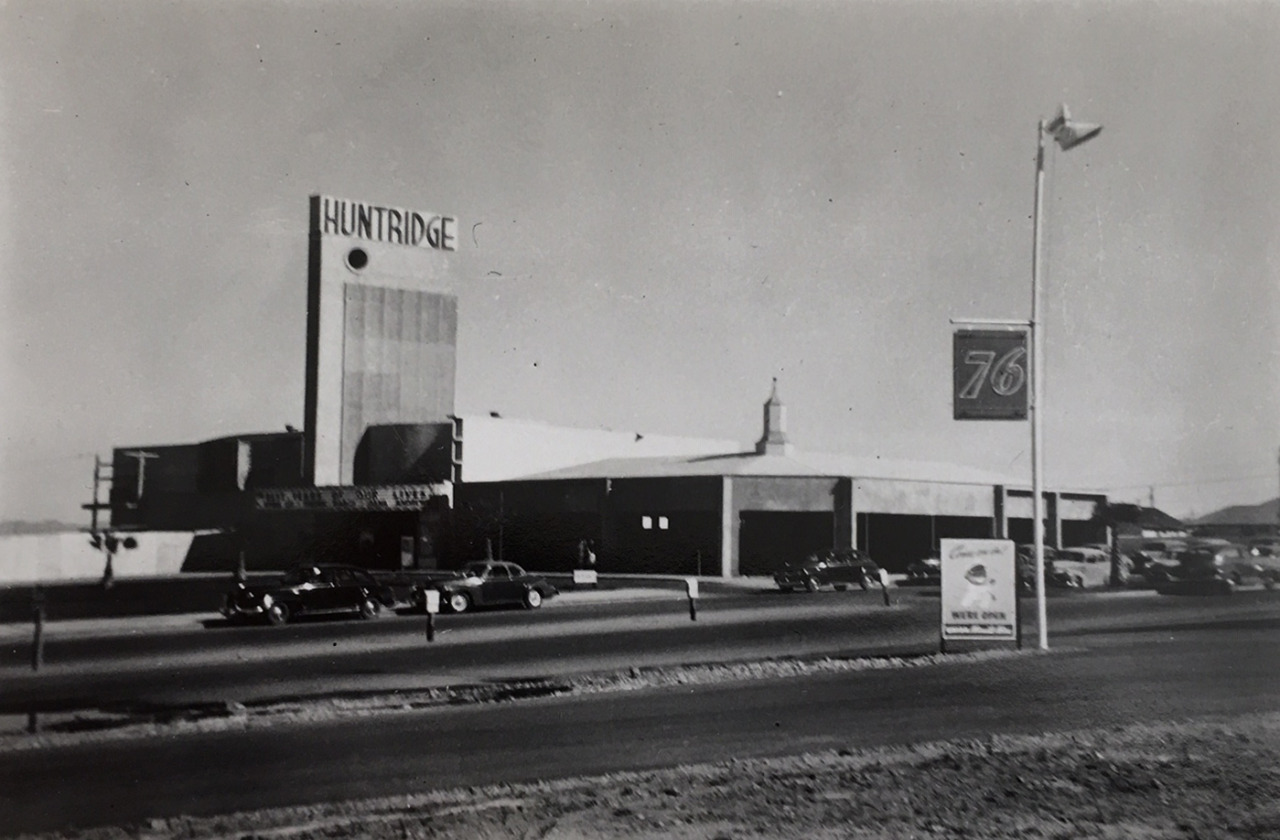
1944The Streamline Moderne-style theater opened October 10. Las Vegas's first suburban movie house served the new Huntridge subdivision during the city's wartime expansion.
View EventPhoto: 1947. Vintage Las Vegas Collection.
-
Selling Las Vegas
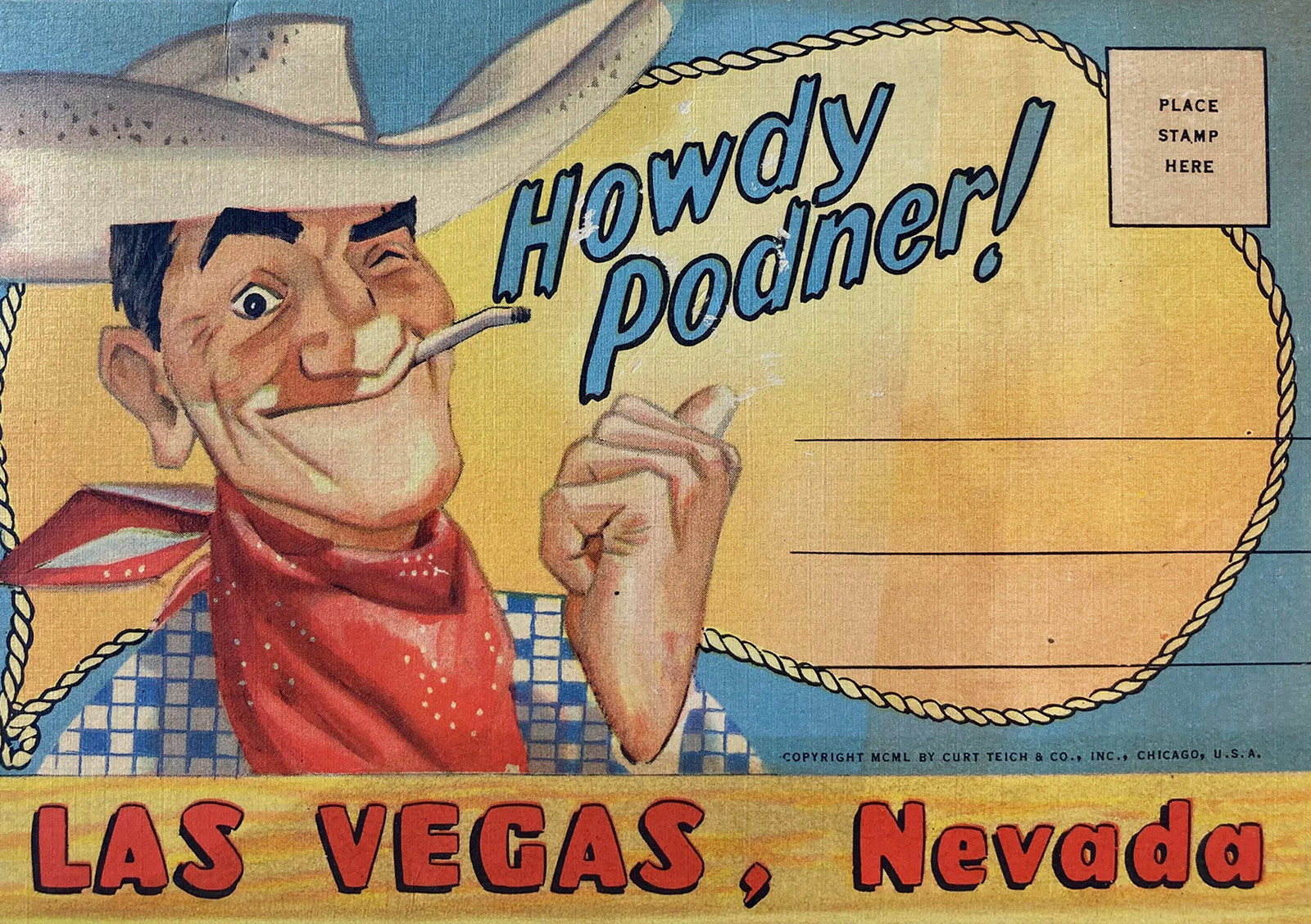
1945Hotel and casino operators financed a national advertising campaign through the "Live Wire Fund," masterminded by Maxwell Kelch of the Las Vegas Chamber of Commerce. The funding model proved successful for years, spawning "Vegas Vic" in 1946 and the Las Vegas News Bureau in 1948.
-
Golden age of neon
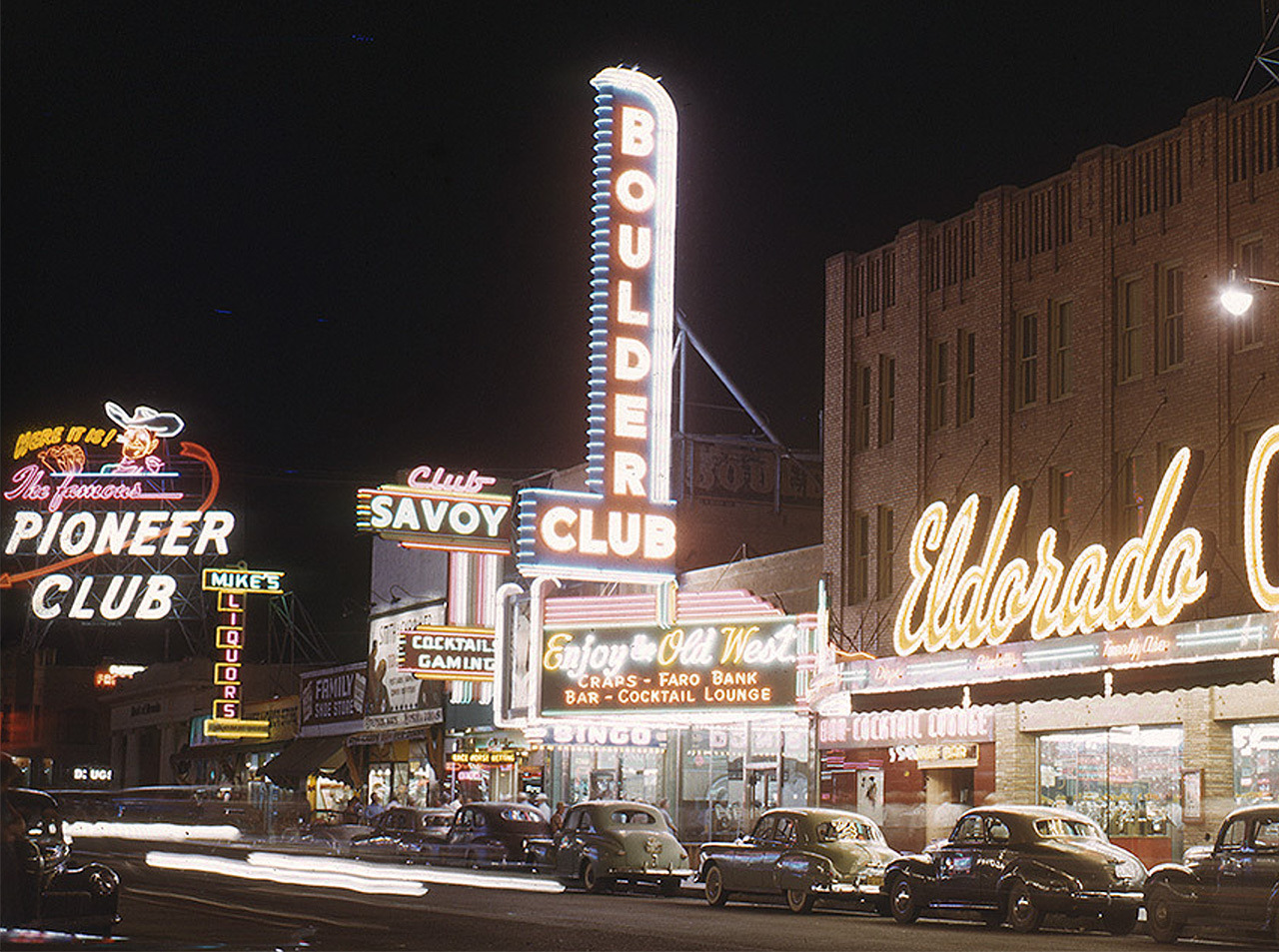
1945The Boulder Club casino on Fremont Street debuted a giant, animated neon marquee sign towering over the building. Created by Young Electric Sign Co. (YESCO), it ushered in the era of "Neon Spectaculars" that would define Fremont Street's image for decades.
Photo: 1949. Vintage Las Vegas Collection.
-
The Mob in Las Vegas
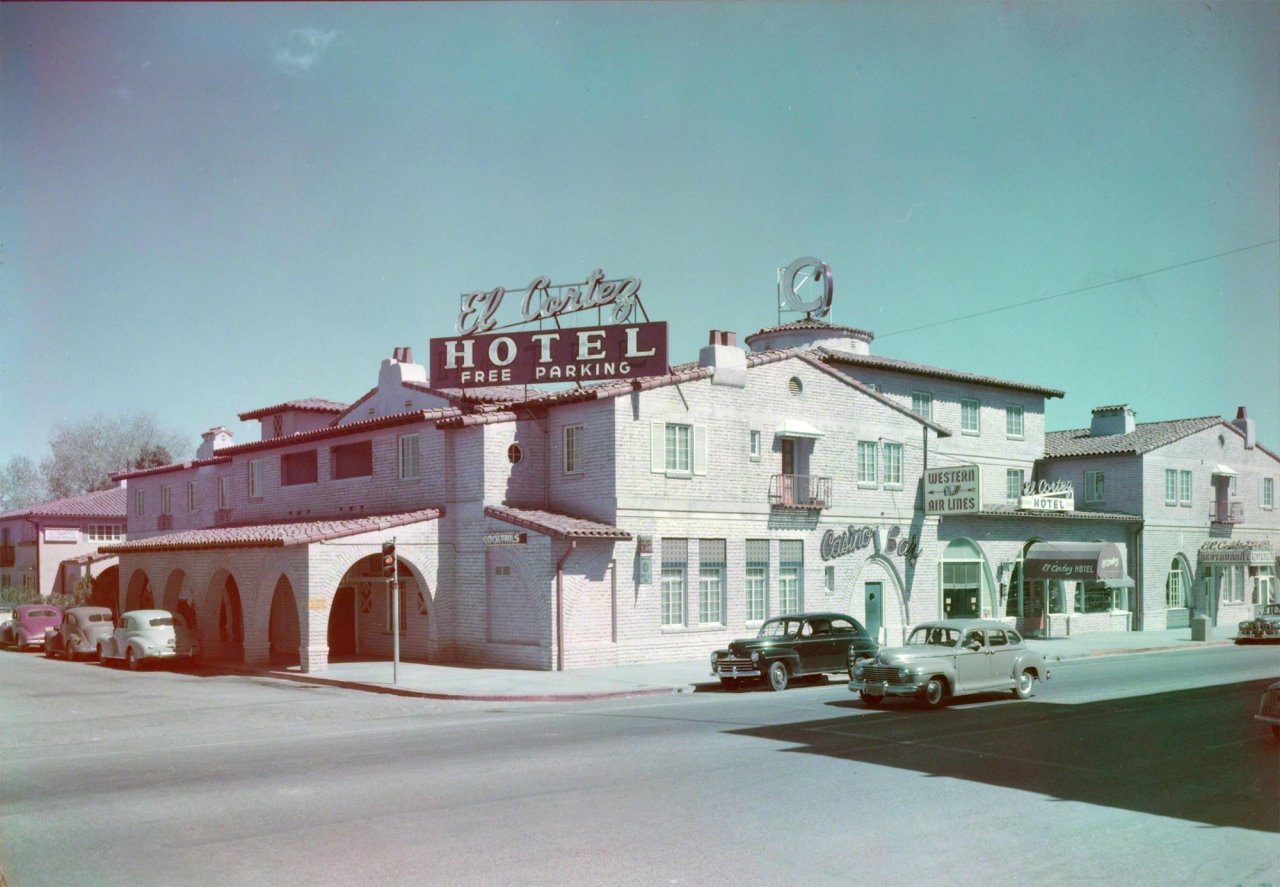
1945A group tied to underworld financier Meyer Lansky purchased the El Cortez, marking the first direct move by East Coast syndicates into hotel-casino ownership in Las Vegas.
Photo: 1940s. Manis Collection. PH-00100. Special Collections & Archives, UNLV.
-
North Las Vegas incorporates
1946First platted by Thomas L. Williams in 1919, the community was named North Las Vegas in 1932, and officially incorporated as a city on May 1, 1946. Population: 2,875.
View Event -
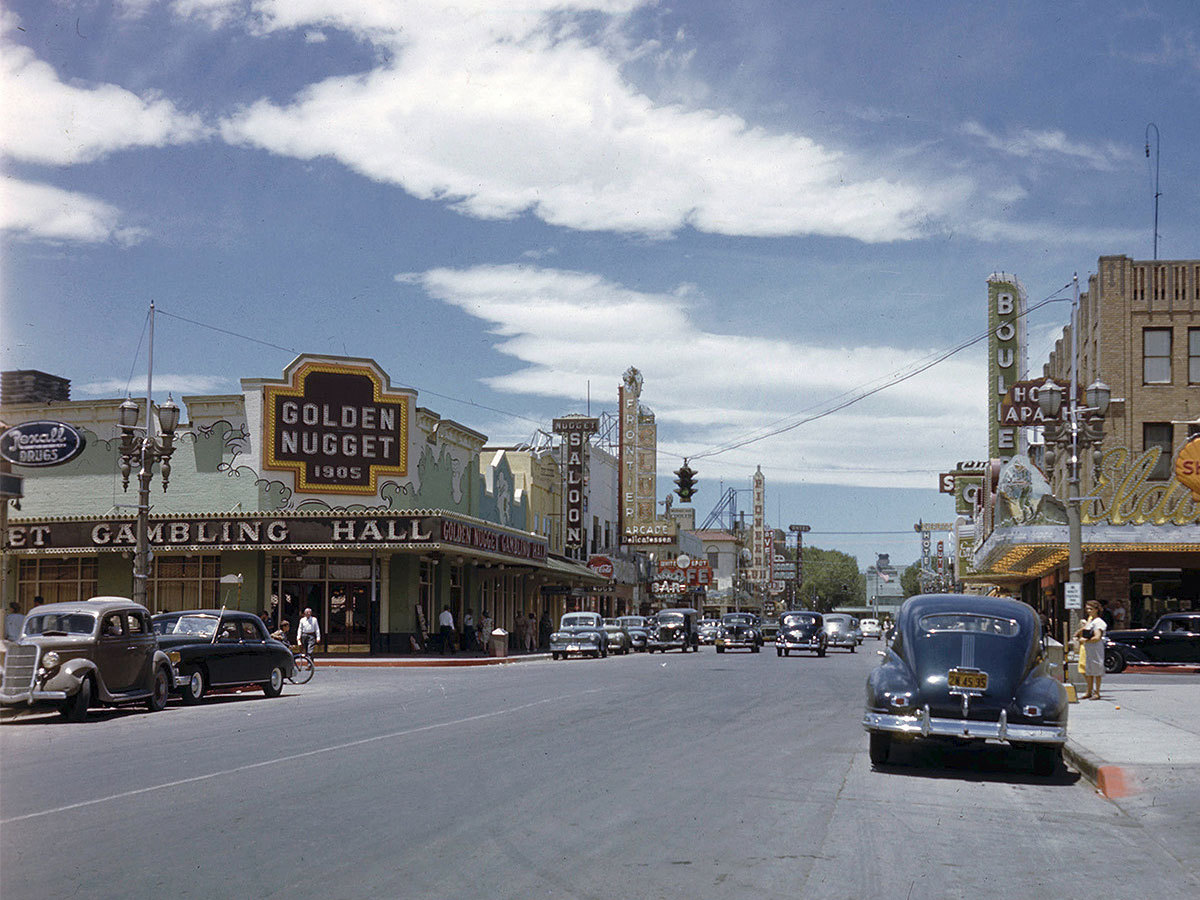
Golden Nugget
1946Founder Guy McAfee unveiled the city's largest, and among the first themed casinos in Las Vegas on August 30, raising the bar for style and branding on Fremont Street.
View EventPhoto: 1946. Manis Collection. PH-00100. Special Collections & Archives, UNLV.
-
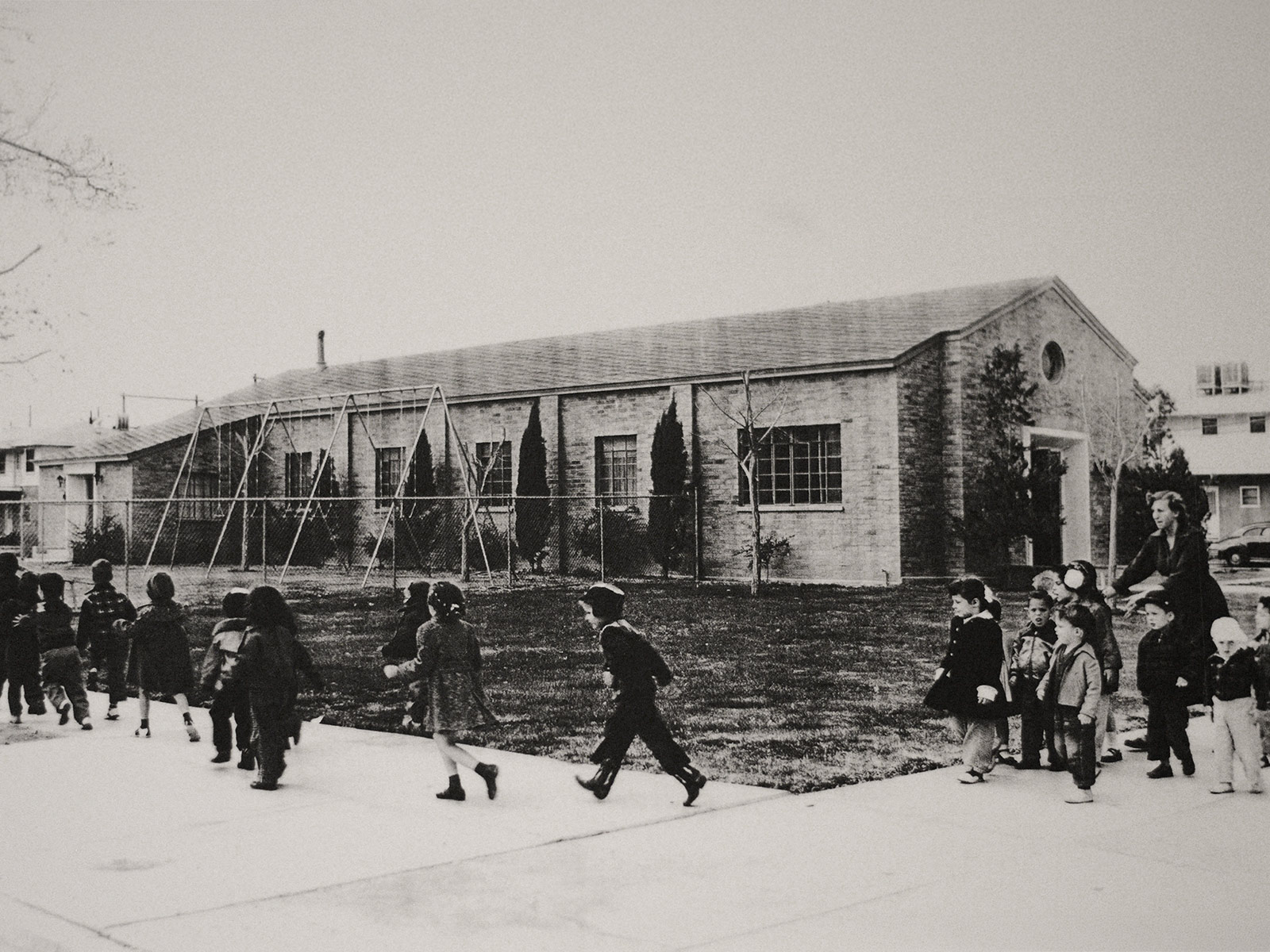
Las Vegas Jewish Community Center
1946After years of informal gatherings, the community center at 1229 Carson Ave became the city's first permanent Jewish institution and served as the hub of organized Jewish life in Southern Nevada. Relocated in 1958, it became Temple Beth Sholom.
Photo: 1229 Carson Ave, circa 1950s. Las Vegas News Bureau.
-
Flamingo
1946Founded by Billy Wilkerson, and completed by Benjamin "Bugsy" Siegel with funding from the mob, Flamingo opens on December 26, introducing modernism to the Las Vegas Strip.
View EventPhoto: sky000624. L. F. Manis Photograph Collection (PH-00100) UNLV Special Collections.

-
McCarran Field
1948Clark County buys Alamo Field south of the city and opens the new McCarran Field (LAS Airport) on December 19. It was renamed McCarran International in the 1970s, and Harry Reid International in the 2020s.
View EventPhoto: McCarran Field on opening day, Dec. 19, 1948, with an air show of military aircraft. Las Vegas News Bureau.

1950-1960
-
Clark County population: 48,289
City of Las Vegas population: 24,6241950City of Las Vegas: The 1950s (documentary) -
The city of Las Vegas vs. Clark County
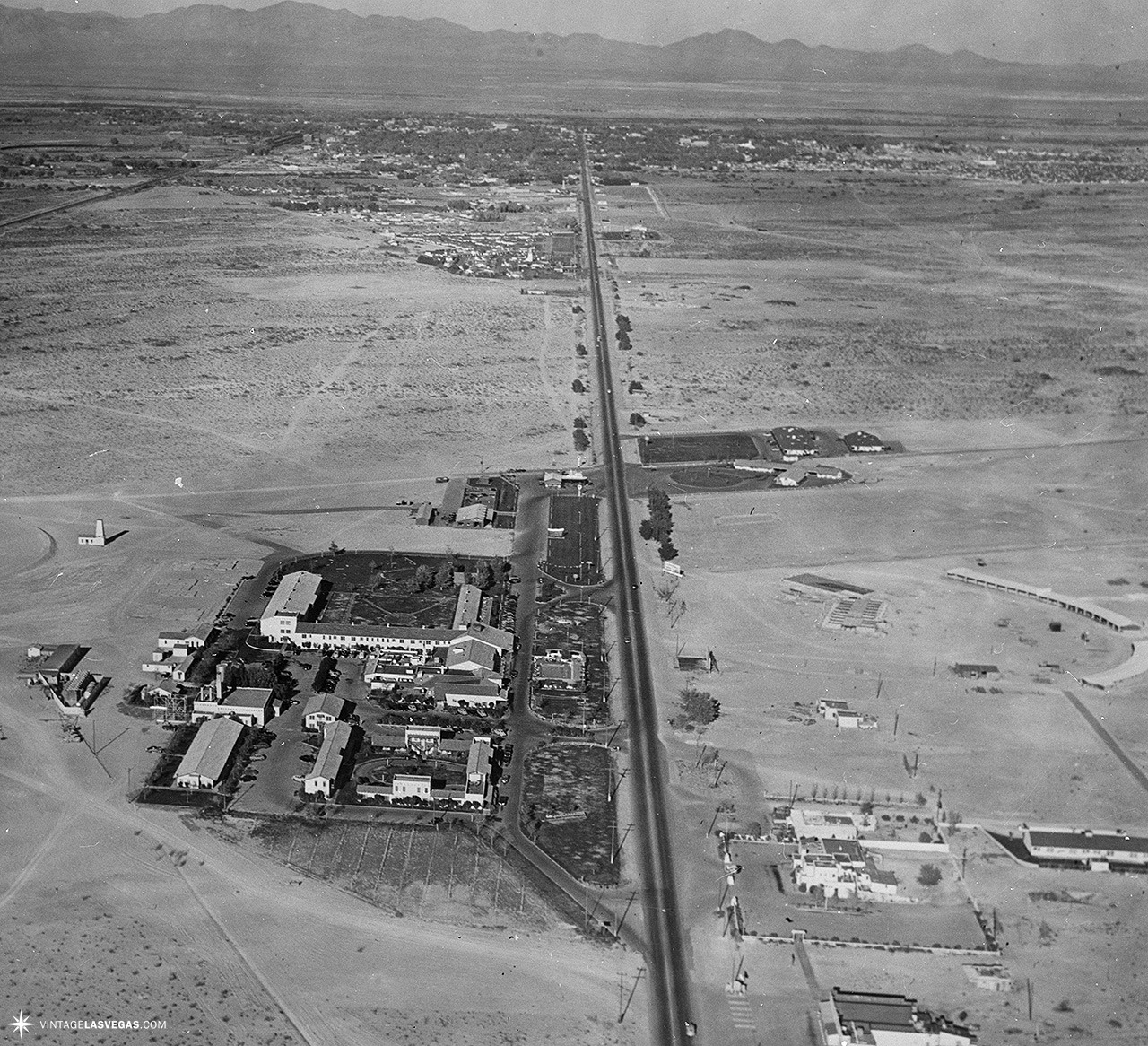
1950The city of Las Vegas attempted to annex the Las Vegas Strip, but casino owners fought back. The Nevada Legislature intervened, keeping the Strip in unincorporated Clark County and setting the stage for a lasting city-county rivalry. County government retained primary authority over land use, taxation, and regulation in the valley’s most economically significant corridor. Clark County adopted the "Las Vegas" name for the Strip and its business and residential areas.
Photo: Las Vegas Strip facing north towards the City of Las Vegas, 1947.
-
Las Vegas Sun
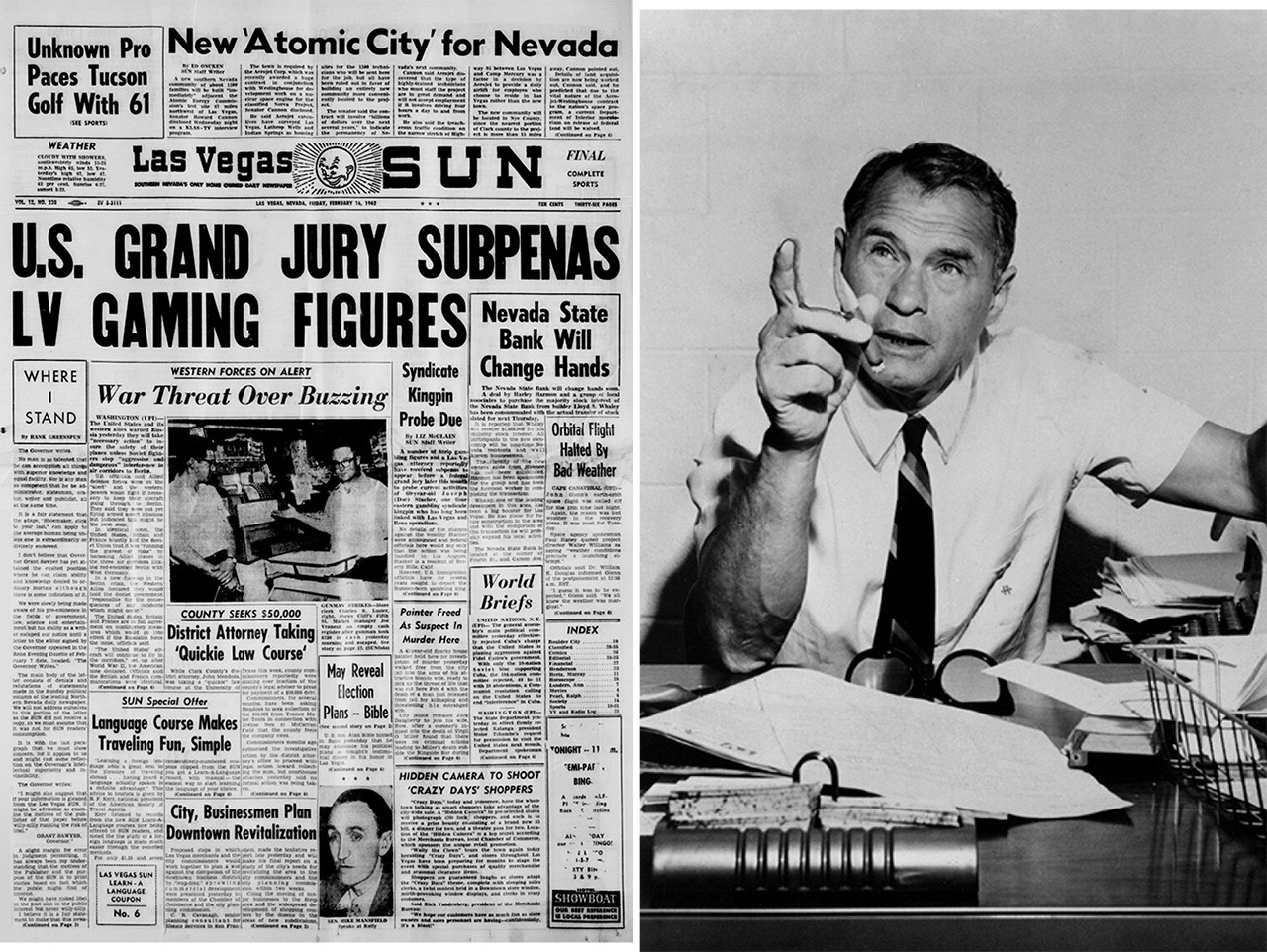
1950Hank Greenspun began publishing the Las Vegas Sun newspaper, taking an editorial stand against corruption, censorship, and political intimidation in Nevada. Its early campaigns during the McCarthy era marked the beginning of Greenspun's long influence on the state's journalism and politics.
-
Kefauver hearings
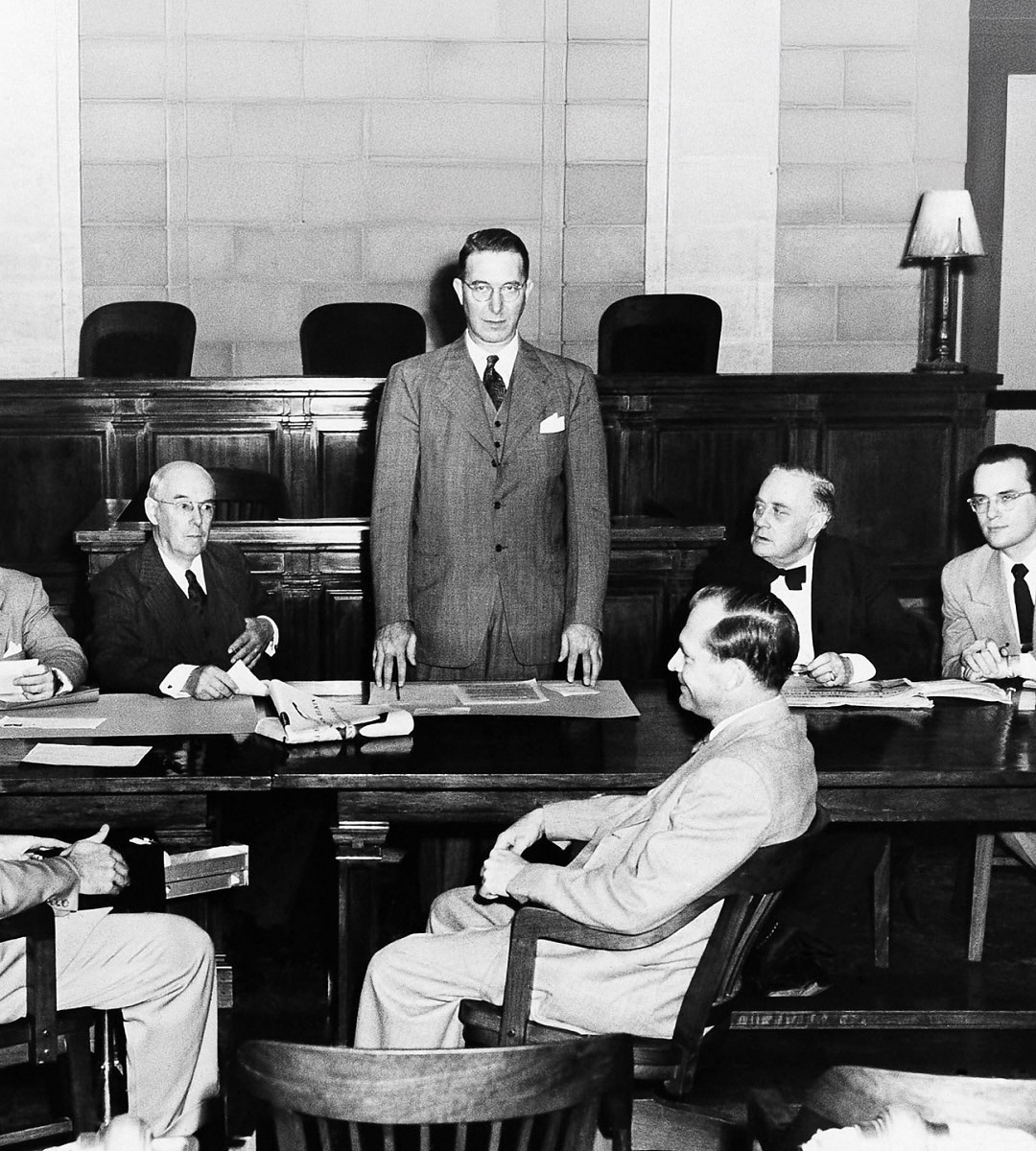
1950The U.S. Senate Special Committee to Investigate Organized Crime in Interstate Commerce, chaired by Estes Kefauver, held hearings at the federal building in Las Vegas. The hearings revealed mob ties in local casinos. Nevada officials used the spotlight to push reforms, while the exposure also fueled Las Vegas's notoriety and tourist appeal.
View Event (themobmuseum.org)Photo: Senator Kefauver (standing) in the federal courtroom in Las Vegas, Nov. 15, 1950. Themobmuseum.org
-
Atomic testing begins
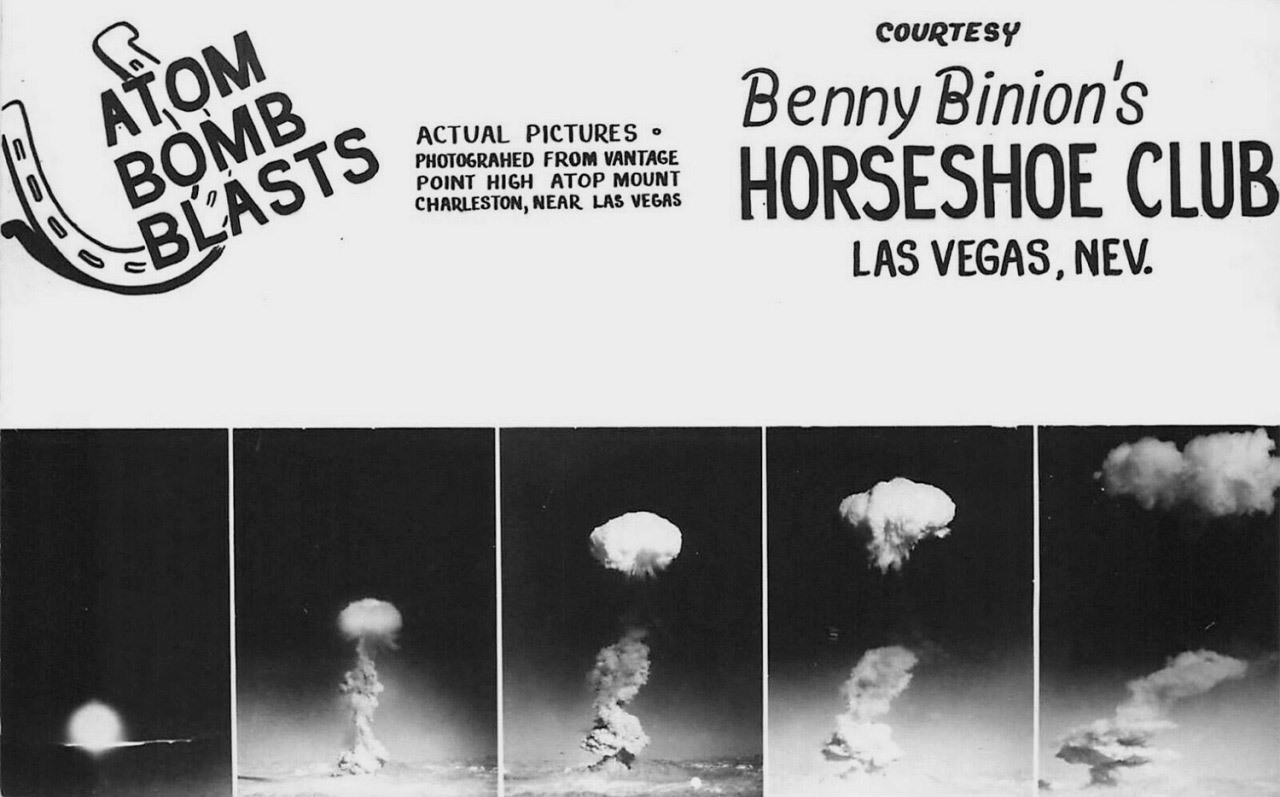
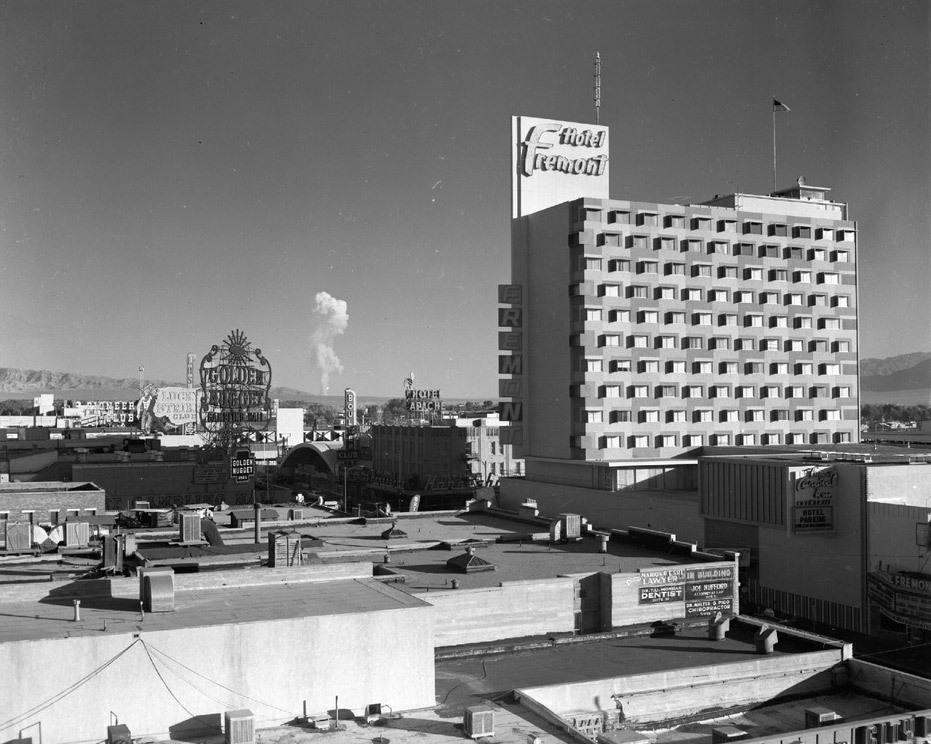
1951The first nuclear test was conducted at the Nevada Test Site on January 27. Between 1951 and 1962, one hundred above-ground tests were conducted, with atomic mushroom clouds occasionally visible in Las Vegas. The tests drew national attention to the city, and the test site employed thousands of Las Vegas residents.
Photo: Postcard, 1951.
-
Henderson incorporated
1953Henderson incorporated as a city in 1953, formalizing the valley's major postwar growth center outside the City of Las Vegas.
-
KLAS Television Station
1953On July 22, KLAS-TV Channel 8 began broadcasting as Nevada's first television station. It introduced network programming and local news to the valley for the first time, expanding Las Vegas's reach as a modern regional media center.
Photo: Detail of the mural "100th Birthday" (2005) by Mark Melnick. KLAS-TV, Channel 8 Drive, Las Vegas.

-
Las Vegas Valley Water District
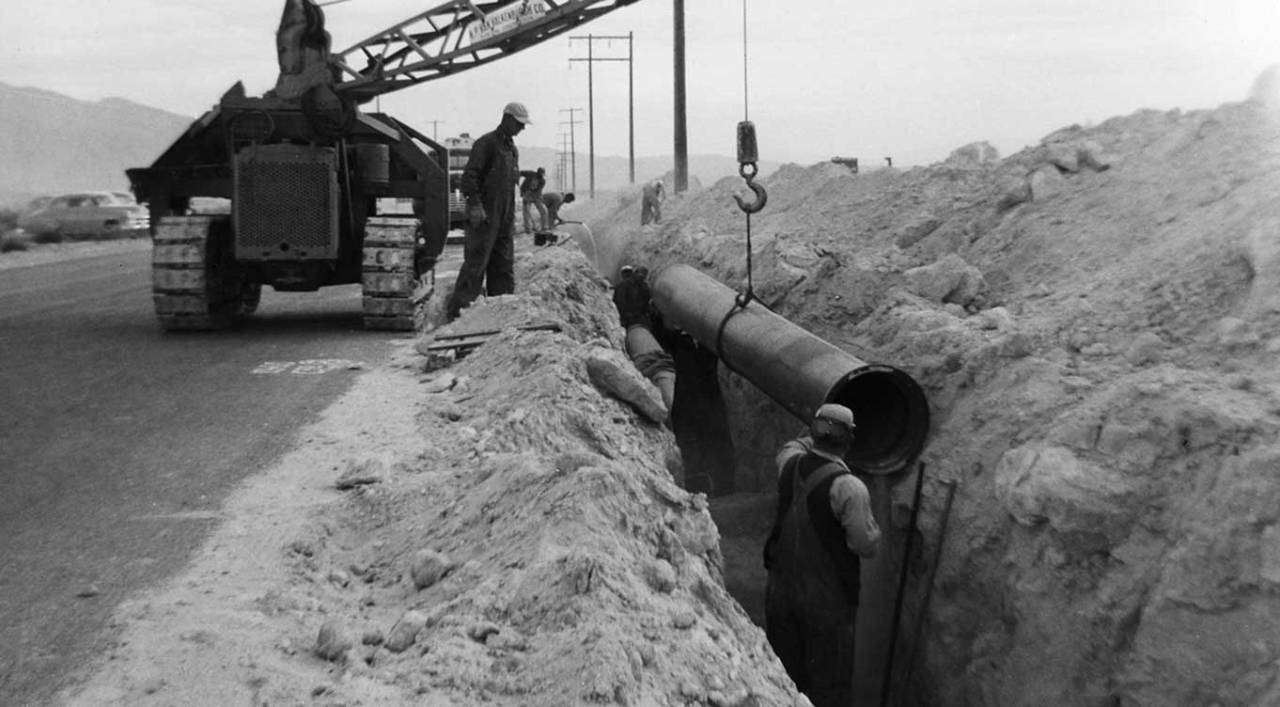
1954Facing overuse of the valley's groundwater, LVVWD was established to take control of the water system from Union Pacific's Las Vegas Land & Water Co. Construction of the LVVWD pipeline soon followed, linking the city to Lake Mead's water for the first time.
View EventPhoto: Construction of LVVWD Pipeline, 1954.
-
Moulin Rouge
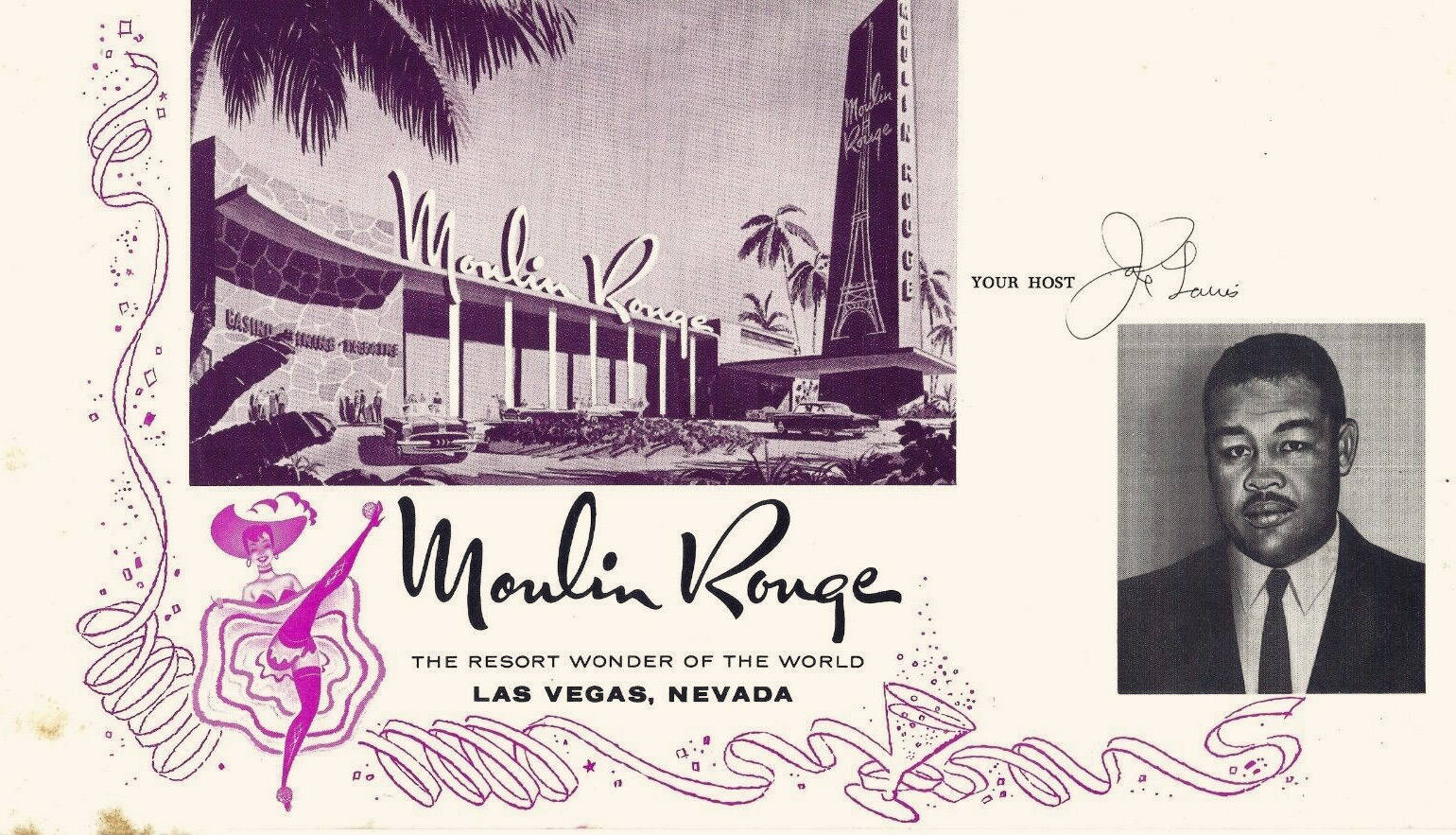
1955Opened May 24, Moulin Rouge was the first racially integrated hotel-casino in Las Vegas and in the nation. The resort closed within the year, but remains a milestone in the city's civil rights history.
View EventPhoto: Postcard, 1955.
-
Clark County Fair and Recreation Board created, precursor to LVCVA
1955Clark County established the Fair and Recreation Board, which evolved into today’s Las Vegas Convention & Visitors Authority. The county enacted its first room tax in 1957 to fund the board and build the Las Vegas Convention Center.
Photo: Construction of Las Vegas Convention Center, July 8, 1958. Las Vegas News Bureau.

-
Fremont Hotel
1956Designed to rival the top resorts of the Strip, the Fremont opened May 18 as the tallest building in Las Vegas and the state. In the 1960s, FBI wiretaps of president Ed Levinson's office uncovered casino skimming and concealed organized-crime involvement.
View EventPhoto: Fremont Hotel with an atomic cloud following a detonation at Nevada Test Site, Jun. 24, 1957. Las Vegas News Bureau.
-
Clark County School District
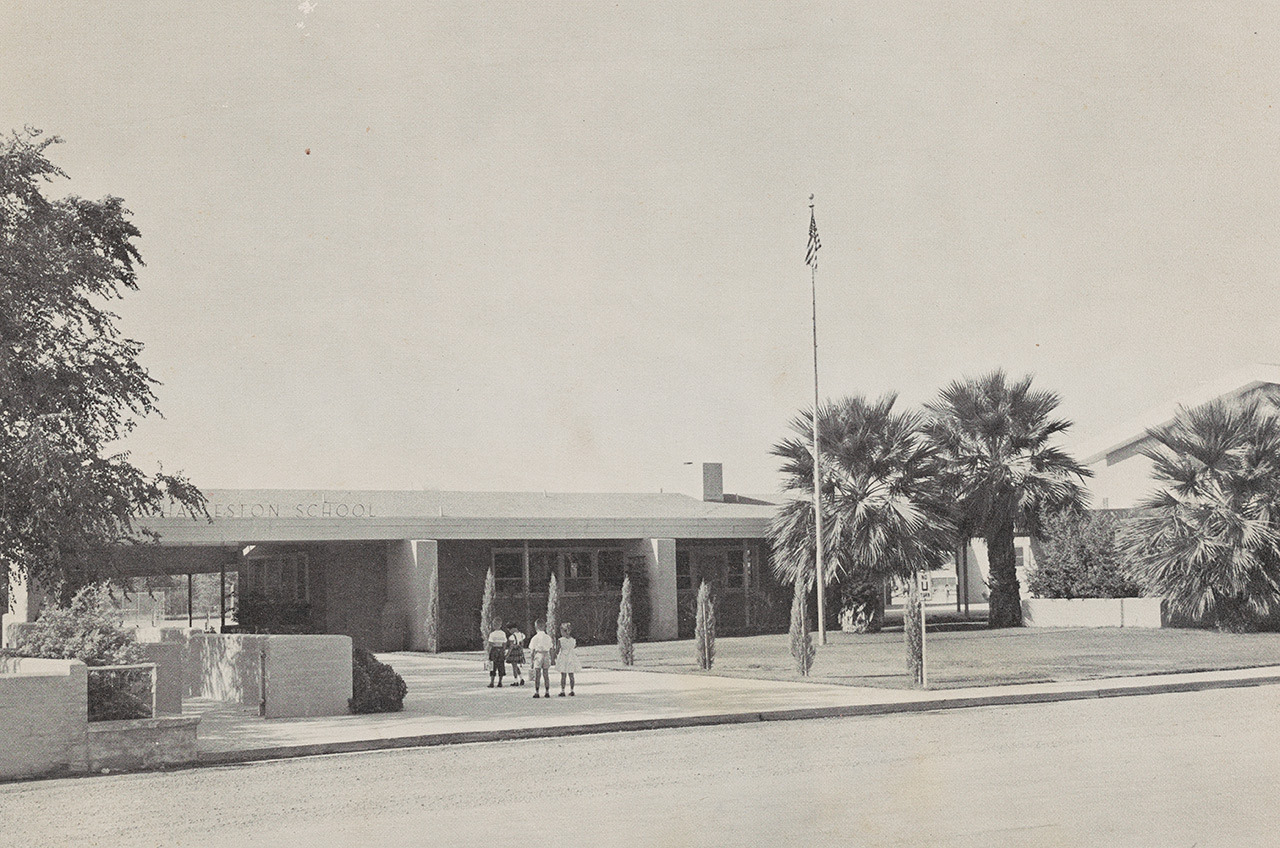
1956On September 16, Nevada's public school reorganization consolidated the schools of Las Vegas into the newly created CCSD. Beginning with fewer than 14,000 students, the district would expand rapidly, becoming one of the largest in the United States by the 21st century.
Photo: West Charleston School, 1950s. Perri Collection. PH-00181. Special Collections & Archives, UNLV.
-
University of Nevada, Las Vegas founded
1957Southern Nevada’s first public institution of higher education was established in 1957 as Southern Division of the University of Nevada. Renamed the University of Nevada, Las Vegas in 1969, UNLV grew into a major research university and one of the valley’s largest employers, shaping the region’s workforce, cultural life, and long-term civic development.
Photo: 1959. University of Nevada, Las Vegas Photograph Collection (PH-00062), UNLV Special Collections & Archives.

-
Las Vegas Convention Center
1959The Las Vegas Convention Center opened in April 1959, marking the valley's commitment to large-scale convention business as a year-round economic driver.
View EventPhoto: Las Vegas News Bureau.

-
Welcome to Fabulous Las Vegas, Nevada sign
1959The “Welcome” sign is installed circa May, built by Western Electric Displays in Las Vegas, and designed by Betty Willis.
View EventPhoto: Vintage Las Vegas collection.

-
Oran K. Gragson elected mayor
1959A political outsider, Gragson won office on a reform platform. Elected to four terms (16 years), he became the city's longest-serving mayor.
Photo: Mayor Gragson (center) at an NAACP meeting, Las Vegas, 1963. Brookman Photographs. PH-00303. Special Collections & Archives, UNLV.

1960-1970
-
Clark County population: 127,016
City of Las Vegas population: 64,4051960Boulder City incorporates January 4.
City of Las Vegas: The 1960s (documentary) -
Moulin Rouge Agreement
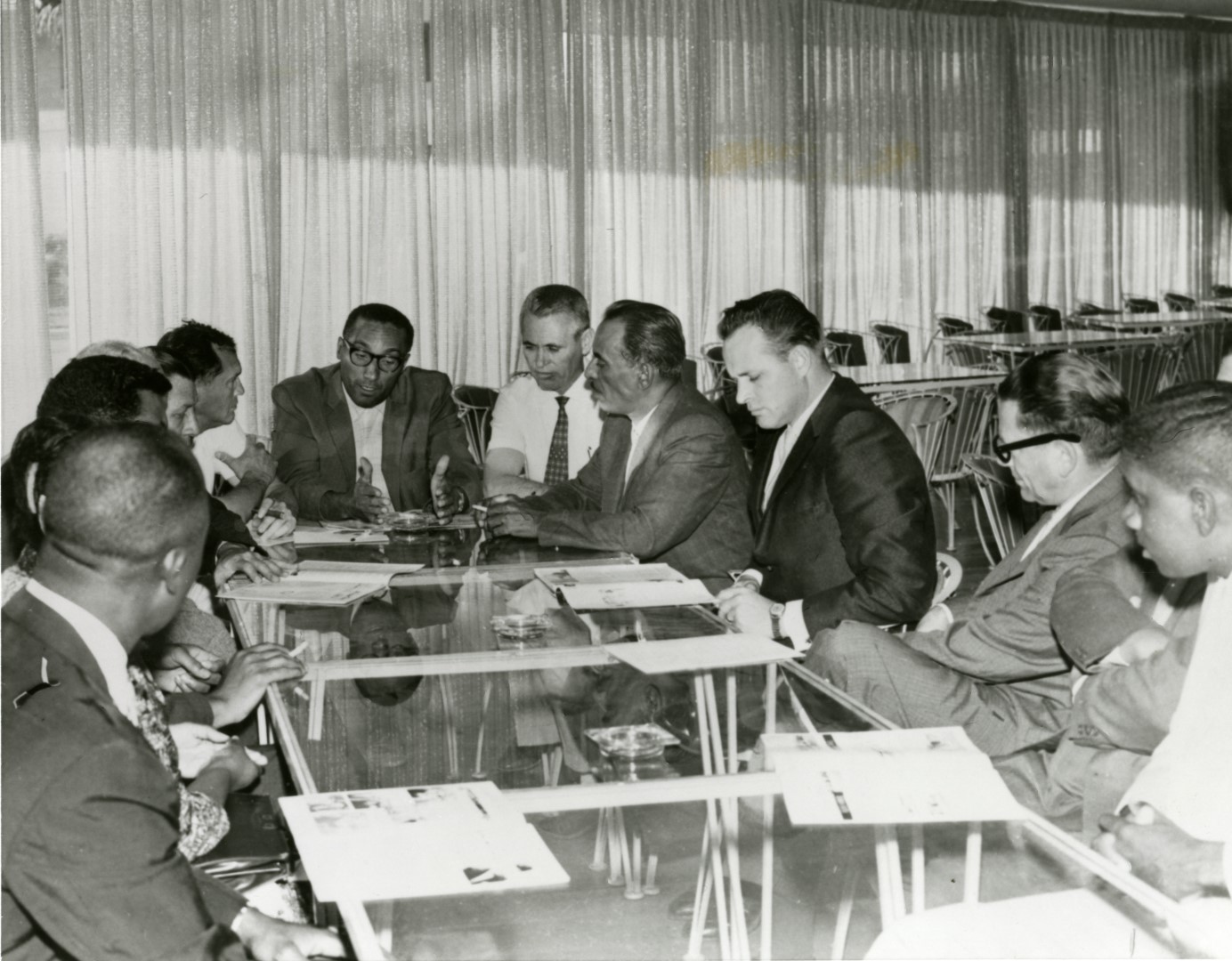
1960On March 26, NAACP leaders led by Dr. James B. McMillan met with state and local officials at the Moulin Rouge, reaching an oral settlement to end discrimination in hiring and patronage on the Strip and downtown. The Moulin Rouge Agreement marked a turning point in civil rights in Las Vegas.
Photo: Meeting at Moulin Rouge Hotel Coffee Shop, Mar. 26, 1960. McMillan Collection. PH-00334. Special Collections & Archives, UNLV.
-
Tule Springs Park
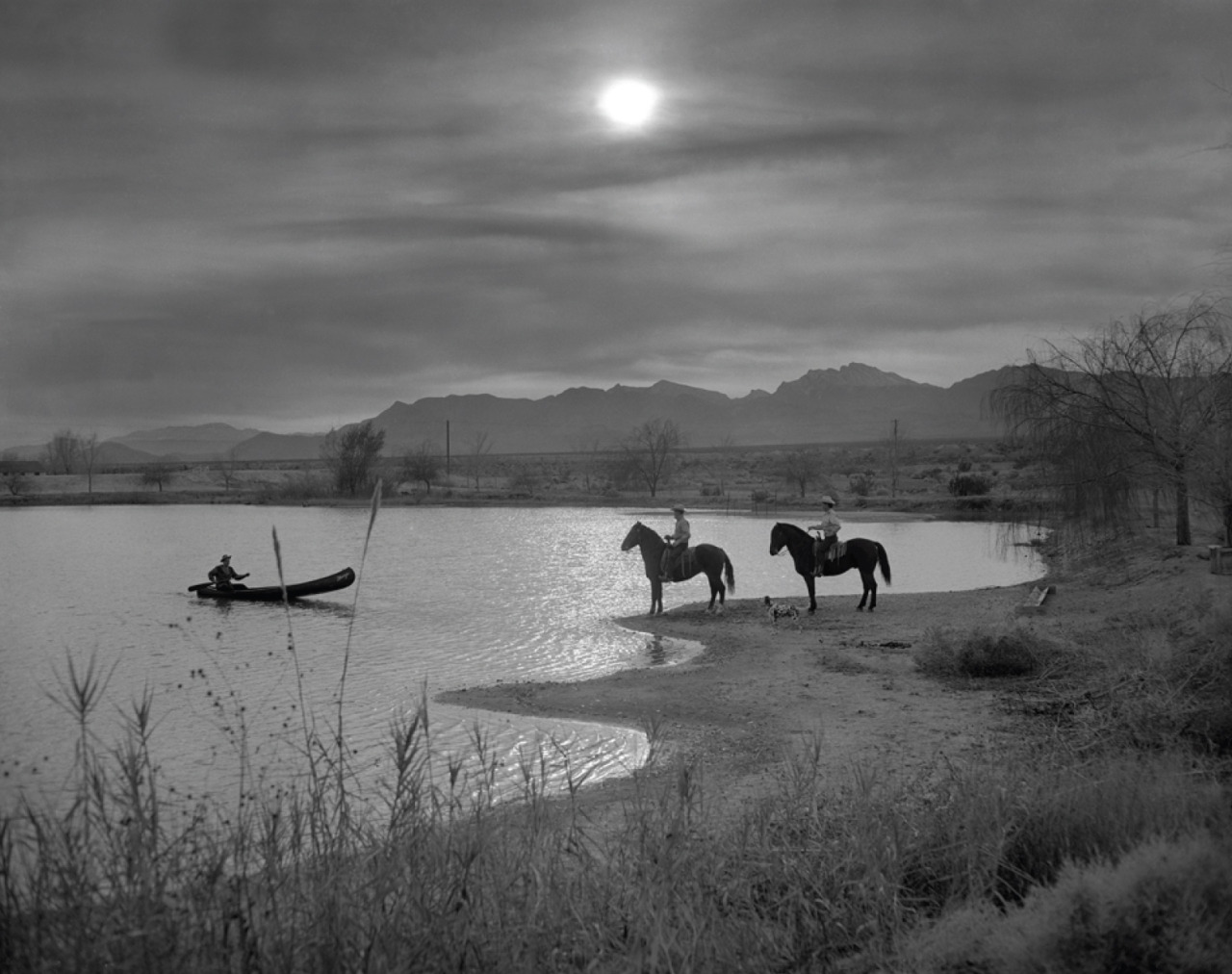
1964The city purchased the 680-acre Tule Springs Ranch for its groundwater resources and to preserve its natural springs, ponds, and historic ranch site for recreation. The area is now called Floyd Lamb Park at Tule Springs.
View EventPhoto: Tule Springs Ranch, 1952. Las Vegas News Bureau.
-
Culinary Workers Union strike
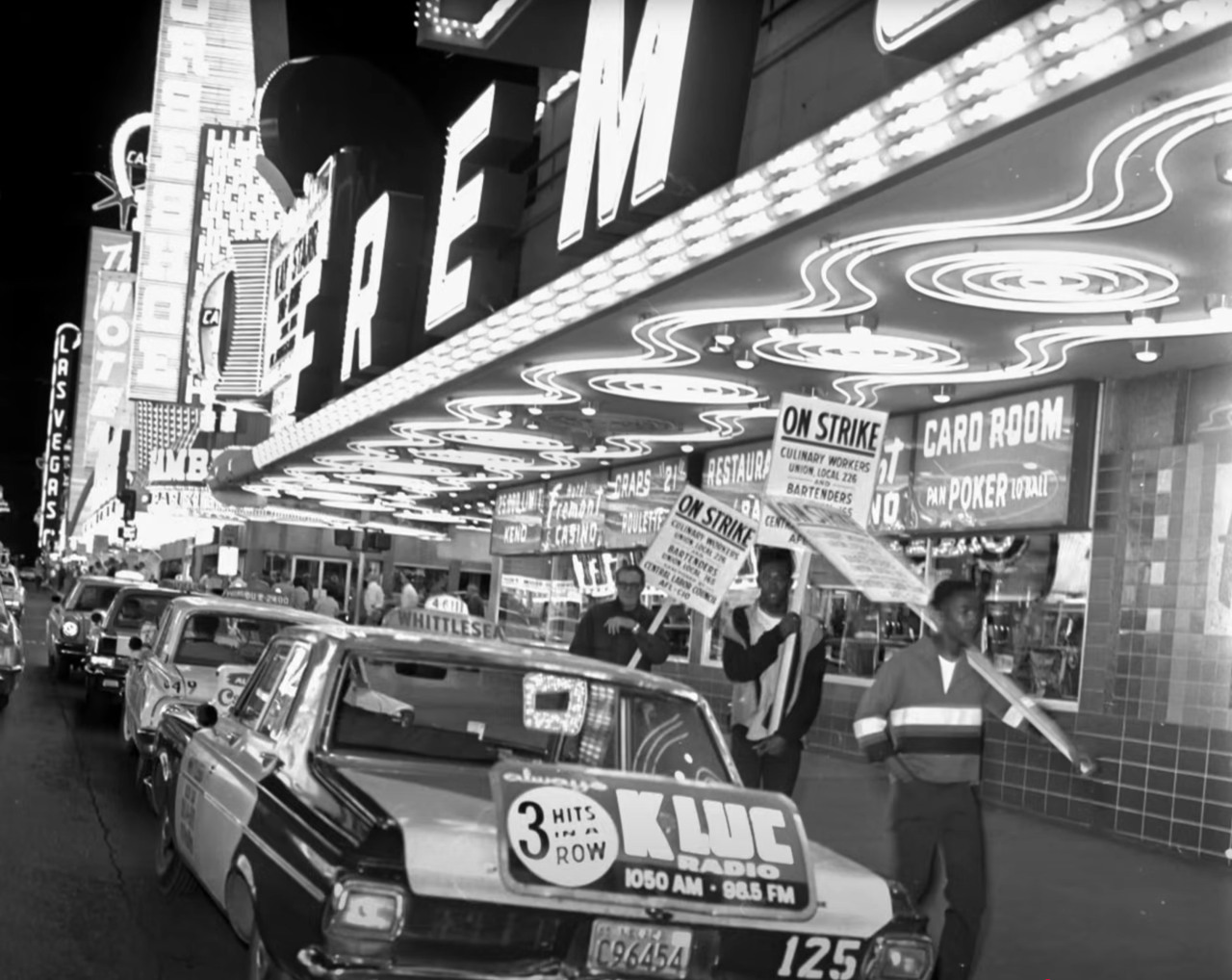
1967On April 18, about 2,000 members of Culinary Workers Union Local 226 walked out against 12 downtown hotel-casinos, launching a six-day strike. Chartered in Las Vegas in 1935, the union expanded dramatically under Secretary-Treasurer Al Bramlet in the 1950s-1970s, becoming the dominant force in Nevada's hospitality labor.
Photo: Workers picket in front of Fremont Hotel, Apr. 1967.
-
Highways reshape the city
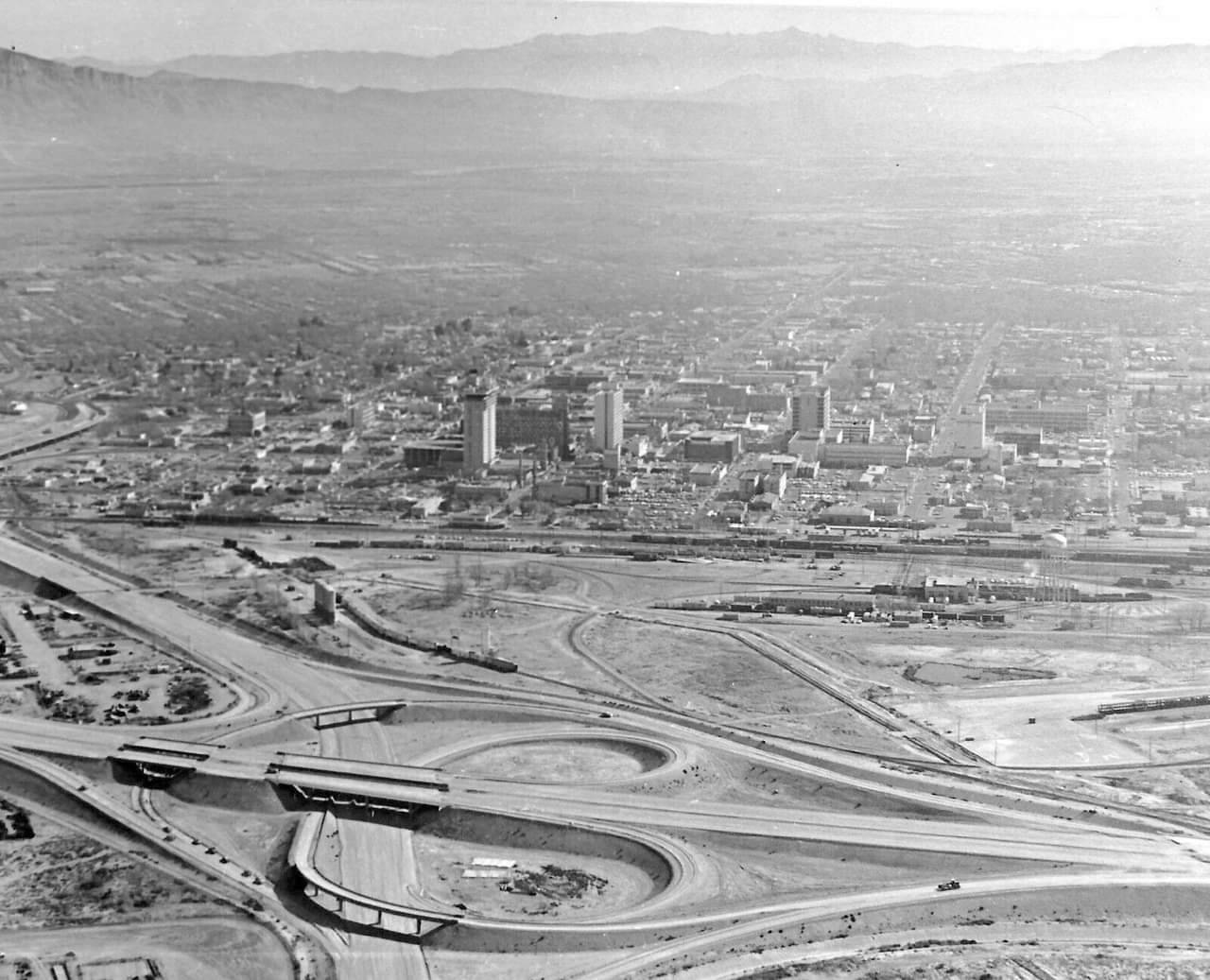
1969Construction of Interstate 15 and the Downtown Expressway transformed the city's layout. The full network through downtown opened in the early 1970s.
Photo: Construction of the downtown interchange, circa 1969.
1970-1980
-
Clark County population: 273,288
City of Las Vegas population: 125,7871970City of Las Vegas: The 1970s (documentary) -
World Series of Poker
1970Benny Binion launches the World Series of Poker at the Horseshoe Club in April. Binion's Horseshoe hosts the annual competitive event until 2005.
-
Las Vegas Paiute Tribe sovereignty
1970After adopting a formal constitution, the tribe gained federal recognition as a sovereign tribal nation. The Las Vegas Paiutes, part of the Nuwuvi (Southern Paiute) people with deep ancestral ties to the valley, had maintained a community at the downtown Paiute Colony since 1911.
Photo: Creative Services Records. PH-00388. Special Collections & Archives, UNLV.

-
Southern Nevada Water Project
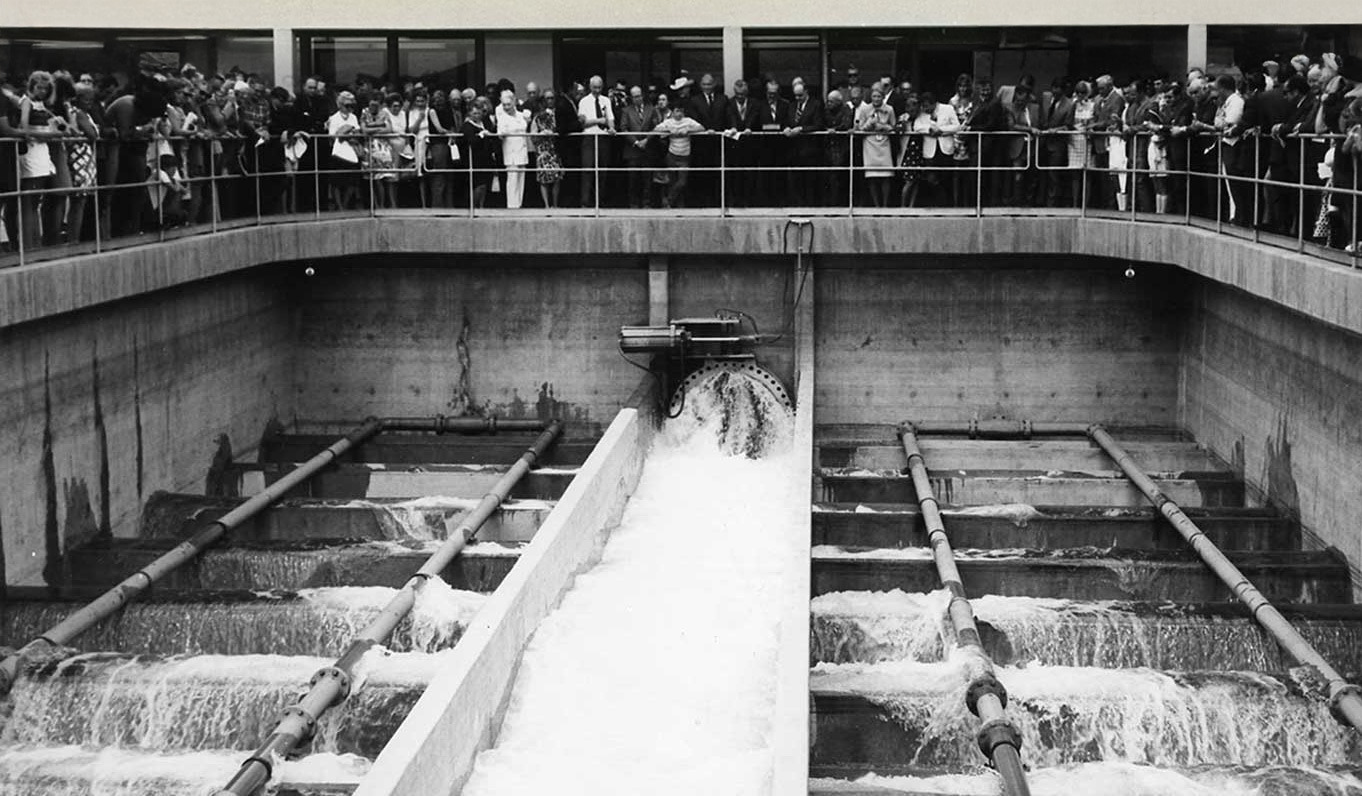
1971Years in the making, a direct pipeline from Lake Mead to Las Vegas opened in 1971, securing the city's water supply. Later renamed the R.B. Griffith Water Project, its Stage II was completed in 1983, expanding capacity to nearly 300,000 ac-ft. Since the 1990s the project has been managed by Southern Nevada Water Authority.
Photo: Alfred Merritt Smith Water Treatment Facility, 1971. Bureau of Reclamation.
-
Westside Activists Protest on the Strip
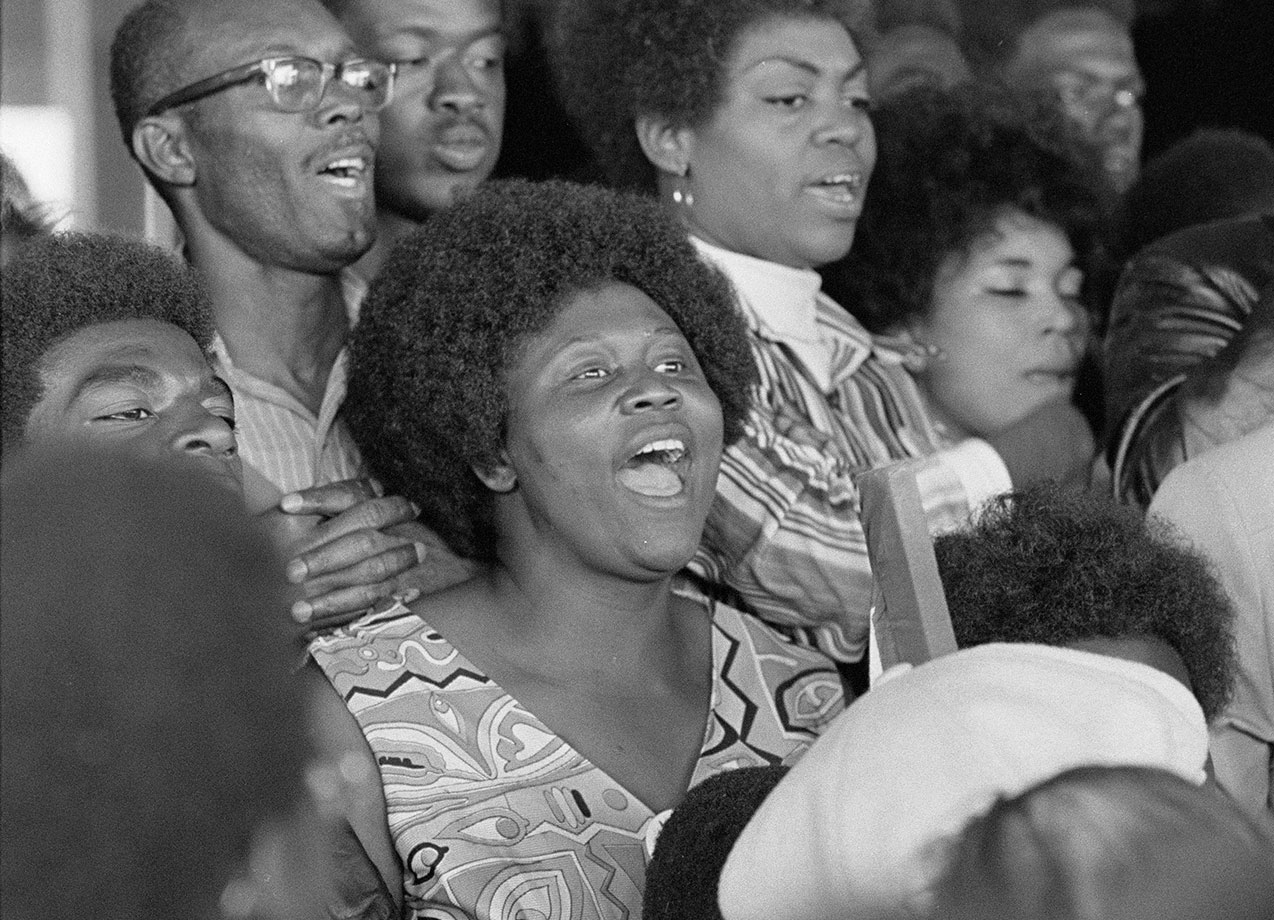
1971Activists led by Ruby Duncan protest on the Las Vegas Strip, demanding fair public assistance policies and exposing the gap between Strip wealth and Westside poverty. Duncan later founds Operation Life, bringing the Historic Westside a health clinic, employment and housing services, and spearheading its first public library.
Photo: Hank deLespinasse Photographs. PH-00454. Special Collections & Archives, UNLV.
-
Mormon Fort recognized
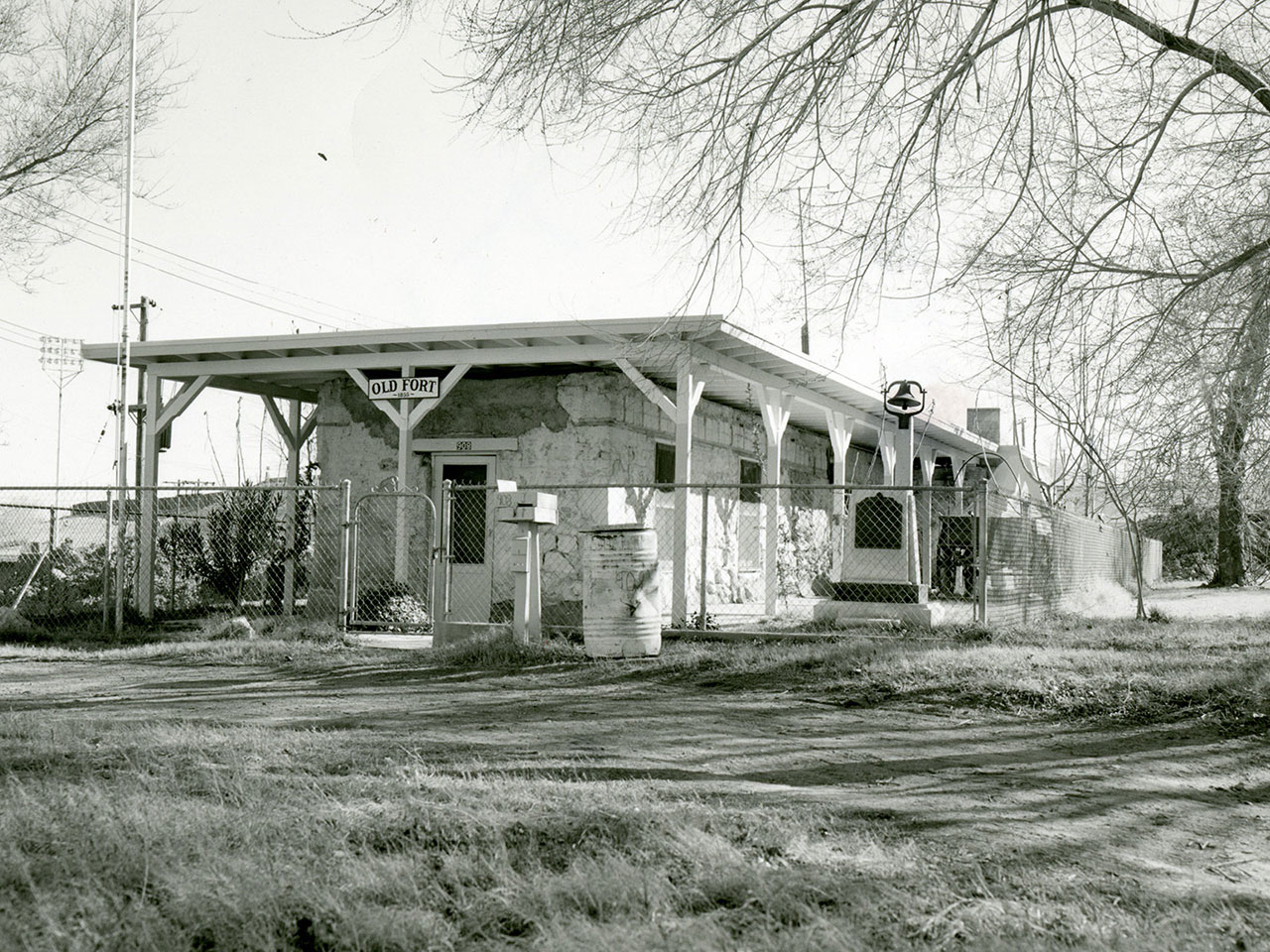
1972The remains of the 1855 Mormon Fort, the first permanent settlement in Las Vegas, were listed on the National Register of Historic Places. The site was acquired by the city in 1989, and gained lasting protection in 1991 when it became Old Las Vegas Mormon Fort State Historic Park.
Photo: Mormon Fort, 1980. Preservation Association Collection. PH-00060. Special Collections & Archives, UNLV.
-
Las Vegas Metropolitan Police Department formed
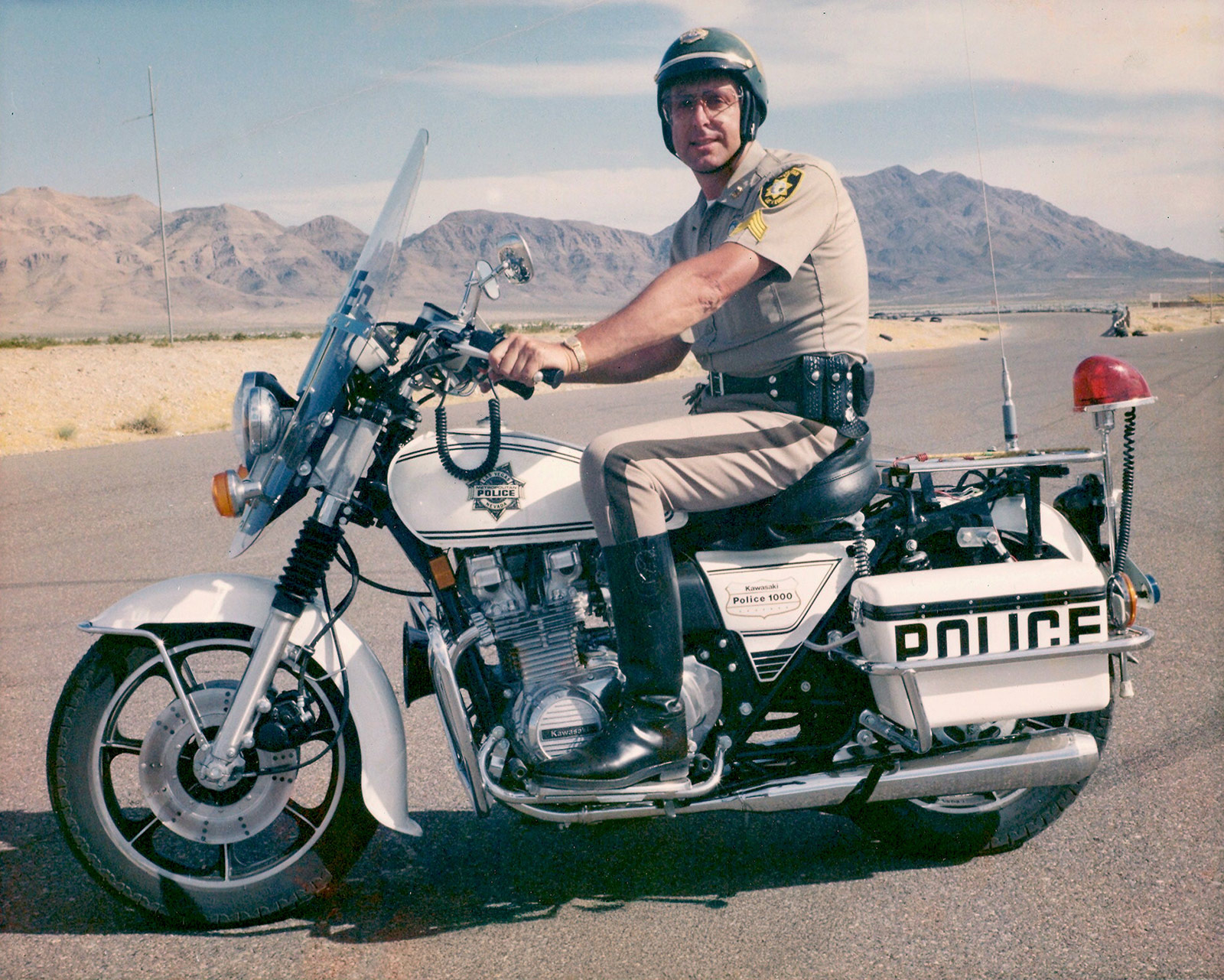
1973On July 1, the City of Las Vegas Police and Clark County Sheriff's forces merged into a unified agency. The new LVMPD set up headquarters in Las Vegas City Hall, which had been dedicated on June 15.
Photo: Sgt. Stanley Cooper at Craig Road Speedway, 1979. Policemotorunits.com
-
Sam's Town
1979Boyd Gaming opened Sam's Town on Boulder Highway on April 1, 1979. Built for the valley's growing resident population, it helped establish the locals casino market and the Boulder Strip.
View Event

1980-1990
-
Clark County population: 463,087
City of Las Vegas population: 164,6741980City of Las Vegas: The 1980s (documentary)MGM Grand Fire
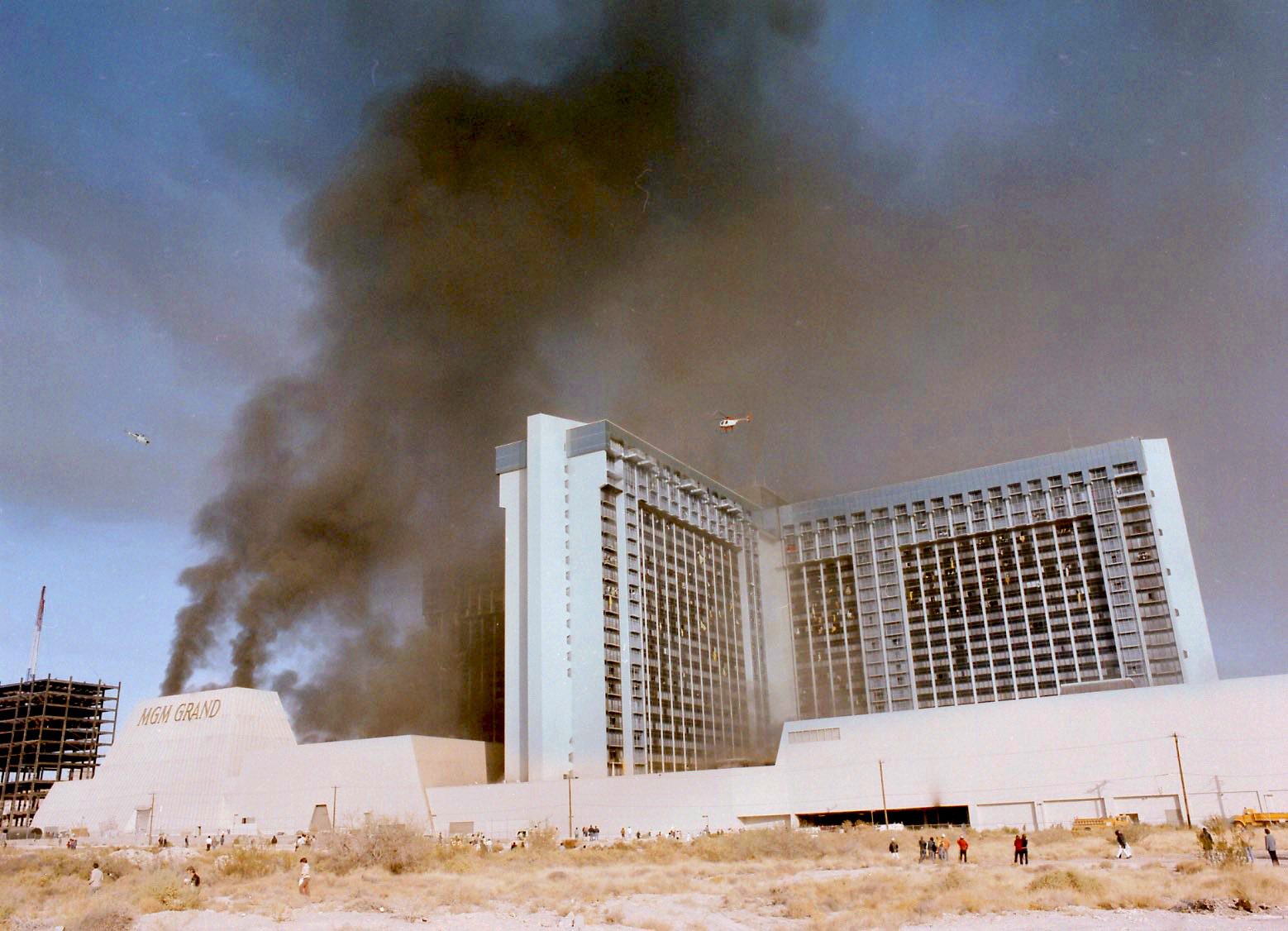
1980Fire struck the MGM Grand Hotel on November 21. Eighty-five people died in the disaster. The tragedy prompted major changes in building codes, fire-safety systems, and public-safety policy across Nevada and nationwide.
Photo by Dee Ennis.
El Mundo marks the rise of Spanish-language media in Las Vegas
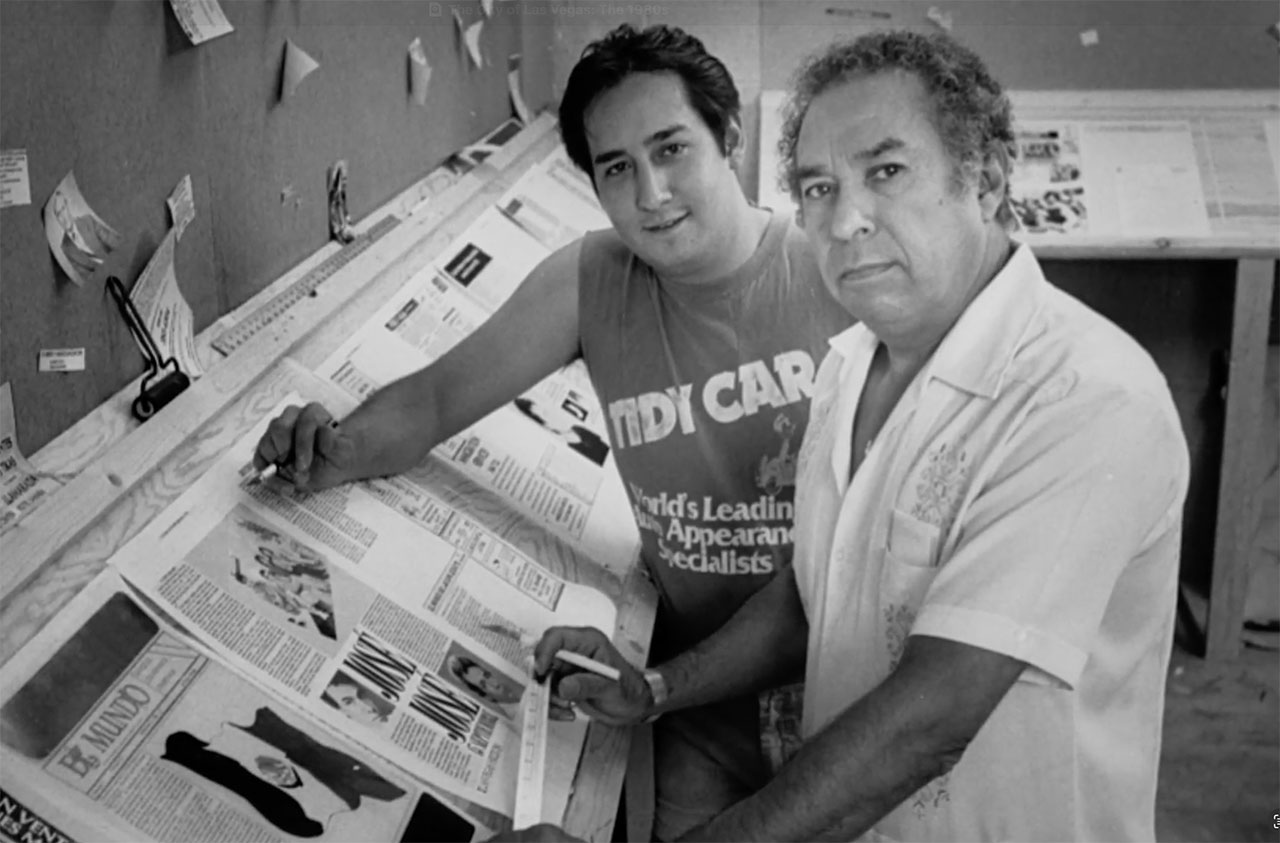
1980Eddie Escobedo Sr. and Eddie Escobedo Jr. founded El Mundo, a Spanish-language weekly newspaper in Las Vegas. The paper became an important local voice and reflected the rapid growth of the valley’s Hispanic population during the late twentieth century.
Scott Henry Photographs. PH-00442. Special Collections & Archives, UNLV.
Nevada State Museum
1982The museum opened in Lorenzi Park, showcasing Nevada's natural history, archaeology, and cultural heritage. Since 2011 it has been located on the Springs Preserve campus.
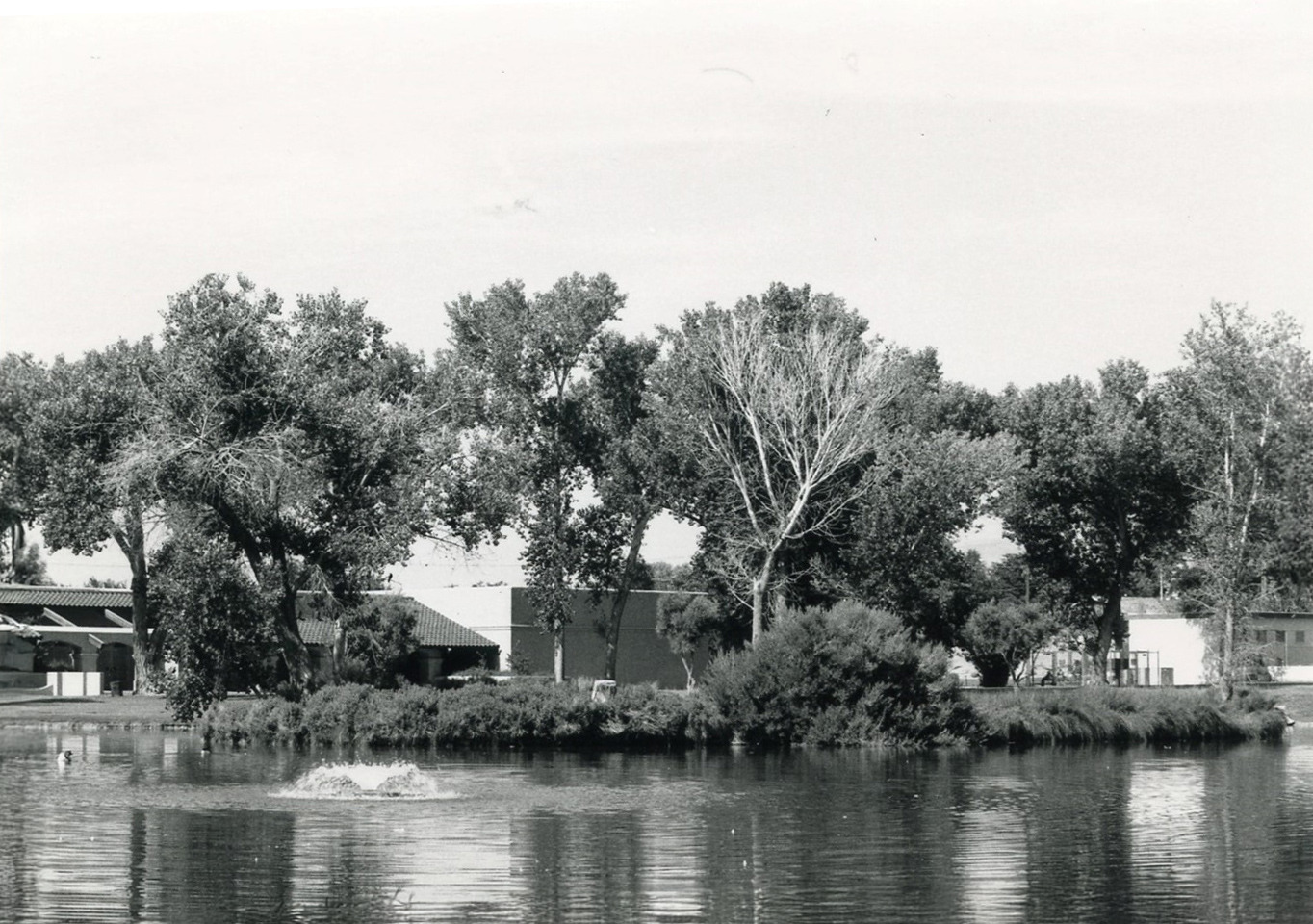
Photo: The Museum at Lorenzi Park, 1980s. Nevada State Museum, Las Vegas.
Flooding and flood response
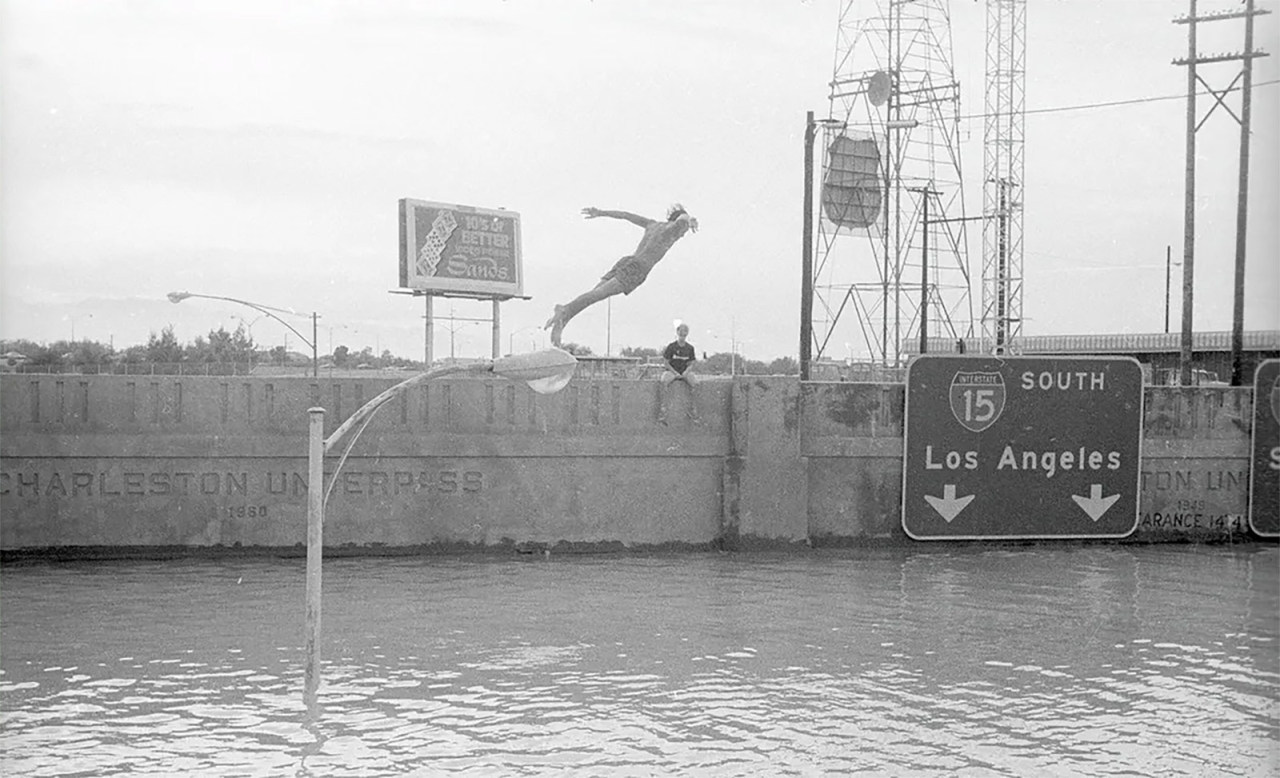
1984Major floods in 1983 and 1984 inundated Las Vegas streets and neighborhoods. In response, the Clark County Regional Flood Control District was created in 1985 to coordinate flood prevention and drainage projects across the valley, including within the city of Las Vegas.
Photo: Flooding at Charleston Underpass, 1984. Bill Rogers.
Union Pacific yard closure
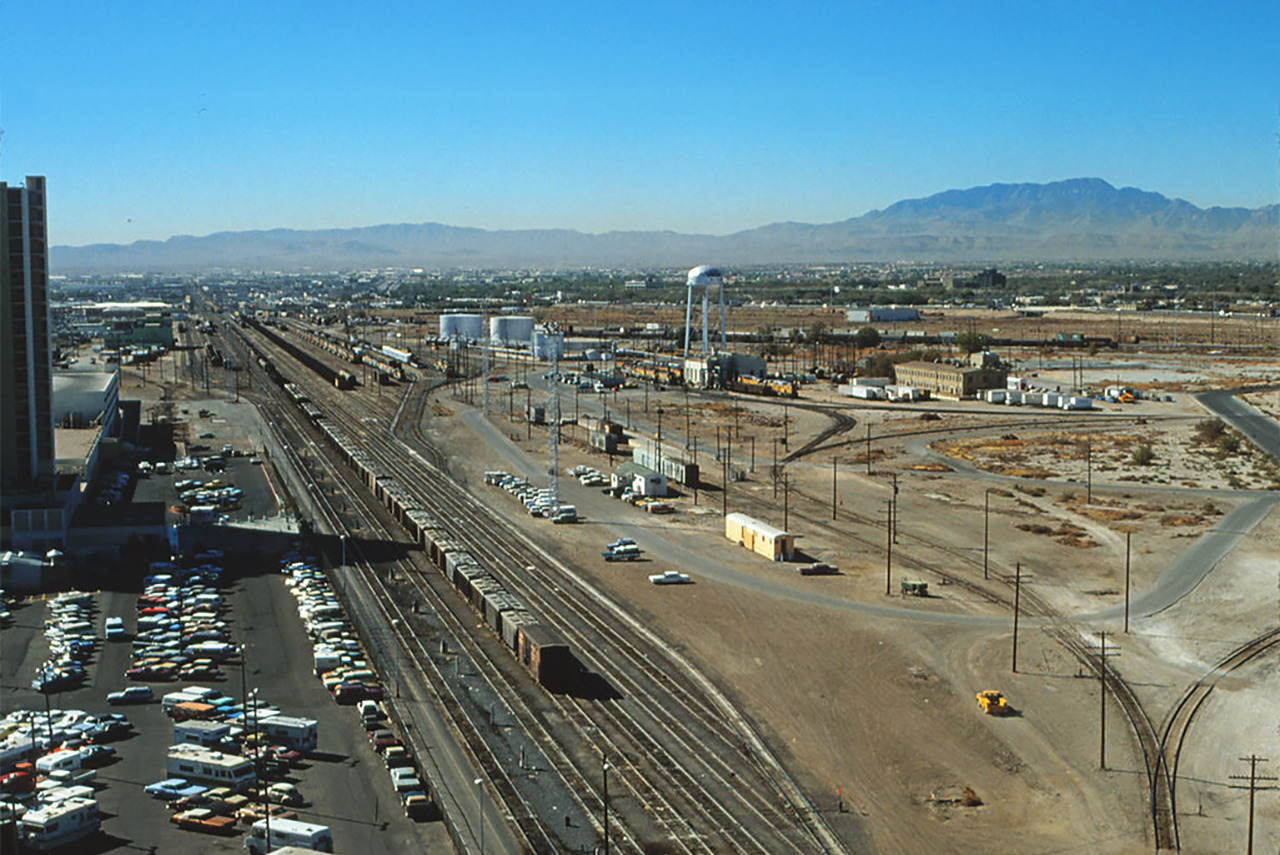
1988Plans to close and vacate UP's downtown rail yard adjacent to the original townsite were finalized, ending more than eight decades of operations. Amtrak, meanwhile, continued passenger service until 1997.
Photo: UP Railroad Yard. Nov. 5, 1980, by Harv Kahn. PH-00456. Special Collections & Archives, UNLV.
1990-2005
-
Clark County population: 741,459
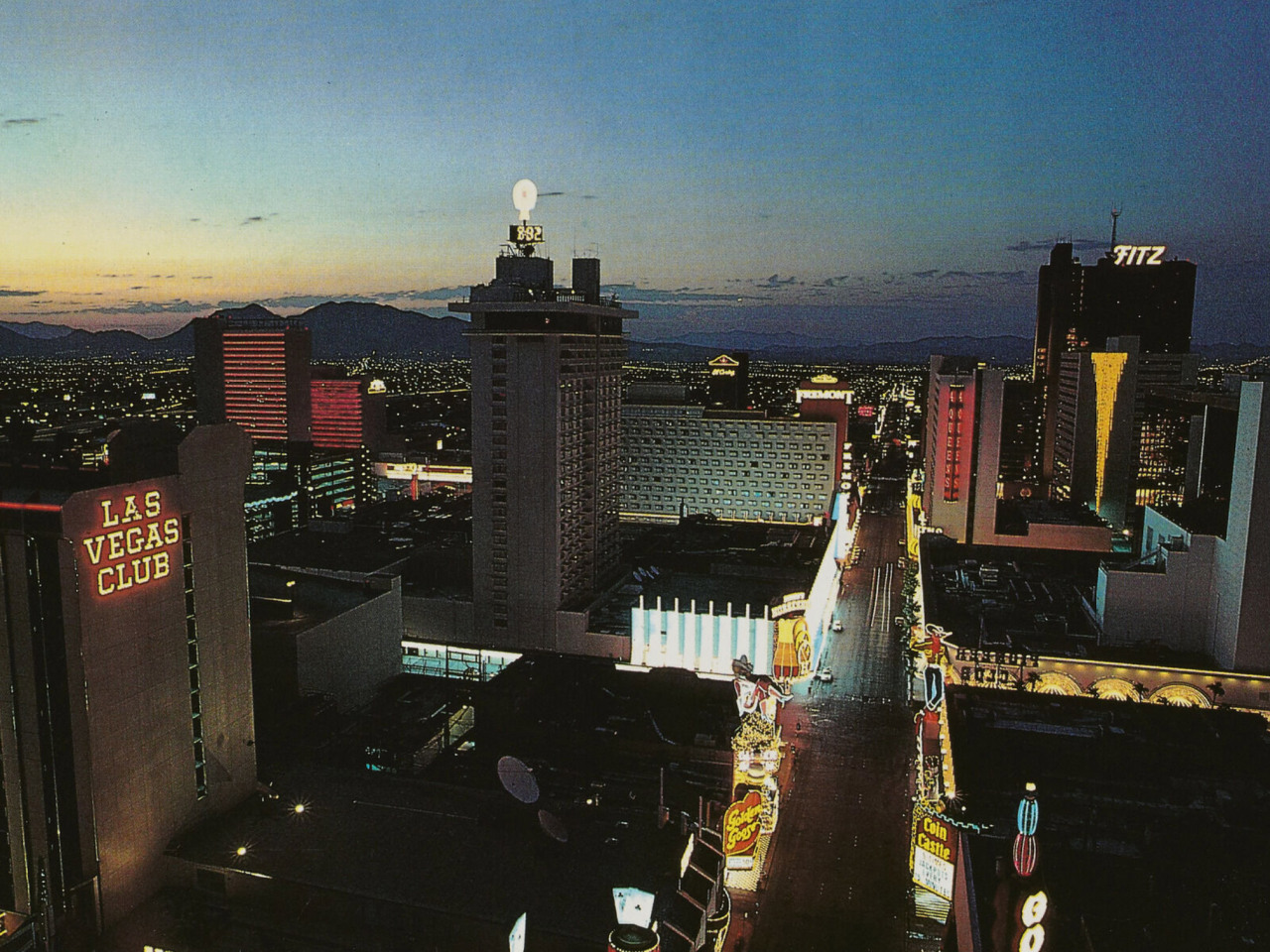
City of Las Vegas population: 259,2121990The 1990s became the fastest growth decade in Las Vegas history. Hispanic and Asian American communities expanded across the city, opening new businesses, churches, and cultural associations that reshaped civic life and reflected Las Vegas's emergence as one of the nation's most diverse urban centers.
-
Summerlin
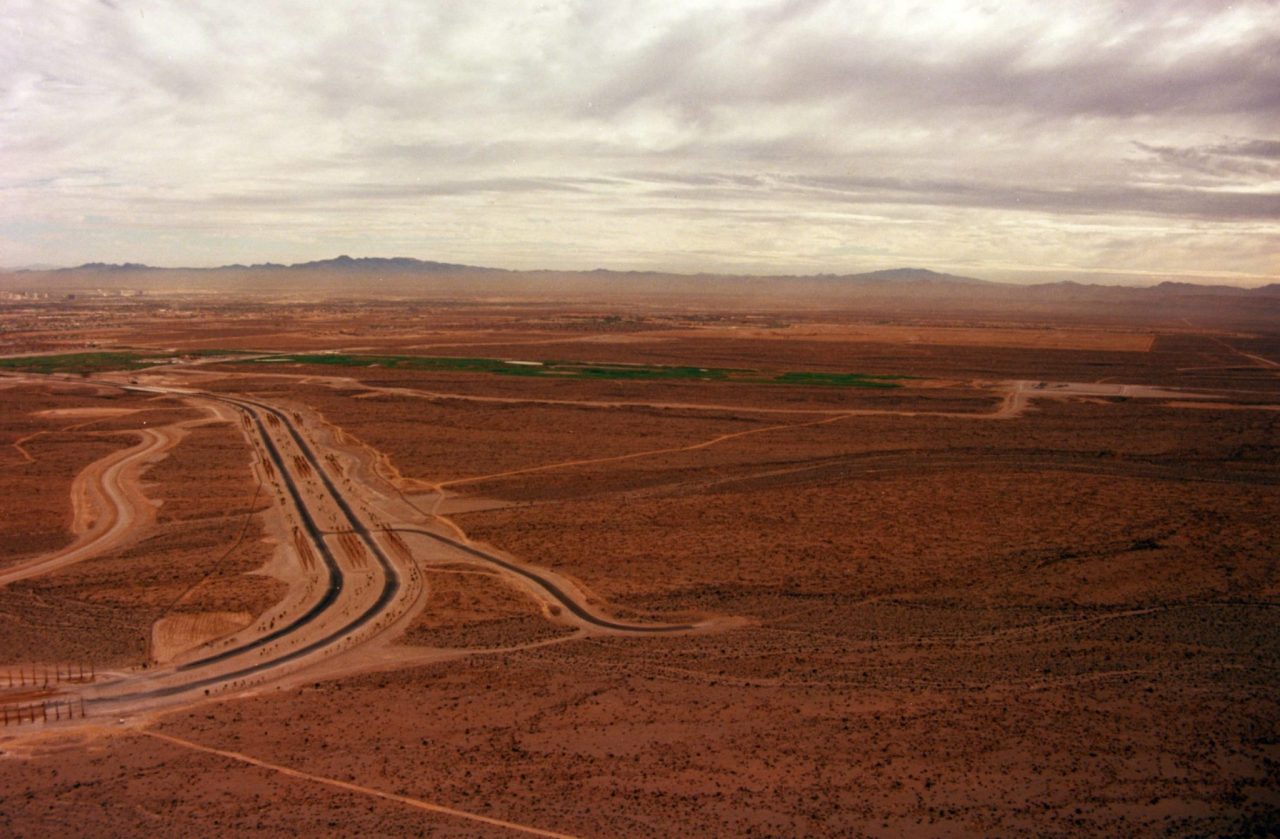
1990The city of Las Vegas annexed thousands of acres on the valley's western edge in coordination with the Howard Hughes Corporation to enable a master-planned community. The project, named Summerlin, marked the start of large-scale suburban expansion, with its first villages opening in 1990.
View EventPhoto: Construction of Summerlin Parkway. Summerlin.com
-
Implosion of the Dunes
1993The Dunes hotel was imploded on October 27. The spectacle helped turn Strip demolition into public entertainment and cleared the way for Bellagio, part of the 1990s mega-resort boom.
View EventPhoto: Las Vegas News Bureau, LVCVA Archive

-
Fremont Street Experience
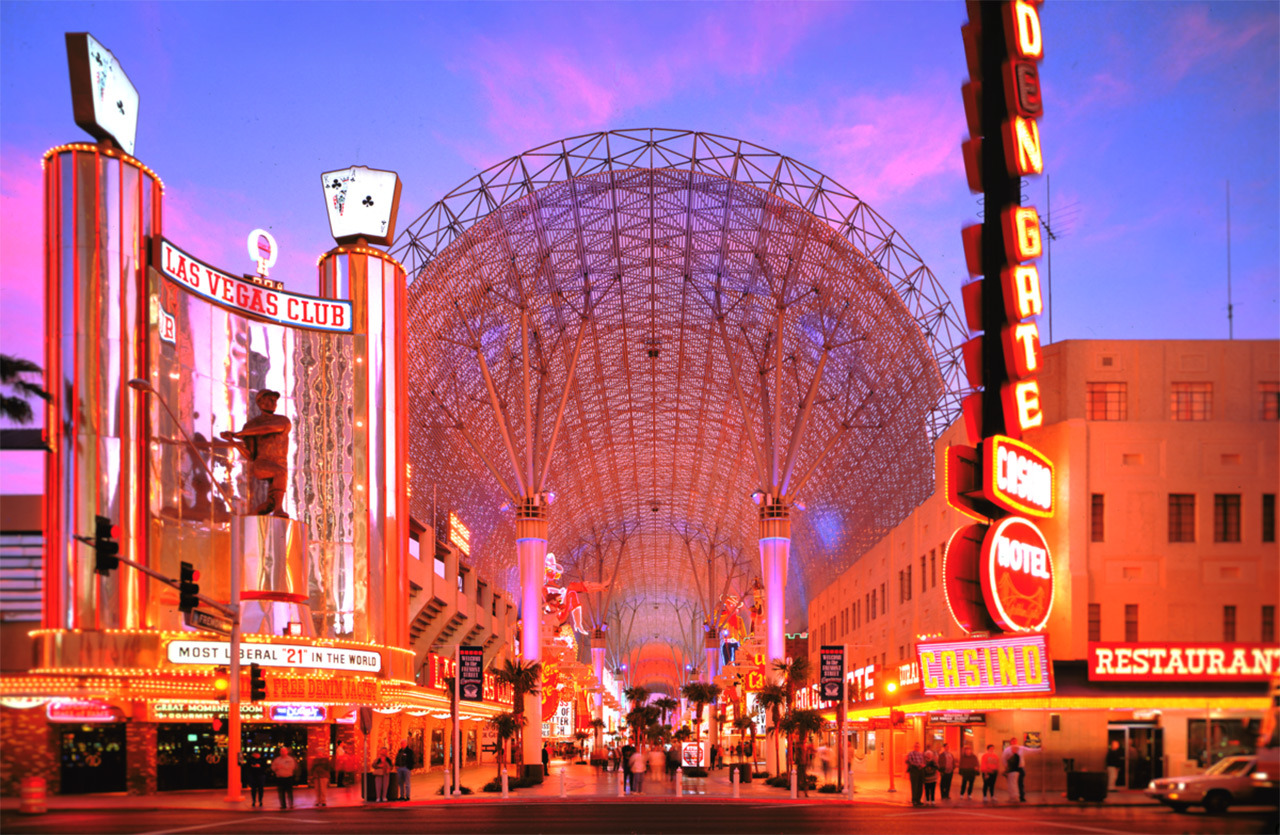
1995Initiated under Mayor Jan Jones's downtown revitalization agenda, the city partnered with casino owners to counter competition from the Strip. The pedestrian mall and light canopy opened December 14, transforming five blocks of Fremont Street into an entertainment district designed to revive tourism and gaming in the city's historic core.
View EventPhoto: 1995. The Jerde Partnership.
-
Neon Museum debuts
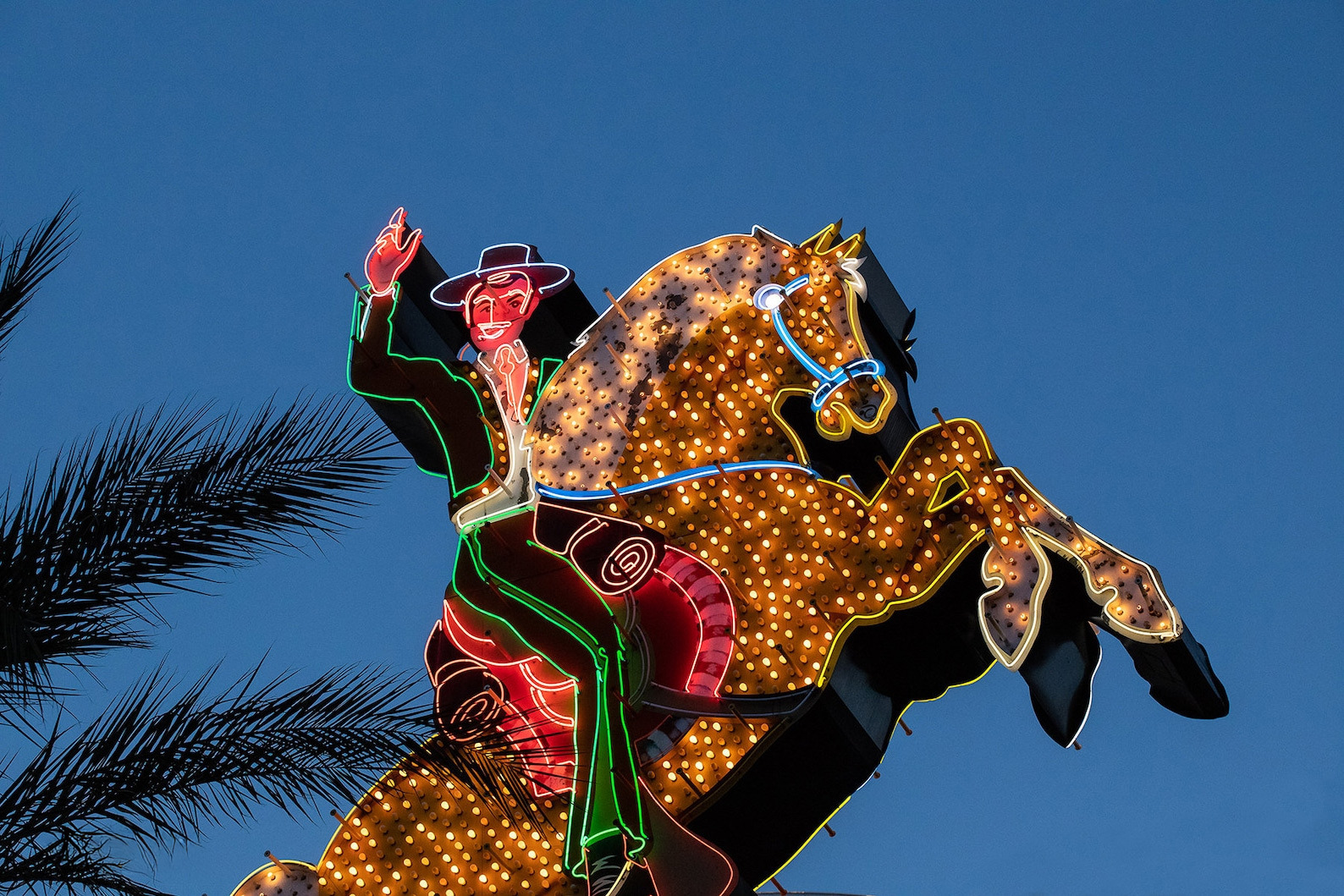
1996Founded as a nonprofit partnership with the city, the museum launched publicly on November 13 with the relighting of the restored Hacienda Horse & Rider sign at Fremont and Las Vegas Blvd. The museum later opened its own exhibition space in 2012 at 770 Las Vegas Blvd North.
-
Las Vegas Medical District established
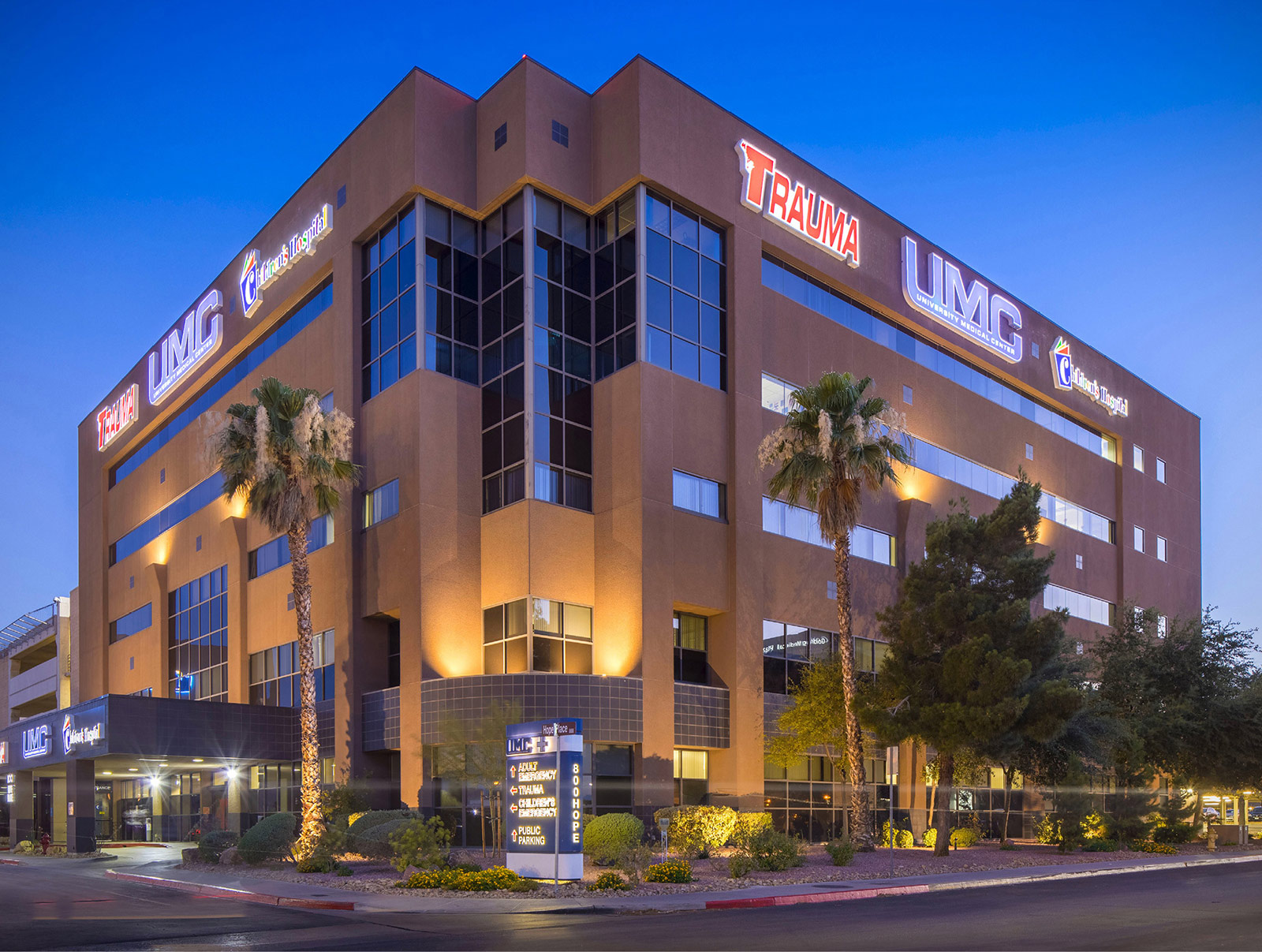
1997The City Council created the Las Vegas Medical District to cluster hospitals, offices, and medical research near downtown. Its anchor was University Medical Center, founded in 1931 as the Clark County Indigent Hospital.
-
Clark County population: 1,375,765
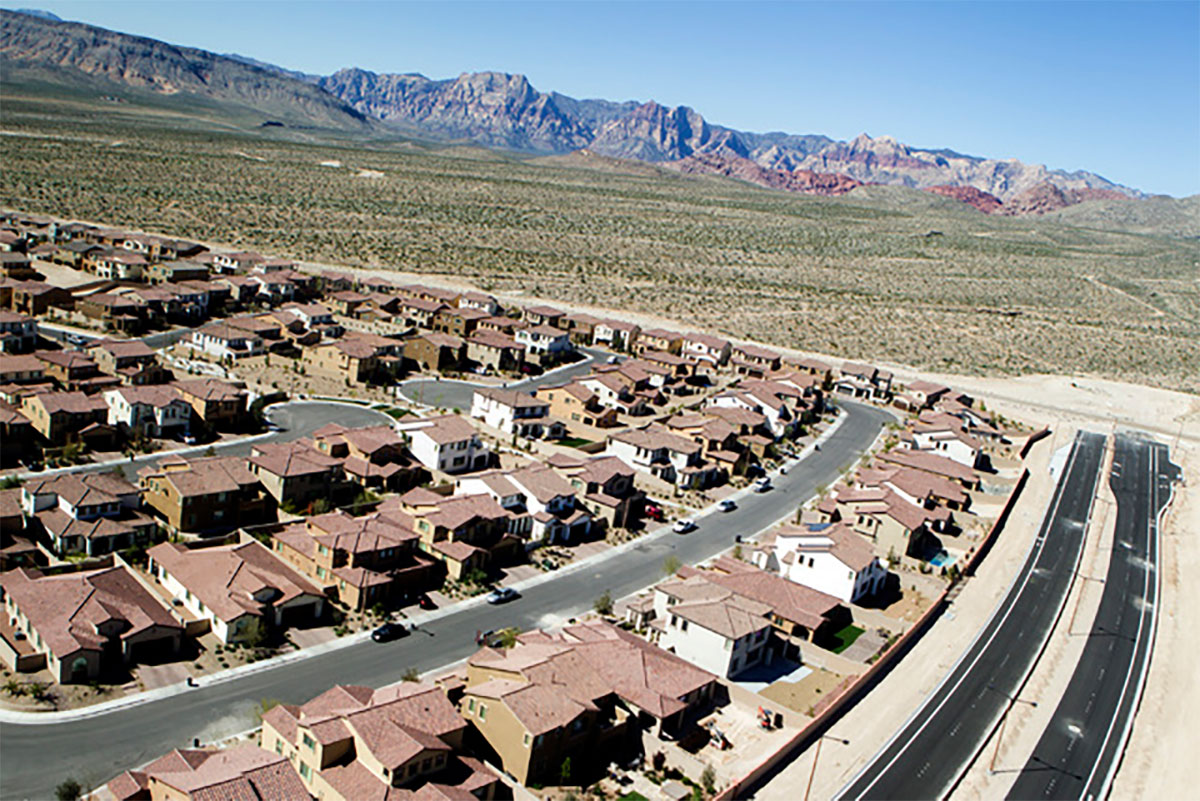
City of Las Vegas population: 478,4342000Las Vegas entered the 21st century as the fastest-growing major city in the nation. Expanding suburbs and steady in-migration marked its rise as the largest U.S. city incorporated in the 20th century.
Photo: The Paseos, Summerlin, Las Vegas. Summerlin.com.
-
Redevelopment of Union Pacific site
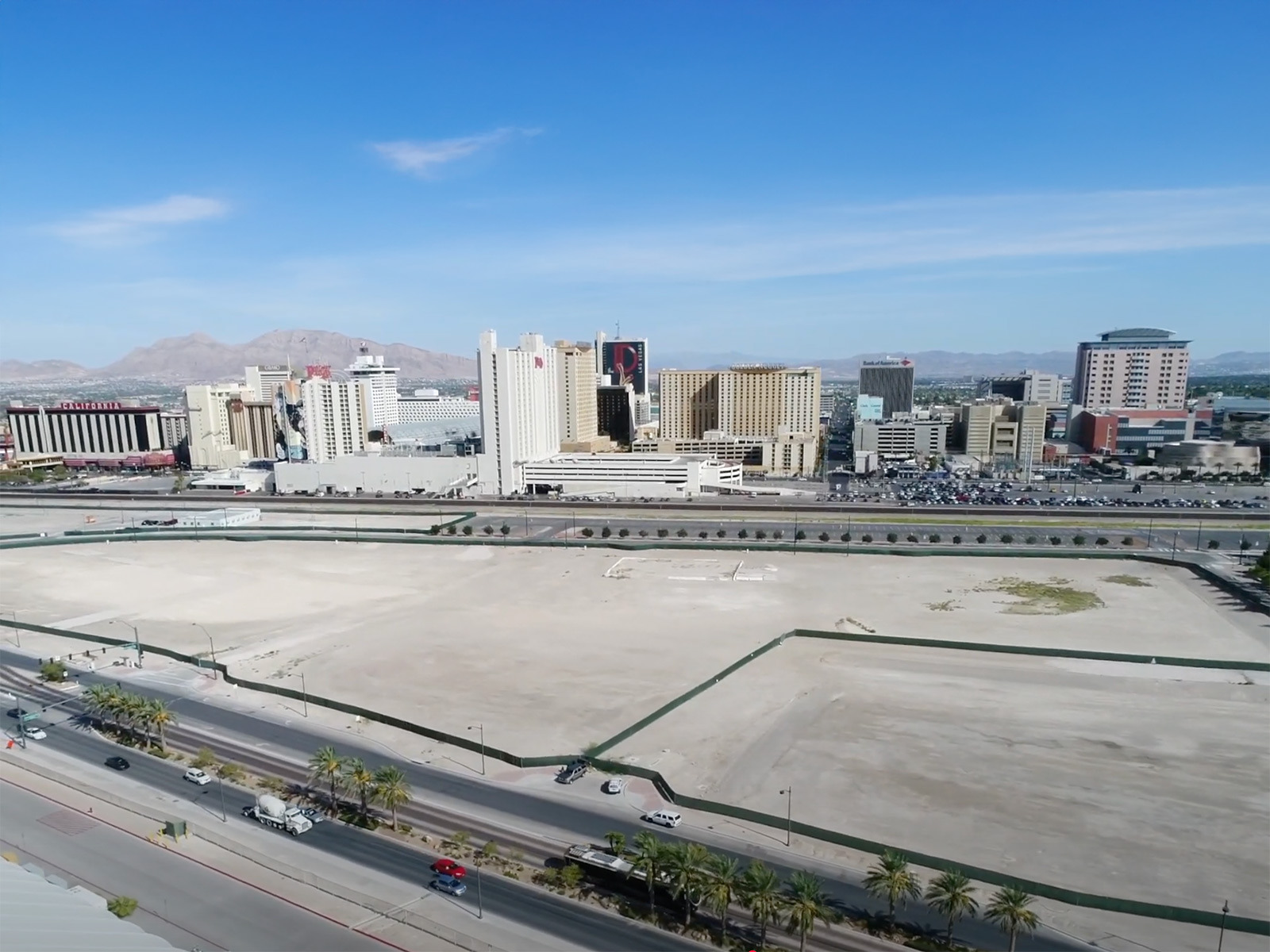
2000Under Mayor Oscar Goodman, the city purchased 61 acres of the former Union Pacific rail yard after a years-long cleanup overseen by the Nevada Division of Environmental Protection. The site was planned as a mixed-use redevelopment area, later becoming Symphony Park.
Photo: Development of Symphony Park, circa 2018.
-
First Friday and emerging Arts District
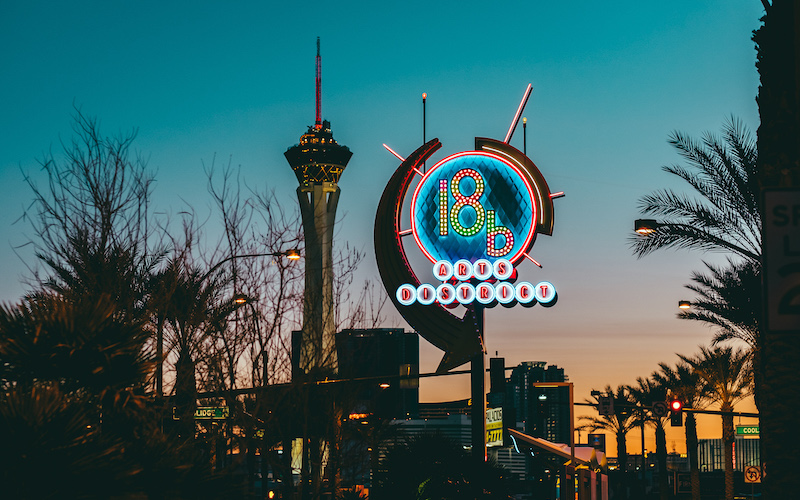
2002The city partnered with local artists and galleries to support monthly First Friday events, beginning in October 2002. The initiative energized the area south of downtown, which became known as the Arts District and was formally branded "18b" in 2005.
Photo: 18b Arts District, 2017.
-
Civic Corridor Plan initiated
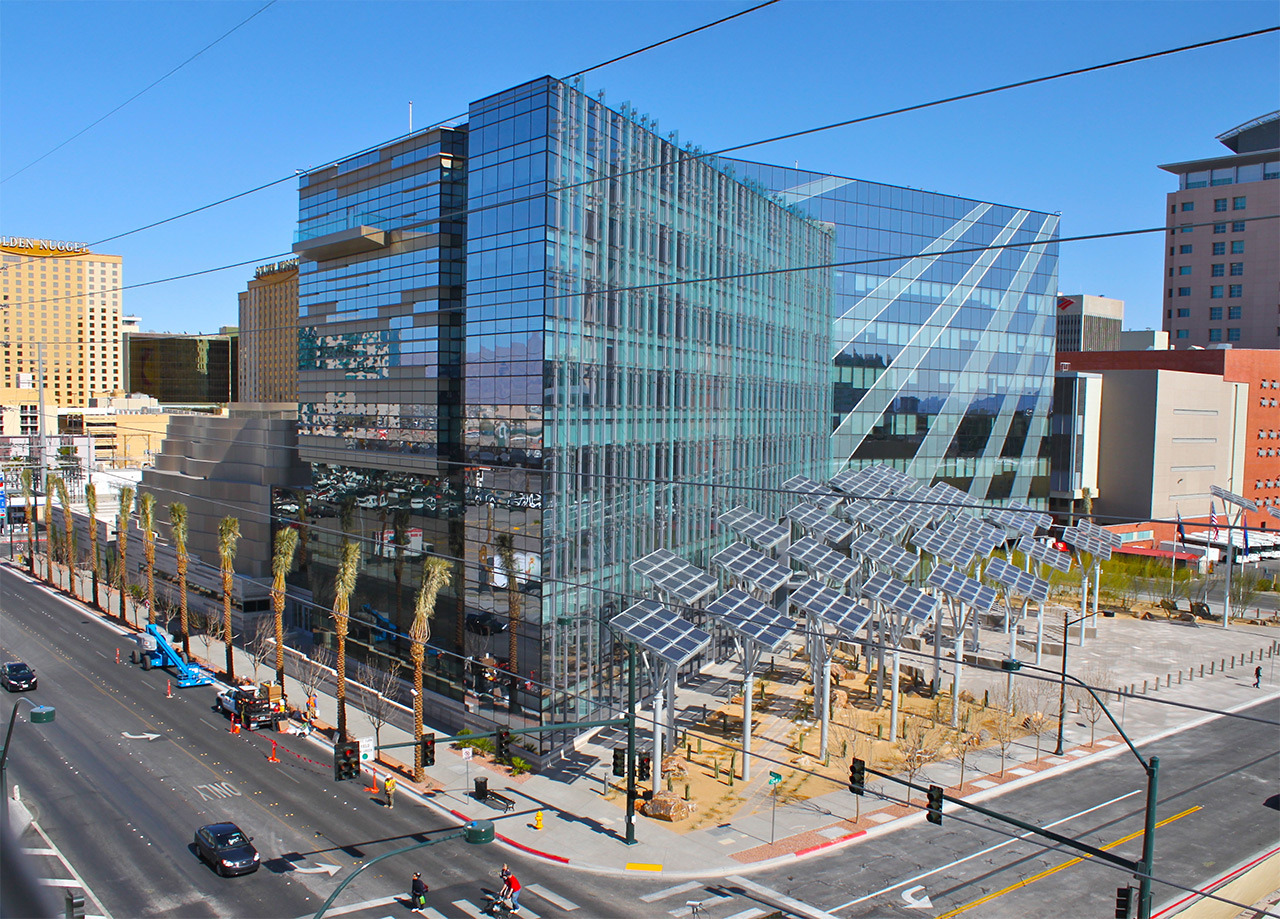
2004The city launched a planning effort to connect downtown's government, cultural, and business centers within city limits. The plan set a framework for future projects such as The Smith Center and the Main Street City Hall.
Photo: Las Vegas City Hall, completed in 2012.
-
Las Vegas Centennial
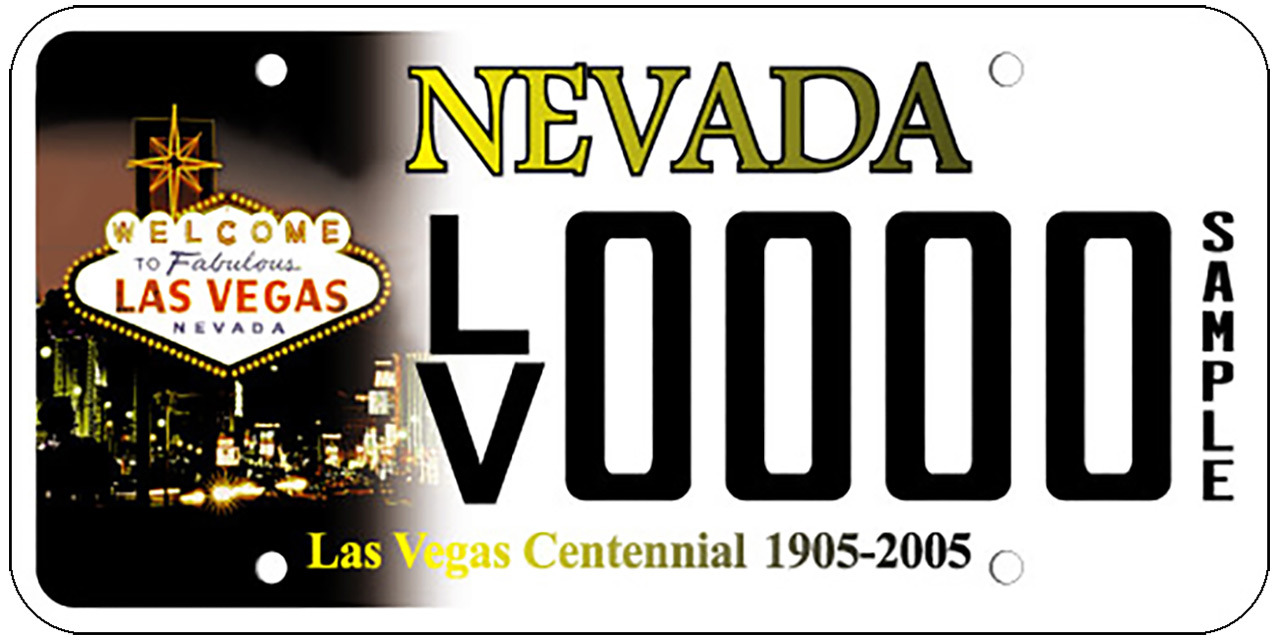
2005The 100th anniversary of Las Vegas was commemorated with citywide events and heritage projects. The festivities revived Helldorado Days and launched the "City of 100 Murals" public art program. The Centennial license plate, introduced the same year, created a lasting fund for historic preservation and grant initiatives in the city of Las Vegas.